
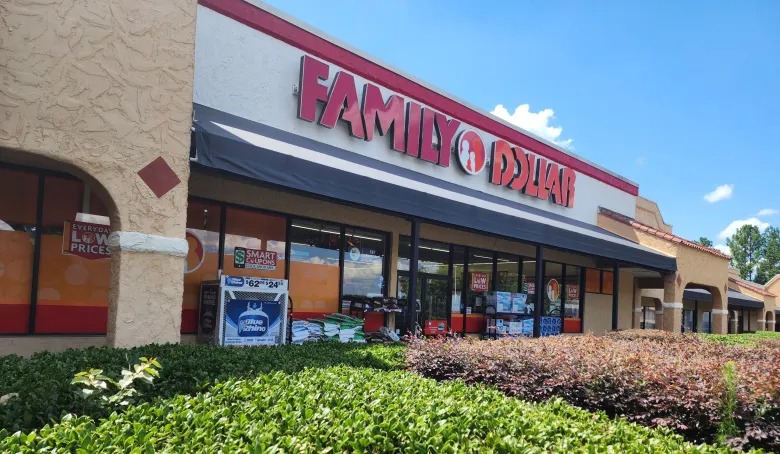
CAROLINA PUBLIC PRESS - Anthony Tyrone Brown went on trial for armed robbery in October 2014 following an incident at a dollar store in Durham several months prior. Brown always insisted he was innocent, but based on the evidence available at the time, he was convicted by a jury and sentenced to nine and a half years in prison. He was released in February 2021.
Ever since his initial conviction, Brown has been working with the North Carolina Center on Actual Innocence to try and clear his name. After filing motion after motion for years without success, newly discovered evidence — a previously unidentified fingerprint — has completely changed the game.
This new evidence led the court this month to vacate Brown’s conviction and dismiss the original charge against him.
However, the case brings to light potential issues with how agencies like the Durham Police Department are handling biological evidence under the existing state statute.
What happened?
Just before 7 p.m. on Jan. 28, 2014, a Black man was captured on a surveillance camera walking near the checkout lanes of a dollar store on Guess Road in Durham. He got the attention of an employee, Brittany Evans, who came over to the checkout area to help him, according to later court records.
After placing a pack of gum on the conveyor belt at the checkout, the man made Evans aware that he had a gun and demanded the money from the register. Kristin Hunt, an assistant manager, was called over by Evans to help open the register. Once it was opened, Hunt put the money in a plastic bag and the man grabbed it before leaving the store, the May 2025 motion said.
Officers from Durham Police responded a little after 7 p.m. and talked to the employees about what they saw. Both had somewhat similar descriptions of the suspect, with Hunt describing him as “stocky,” while Evans described him as “pudgy in the face.” The incident report described the man as a “Black male, age 35-45, height 6′ to 6’2″, weighing 200 to 220 Ibs., with a muscular build,” the May 2025 motion said.
Officers pulled eight fingerprints from the crime scene, seven of those coming from the front doors and one from the pack of gum the suspect picked up, the May 2025 motion said.
A match to Brown was made six days later from a left palm print on one of the doors, the May 2025 motion said.
Following this, officers put together a photo lineup of seven Black men — including Brown — and presented it to the store employees. Evans and Hunt both reviewed the photos twice, but while Evans was ultimately unable to identify the suspect, Hunt only identified Brown after choosing someone else first. Even then, she only had “80% confidence” it was Brown and said “he didn’t have facial hair when he came in,” since Brown had a full beard in the lineup photo, the May 2025 motion said.
Brown also had this full beard in an arrest photo for unrelated charges a few days after the store robbery. In addition, the described weight and height range of the suspect from the incident report was different from Brown’s, the May 2025 motion said.
On Feb. 6, 2014, Brown was arrested for the store robbery and the robbery of another convenience store, the May 2025 motion said.
That October, Brown was tried for both armed robbery charges, never faltering in his belief that he was innocent, and insisted “he worked a full-time job and owned a $40,000 car and did not need to rob dollar stores.” He pleaded not guilty to the charges, despite the possibility of lesser ones had he taken a deal, the May 2025 motion said.
While he was cleared in the other robbery, the jury ultimately found him guilty of the one at the dollar store, the case in which prosecutors presented the left palm print match and Hunt’s identification of Brown as the strongest evidence against him, the May 2025 motion said.
However, the fact still remained that Evans never identified Brown as the robber and even said he was a regular shopper at the store, the May 2025 motion said.
Christine Mumma, executive director at NCCAI who has also been representing Brown, said he ended up serving seven years in prison before he was released for good behavior. Ever since his conviction, Brown has submitted motions to try and appeal his conviction to no avail.
Before he was sentenced, the motion described Brown making one final plea to the court: “It wasn’t me, Your Honor. I don’t know why she said it was me, but I had a full-time job and custody of my son,” he said.
“I worked there all the time. I don’t understand. I went to the store all the time. Thank you, sir.”
New evidence
At one point, after a string of unsuccessful motions by Brown, Durham Police became aware of “deficiencies” in the work of Clinton Babb, one of the department’s latent print examiners at the time, according to a July 2025 motion. He worked for Durham Police from December 2013 to June 2016 and was the same examiner that pulled prints the day of the dollar store robbery, an October 2025 order said.
Carolina Public Press reached out to Durham Police to ask how they came to question Babb’s work, but the department declined to comment at this time.
Mumma said the department sent more than 2,000 of Babb’s cases to independent examiners to be reviewed. The review revealed instances where Babb claimed prints “did not have evidentiary value,” yet another examiner said otherwise of those same prints, the July 2025 motion said.
A finding of “no evidentiary value” basically means there’s “not enough detail to compare to someone to identify them,” Mumma said.
In the dollar store case, Babb had described the print from the pack of gum and four other prints from the scene as having “no evidentiary value,” the July 2025 motion said. While Mumma acknowledged there wasn’t enough detail on the print from the gum for an identification, there was enough for an exclusion.
“Had they looked at that print, it would show that there was a whorl pattern,” she said. “Anthony Brown does not have a whorl pattern.”
This could have served as “powerful evidence of his innocence,” the July 2025 motion said.
Even more frustrating was that when Durham Police sent Babb’s cases off to be reviewed, they only included cases that were still unsolved, Mumma said.
“They didn’t care if somebody had been convicted based on his bad work,” she said. “They only cared if someone hadn’t been convicted.”
In March 2026, Brown’s counsel requested the full 2014 fingerprint database search included in Babb’s report, a June 2026 motion said. The Durham Police’s counsel responded two weeks later and said they didn’t have that information, nor did they believe they still needed to have it. They didn’t provide a status on the prints in the database when asked either, the motion said.
At that point, Brown’s counsel reached out to the North Carolina State Bureau of Investigation, which is in charge of the SAFIS fingerprint database. They were able to confirm Brown’s prints were still there and that Durham Police had even accessed the prints at the end of March, the June 2026 motion said.
A motion for discovery was filed by Brown’s counsel on April 15, 2026, to try and gain access to digital copies of the three prints that were still being kept in the database, as well as other materials, but the motion was met with opposition. Even so, once it became an order from the court, Durham Police agreed to run the prints through the database for comparison and provide the report to Brown’s counsel, the June 2026 motion said.
That report would change everything.
Released on June 2, it revealed that one of the previously unidentified prints from the robbery matched with another man. Not only that, an analyst noted the match to him was stronger and of better quality than that of Brown’s print match, the June 2026 motion said.
Because no police agency has publicly identified this person as a suspect in the dollar store robbery, CPP is not naming him at this time.
In 2009, this man was arrested for carrying a concealed weapon. He is described as 6 feet tall and weighing 235 pounds — much closer to eyewitnesses’ description of the dollar store robber, the June 2026 motion said.
Why didn’t this individual pop up until now?
The report indicated that although Babb uploaded the prints he collected to the database back in 2014, he never actually performed a search like he said he did, the June 2026 motion said.
At the very least, this discovery points to this man as “a more likely suspect than Mr. Brown,” the June 2026 motion said.
If the prints were run in 2014, the match to this other individual would have been discovered and “provided an important investigative avenue for law enforcement,” the motion said.
Armed with this new information, Brown filed yet another motion on June 26 to have his conviction vacated and his charge dismissed. This time, the court had a different response.
“In summary, the newly discovered evidence of fingerprints other than those of the defendant and an updated analysis present a reasonable probability that someone else could have participated in or was in fact the individual who committed the offense,” the court said in its response on July 20.
Ultimately, Brown’s conviction was vacated and his charge was dismissed, according to a consent order filed on Aug. 4.
“Being cleared after seven years is something I prayed for and hoped for every single day.
It’s an overwhelming feeling of relief, gratitude, and peace to finally have my name cleared,” Brown said in a statement to CPP.
“At the same time, it’s emotional because no decision can give me back the years I lost or erase everything my family and I endured.”
Problematic evidence handling statute
G.S.§ 15A‑268 is the existing statute that covers how biological evidence in a criminal case should be handled. As the statute reads now, whenever evidence is introduced at trial and enters the custody of the clerk of court’s office, the judge determines who collected the evidence and whether it’s biological in nature. Biological evidence is considered any item that contains blood, hair, saliva, fingerprints and more.
If the evidence is biological, it should receive a special designation in court records. This designation is important because it sets it apart from other kinds of evidence, which can be destroyed by the clerks with limited notice following a trial, Mumma said.
Biological evidence, on the other hand, must always be preserved unless proper notice and destruction procedures are followed that “give the defendant an opportunity to be heard,” Mumma said.
The statute also says that, “upon conclusion of the clerk’s role as custodian,” the clerk returns biological evidence to the agency that first collected it.
However, two problems with this exist that relate to Brown’s case.
First, sometimes, the process for identifying biological evidence isn’t properly followed. This is what happened in Brown’s case.
After NCCAI took on Brown’s case in 2020, it tried to perform DNA testing on the prints pulled from the crime scene.
“Sometimes fingerprint examiners are not correct,” Mumma told CPP.
“There is an error rate in fingerprints, but DNA, as long as it’s a strong enough profile, it doesn’t have an error rate.”
But at that point, the prints were “no longer available” for testing. A notice of intent to destroy evidence went out in June 2019, but that should’ve only covered non-biological evidence, Mumma said.
“Good example of the judge, prosecutor, and defense not identifying the prints as biological even though the law required it as of 2009, and even though the statute says fingerprints are biological, the clerk not keeping them because no one else followed the law,” Mumma said in an email to CPP.
“The statute is cumbersome, which happens when legislation is done piecemeal.”
As a result, the physical print cards from Brown’s case couldn’t be used for any further testing. Had they been available in 2020, Brown could’ve been exonerated sooner, Mumma said.
“The clerk said they wouldn’t have destroyed them, they would have sent them back to law enforcement,” Mumma said.
“Law enforcement said they didn’t have them. So we, to this day, don’t know what happened to the prints. We just know they’re not where they’re supposed to be.”
While Durham Police have maintained that the print cards were destroyed, Mumma said she’s not convinced.
“A similar thing happened in Kevin Johnson’s case, who was exonerated in June 2023,” she told CPP in an email.
“DPD said the prints had been destroyed, but they were miraculously found once someone conducted a thorough search. It takes someone who wants to find the evidence to find it.”
The second issue with the statute is that the rule regarding designation wasn’t added to it until 2009, meaning there is a lot of evidence in the clerk’s custody that lacks designation but is biological, Mumma said.
“That doesn’t help them with what is currently in their evidence rooms, and they have taken the position … that if it doesn’t say ‘biological’ on it, they don’t have to preserve it, which is ridiculous,” she said.
“Because that means biological evidence from cases in the early 2000s, which would benefit the most from DNA testing, could be destroyed. It defies logic.”
Adhering to the statute and returning biological evidence to the collecting agency is important because those agencies are often the best equipped at handling it, Mumma said.
“Law enforcement is the best long-term custodian of biological evidence because they have to be trained in how to collect it and preserve it and are more up to date in advancements in science because they use them in current investigations,” Mumma told CPP. “They have the space and training (that) clerks do not.”
The solution is to make the statute clearer so there’s no room for confusion for the clerks, Mumma said.
Instead of indicating that only biological evidence should be returned to law enforcement after trial, Mumma recommends changing the statute to require that all evidence collected by law enforcement be returned to them after trial and labeled as a trial exhibit. She also recommends getting rid of the judicial process that designates evidence as biological.
“This would simplify the process and eliminate room for error,” Mumma said.
From there, the law enforcement agency can look to existing guidelines to determine what should be destroyed or not, she said.
Potential problems at DPD
Aside from the issues with the statute, there could be issues at Durham Police that go beyond the work of just one print examiner in one case. Mumma said she thinks a “complete independent audit of the Durham Police Department’s latent print section” is warranted.
“Babb was supervised by somebody,” Mumma said. “Somebody was signing off on his work, so that is for an independent auditor to determine.”
Mumma said she is also suspicious of how “they hid the evidence from us for so long.”
“Two months ago I asked the Durham Police Department to objectively look at the evidence in this case, and they responded that they thought the conviction was good,” she said.
“It wasn’t until we were issuing subpoenas for law enforcement to be called to the stand that the state consented.”
Those subpoenaed officers, including Babb and two other examiners at the department, didn’t end up having to testify at the evidentiary hearing on Aug. 4 because the district attorney’s office agreed to vacate the conviction before then, Mumma said.
Brown’s is not the first exoneration to come out of Durham either. In fact, his is the fifth case since 2022 to be exonerated by NCCAI, Mumma said.
Brown applied to NCCAI in 2020 to have them look into his case, but other exonerations were the result of something called the Durham DA Project. Brown’s case was worked into the project later on, Mumma said.
The project started in 2018 under former District Attorney Roger Echols. NCCAI had concerns about cases in Durham following the disbarment of former district attorneys Mike Nifong and Tracey Cline, Mumma said.
Because of this, Echols signed a memorandum of understanding with NCCAI agreeing to “work cooperatively” as their organization looked into Durham cases, Mumma said.
“That didn’t mean agreeing to anything. It meant if we found a credible claim of innocence, that he would provide us with access to files to review the evidence in the cases,” she said.
“No commitment to agree, but just to cooperate in investigations if there was a credible claim of innocence.”
NCCAI looked for these cases by sending out more than 1,000 questionnaires to inmates in the Department of Corrections who had been convicted in Durham, screening out cases “that were not likely candidates for postconviction relief,” Mumma said.
The string of exonerations resulting from this work points to a “larger issue,” Mumma said.
“Just because I have not pursued a case where there’s a claim of innocence from that time frame, does not mean there’s not a valid claim of innocence,” Mumma said.
“There’s procedural bars that would keep us under the law from going forward, but it would not keep the state from having an interest. … I’m limited by the law.”
Echols left office in 2019 and his successor, District Attorney Satana Deberry, took office that same year.
Deberry signed a memorandum of understanding with NCCAI when she took office as Echols did, but Mumma said she “never followed through on the terms of it.”
CPP reached out to Deberry’s office for comment, but they did not respond prior to publication.
“They have authority to not be limited by the law, which Satana DeBerry has exercised within her office,” Mumma said. “So the question is, will she exercise it to look at old convictions that may be unjust?”
While there’s no expectation for her to do that, the exonerations should inspire others to take action, Mumma said.
“If those don’t cause people with a moral and ethical compass to initiate their own objective reviews, then the MOU doesn’t matter,” she said.
What’s next?
The case now has new evidence, and the work of a former department latent print examiner has been called into question. But the way forward from here is currently unclear.
Durham Police also declined to comment at this time regarding if it’s done any further investigation into Babb.
“I’m sure they will not on their own go back and look at cases from Mr. Babb or anybody else,” Mumma told CPP. “Because that might open them up for criticism, even if someone was convicted who shouldn’t have been.”
Brown told CPP he now has “a chance to move forward.”
“My plans are to rebuild my life, spend time with my loved ones, work hard, and appreciate every opportunity that comes my way,” he said.
“I don’t take freedom or time for granted anymore because I know how quickly both can be taken away.”
If people take away anything from his experience, Brown said he hopes they understand the importance of “a fair process” and always pursuing the truth.
“Even when things seem impossible, and it feels like no one is listening, you can’t give up,” he said.
