
By Jheri Hardaway
Staff Writer
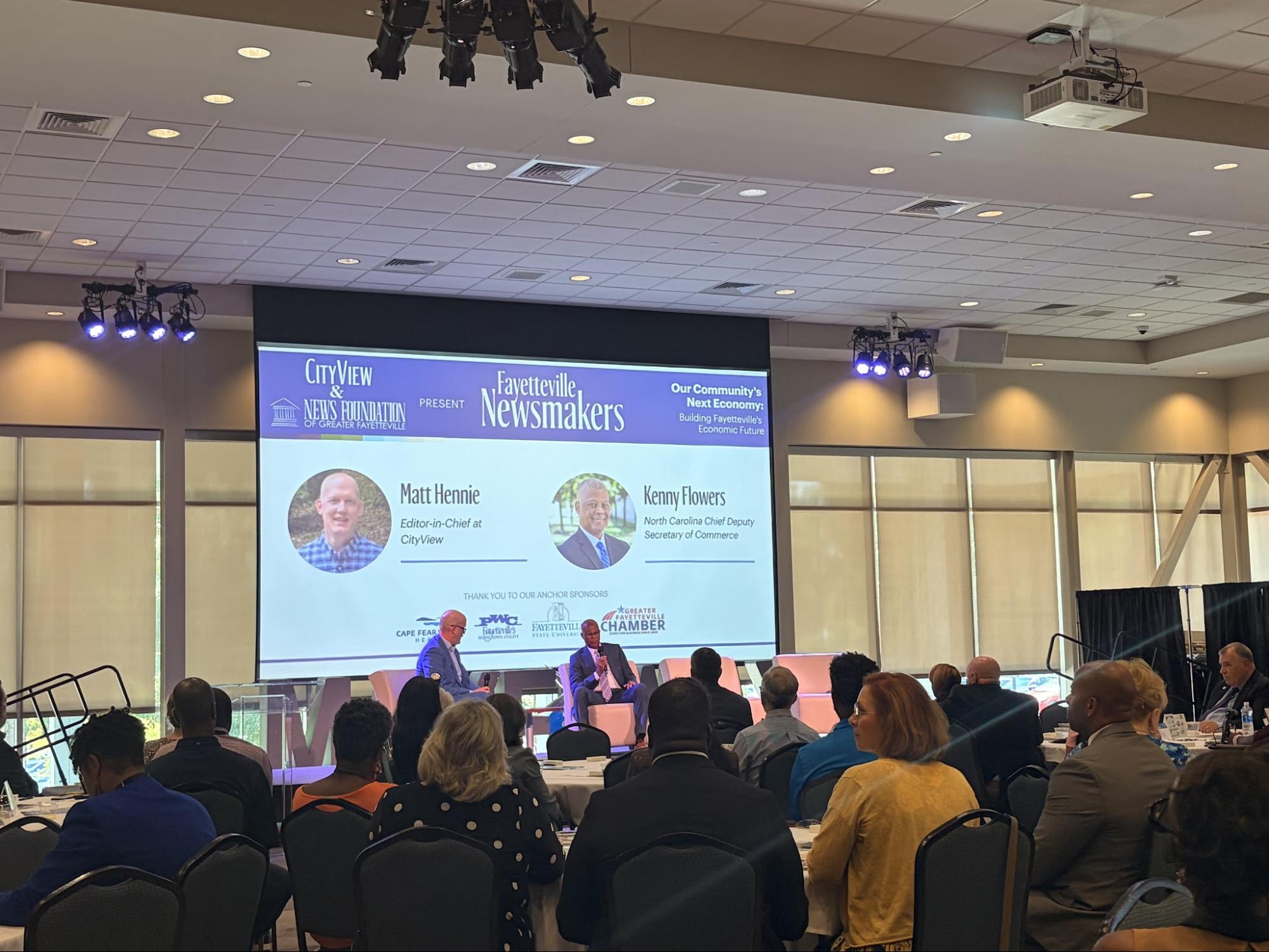
Fayetteville, NC - On Wednesday, July 15, Fayetteville State University’s Rudolph Jones Student Center became the epicenter for critical regional discourse as it hosted the inaugural "Fayetteville Newsmakers" civic dialogue. Co-organized by The Assembly Network and the News Foundation of Greater Fayetteville, the editorially led forum brought together a formidable panel of state officials, local policymakers, and entrepreneurial leaders—including Fayetteville Mayor Mitch Colvin, Cumberland County Commission Chair Kirk deViere, and NC Department of Commerce Chief Deputy Secretary Kenny Flowers—to confront a vital question: "Where is our community's next economy coming from?" Over the course of two hours, panelists and community members engaged in a forward-looking exploration of strategies designed to diversify the region’s economic footprint beyond its traditional retail and military pillars, focusing intensely on how to attract high-wage external investment to secure a prosperous, multifaceted future for the Greater Fayetteville area.
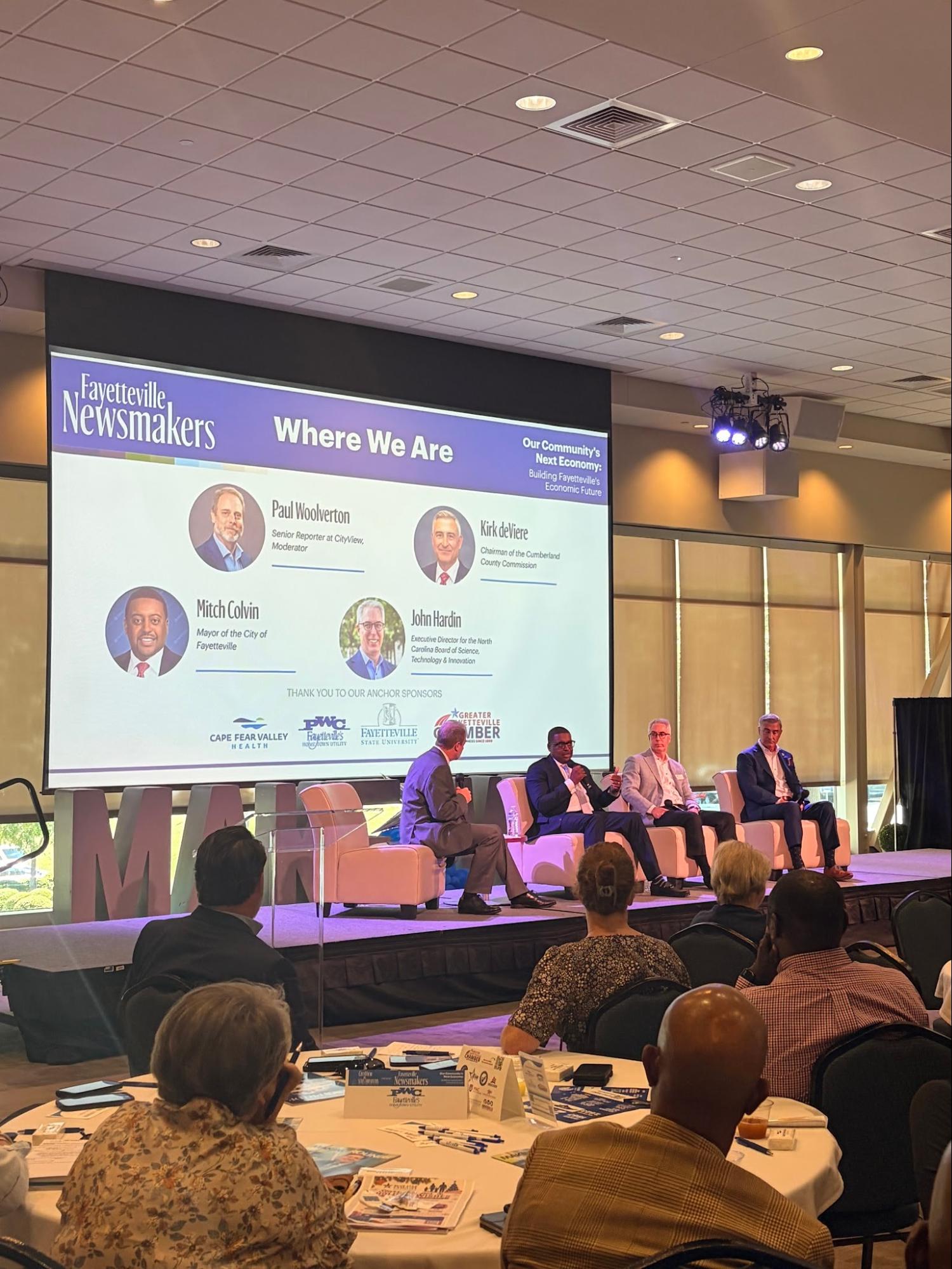 With regional income trailing state and national averages, the editorially led civic dialogue highlighted a collective determination to diversify the local economy beyond its historical reliance on retail and military staples, pivoting toward high-wage external investments, technological innovation, and structural equity.
The forum opened with insights from Kenny Flowers, Chief Deputy Secretary of the North Carolina Department of Commerce, who emphasized that North Carolina’s top-tier business rankings are the result of intentional, long-term planning. "We stay ready, so we don't have to get ready," Flowers noted, referencing the state's First in Opportunity strategic plan. He identified key growth sectors driving the state's modern innovation economy, including aerospace, advanced manufacturing, life sciences, healthcare, and artificial intelligence. However, Flowers noted that statewide success requires uplifting distressed regions. Despite a metro core, Cumberland County remains classified as a Tier 1 county, a legislative designation marking it among the 40 most economically distressed counties in North Carolina. Rather than viewing this label as a permanent setback, Flowers framed it as a strategic avenue for resources. "Being Tier 1 means you qualify for more resources from the Department of Commerce," Flowers explained, pointing to building reuse programs, downtown economic development grants, and utility account funds designed to build local capacity. Flowers revealed that over the last five years, nearly 75% of North Carolina’s job announcements occurred in Tier 1 and Tier 2 counties, fueled by nearly a billion dollars in rural infrastructure investments since 2018.
Following the state perspective, a second panel moderated by senior reporter Paul Wolverton directly addressed Cumberland County’s localized economic friction. Wolverton introduced sobering benchmark data from 2024: while the national median household income stood at $80,734 and the state average was $72,388, Cumberland County lagged behind at $61,291, with the city of Fayetteville sitting at $58,407. Fayetteville Mayor Mitch Colvin acknowledged that while Fort Bragg (now Fort Liberty) serves as a monumental $8.2 billion economic engine, local policy has historically accommodated the base rather than leveraging its full potential.
"Probably 60-plus percent of the people in our community are employed by the government; federal, state, and local," Mayor Colvin stated. "We have not really diversified what that looks like. We need to convert a lot of that talent that leaves the military and let them become business owners, ensuring dollars stay in our local community instead of leaving for corporate retail headquarters."
Cumberland County Commission Chair Kirk deViere echoed this sentiment, emphasizing that building a modern economy requires stabilizing fundamental civic pillars. DeViere highlighted the county's aggressive $610 million investment into school construction and maintenance, alongside a separate $250 million to $300 million allocation explicitly dedicated to expanding water and sewer infrastructure to rural municipalities. "Robert Van Geons [President of the FCEDC] can't recruit industry if we don't have the infrastructure in place," deViere remarked.
The dialogue took a provocative turn during a presentation by Dr. John Hardin, Executive Director of the North Carolina Board of Science, Technology, and Innovation. Dr. Hardin defined innovation simply as "something new that adds value," noting that the 2025 Nobel Prize in Economics empirically validated technological innovation as the primary driver of modern rising standards of living. Dr. Hardin challenged the region to lean aggressively into a "defense innovation economy," working directly with warfighters to solve complex logistics, healthcare, and energy issues. This struck a nerve with an audience member, Reverend Dr. Floyd Wicker Jr., who yelled “No!” The panelist acknowledged the disruption and allowed Dr Wicker a moment to voice concerns regarding the ethics of prioritizing defense spending over peace-seeking industries. Dr. Hardin and the panel clarified that military advancements yield critical "dual-use" civilian technologies, particularly in the biomedical and cyber sectors.
Commissioner deViere envisioned a "Pentagon South" corridor model that structurally links local assets ranging from the new downtown Defense Innovation Center to Fayetteville State University, Fayetteville Technical Community College, and the military’s Joint Innovation Operations Center. Meanwhile, Mayor Colvin advocated for a dedicated, physical "innovation site" mirroring Huntsville, Alabama’s success, where companies can cluster, collaborate, and accelerate commercial research.
The panel also addressed the highly debated arrival of modern data centers. While these facilities signal technological progress, Flowers and local officials acknowledged the structural strains they place on limited utility grids. The consensus focused on cautious optimization: welcoming high-value investments without creating environments where local governments run out of core resources.
Closing the forum, leaders agreed that the path forward requires deep institutional alignment. By fusing the academic talent of local universities with strategic infrastructure spending and state-backed small business grants, Fayetteville and Cumberland County aim to shed their economic distress and step firmly into the state's high-wage future.
