
By: Jordan Meadows
Staff Writer
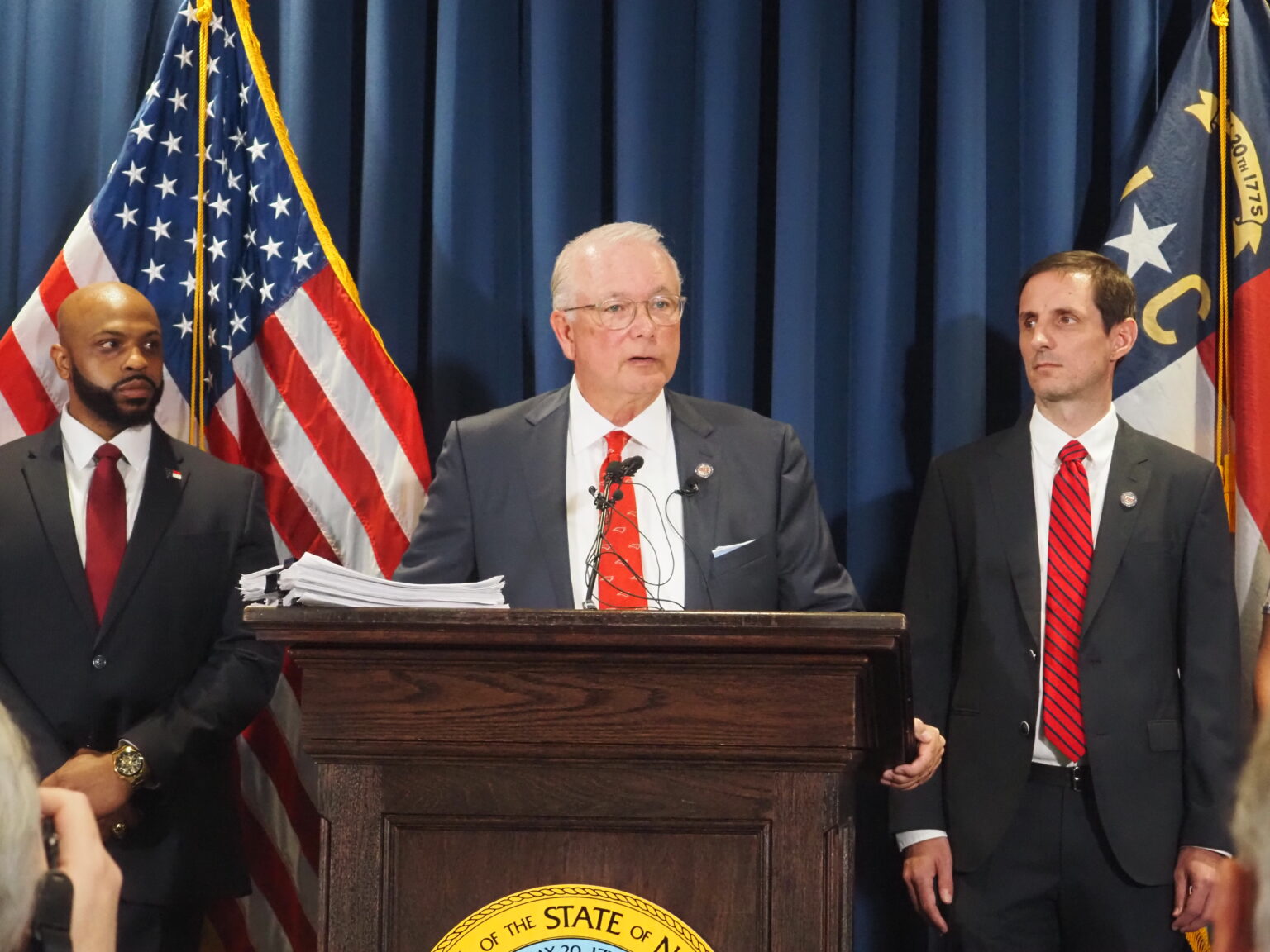
North Carolina State Auditor Dave Boliek said his office uncovered a growing pattern of financial mismanagement across municipalities and public institutions statewide, with a series of audits revealing issues ranging from weak oversight to potential criminal activity.
Speaking during a July Council of State meeting, Boliek said his office has already been involved with “dozens of municipalities of varying sizes that are experiencing financial distress,” citing high-profile cases and emphasizing that similar concerns are emerging across the state.
One of the most detailed and closely watched investigations centers on the Town of Cary, where a sweeping investigative report released in mid-July found more than $1 million in questionable and, in some cases, extravagant spending tied to former Town Manager Sean Stegall. The report, which spans thousands of pages, examined procurement card use, council expenditures, and broader financial management practices after complaints of alleged misconduct.
Auditors reviewed tens of thousands of transactions and interviewed both current and former employees and elected officials. Boliek described the findings as “public dollars being thrown around carelessly while taxes are being raised only creates distrust in government,” and that it “brings a true accounting of where tax dollars go in Cary.”
The audit revealed that Cary issued 828 government purchasing cards—about 62% of its workforce—far exceeding the roughly 16% average among similarly sized municipalities like Charlotte and Raleigh.
Between January 2024 and December 2025 alone, those cards were used in more than 60,000 transactions totaling $24.2 million. Auditors found that many purchases lacked proper documentation or a clear public purpose, with more than $100,000 in transactions missing itemized receipts or any supporting records. Among the most scrutinized expenses were $65,653 paid to a ghostwriter for a book about Stegall, $86,000 for a video tied to a town retreat that included a staff dance performance, and an additional $35,000 for a documentary about that same video. Other spending included a $3,419 stay at a penthouse hotel, high-end meals, transportation costs, and even Ray-Ban sunglasses for council members. In one instance, $37,301 in graduate tuition was paid on behalf of a council-member before being reimbursed.
Boliek noted that some of the most expensive expenditures were approved at the staff level without council awareness.
“That $86,000 was town staff approved, so the council wasn’t aware,” he said, adding, “We’ll let you draw your own conclusions about whether that’s a return on investment of taxpayer dollars.”
The fallout from the Cary audit has sparked debate about accountability, with town leaders largely attributing responsibility to Stegall, who resigned in late 2025 after nearly a decade in the role. A separate report commissioned by the town pointed to increased risk associated with long-tenured leadership and weaknesses in oversight systems.
The Cary Town Council is expected to continue addressing the issue in upcoming meetings, particularly one in late August.
In Rocky Mount, a 257-page performance audit revealed a dramatic 78% drop in the city’s cash and investment balances—from roughly $100 million to $21.8 million over two years—while spending increased sharply. Personnel costs rose 27%, capital spending jumped 153%, and millions were spent on projects that either exceeded budgets or failed to materialize, including $17.2 million for a proposed casino development.
Boliek said the report uncovered “red flag after red flag,” including poor hiring decisions and a lack of financial oversight that allowed problems to persist unchecked.
Other audits have identified serious issues across the state, including at North Carolina A&T State University, where more than $700,000 in financial aid was improperly distributed to individuals connected to staff without clear criteria, prompting referrals to prosecutors and state investigators. In Forsyth County Schools, auditors found a $46 million deficit along with “severe weaknesses” such as unrecorded expenditures and failures to reconcile accounts. And a statewide audit also found that the Department of Health and Human Services failed to properly track $138.8 million in federal awards to counties, raising concerns about accountability at the state level.
In Pilot Mountain, NC, Boliek said on-site investigative work contributed to the indictment of a former town manager, while in Zebulon, auditors identified significant internal control weaknesses. In the tiny town of Speed, NC, the auditor has even recommended potential dissolution due to fraud risks and a lack of financial management systems.
Boliek emphasized that his office is also expanding oversight efforts moving forward. Upcoming audits will examine the North Carolina Education Lottery, voter-approved general obligation bond spending over the past six years, and operations within the UNC system, including faculty workloads and vacancy management. He also noted that about five municipalities or entities are currently under active investigation for potential criminal activity.
