
By Jheri Hardaway
Staff Writer
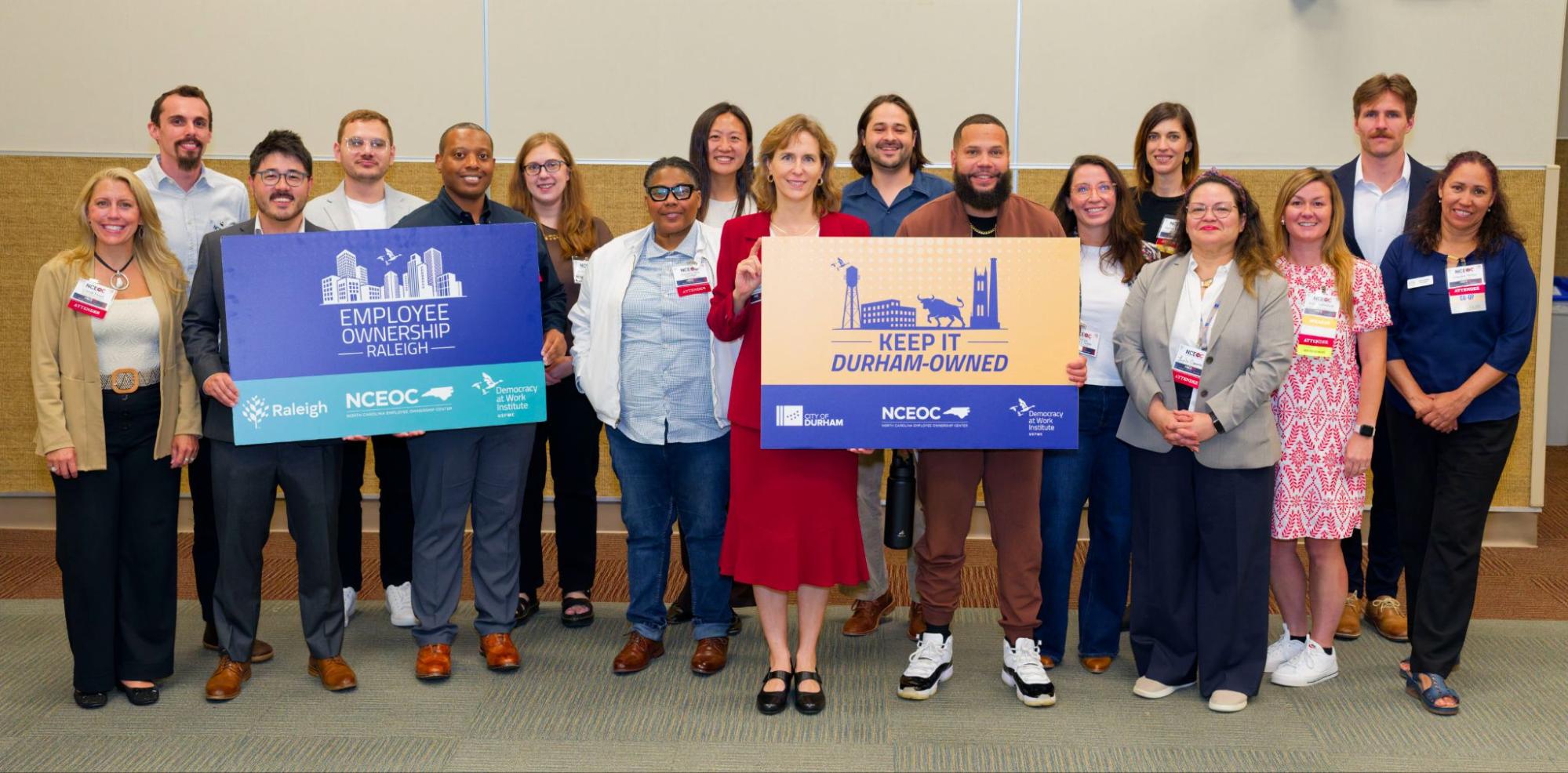
Raleigh, NC - Across North Carolina, a quiet demographic shift is heading toward Main Street. Dubbed the “Silver Tsunami,” more than 82,000 business owners in the state are age 55 or older, facing an inevitable crossroads: how to exit their life’s work without shuttering storefronts or displacing the workforces that built them. At the recent North Carolina Business Continuity and Employee Ownership Conference, regional business leaders, advisors, and founders gathered to address this impending wave. Their shared message was clear: employee ownership is not an idealistic fringe concept; it is a pragmatic, capital-smart succession strategy that preserves local wealth and jobs across the state.
Nationwide, roughly 2.3 million business owners over 55 employ an estimated 24.7 million workers. When these founders retire without a viable succession plan, viable enterprises frequently close or sell out to corporate buyers who slash overhead and consolidate staff. The vulnerability is especially real in North Carolina's rural communities. In counties like Polk, where roughly 79% of business owners are nearing retirement age, the loss of even one or two staple businesses can gut local tax bases and employment security and opportunities.
Compounding the problem is an outdated assumption about succession. “In the olden days, the expectation was that you pass it on to your children,” conference panelists noted, observing that the next generation increasingly pursues independent careers. Meanwhile, third-party sales carry steep failure rates: only about 20% of businesses listed with traditional brokers ever reach closing, leaving many founders stranded at the finish line.
Illa Burbank Executive Director of the North Carolina Employee Ownership Center (NCEOC), who organized the conference focused heavily on dismantling long-standing misconceptions that prevent owners from considering internal transitions. The foremost myth: that workers must pay out of pocket to purchase the company. In practice, structures such as Employee Stock Ownership Plans (ESOPs) and Employee Ownership Trusts (EOTs) are financed through corporate loans paid back over time using the business's own operating profits.
Panelists also dispelled the fear of operational chaos. Employee-owned companies do not abolish management structures or run daily operations by popular vote. Day-to-day hierarchies from executives and supervisors to accounting departments remain intact, while legal ownership transitions into a trust or cooperative structure designed to benefit the employees long-term. Sellers do not sacrifice fair market value. Certified independent valuations establish transaction prices, while state and federal tax structures offer distinct incentives. Under Section 1042 of the Internal Revenue Code, eligible business owners who sell to an ESOP can defer capital gains taxes indefinitely. For businesses structured as 100% S-Corporation ESOPs, federal and state corporate income taxes are completely eliminated, unlocking vital capital to reinvest in operations and compensation.
The Employee Ownership model is in action across North Carolina. The conference highlighted varied paths to shared ownership, illustrating that the strategy fits small creative ventures as well as sprawling industrial employers:
The ESOP Path: Charlotte-based highway contractor Blythe Construction adopted an ESOP to protect its century-old family legacy and avoid layoffs after an earlier brush with international ownership. More recently, C. Herman Construction converted in 2024. Nick Terasovic, CFO of C. Herman Construction, emphasized how shared ownership combats high turnover in competitive industries: “A lot of businesses in the United States over the years have figured out ways to cut benefits to improve the bottom line. An ESOP is a way that we’re actually putting benefits back in our employees’ hands.”
The Worker Cooperative: In Durham, the Electric Violin Shop turned to a worker co-op over a decade ago after two attempts at traditional broker sales fell through. The transition allowed the founder to retire while preserving a niche, worldwide trade specialty within the local staff.
The Employee Ownership Trust (EOT): Durham-based CNC router manufacturer ShopBot Tools and Mooresville safety leader HMS Motorsport chose the EOT model—a flexible, lower-overhead alternative to federally regulated ESOPs. For HMS Motorsport, the transition secured long-standing relationships with NASCAR suppliers and created tangible profit-sharing incentives that convinced younger staff to build permanent careers within the firm.
Generational Wealth Building: For mature employee-owned businesses like Columbia Forest Products, which has operated as a 100% ESOP since the 1990s, the model creates life-changing outcomes for working-class households. Across its rural manufacturing communities, generations of line workers and plant operators have retired as ESOP-backed millionaires.
Mariana Amaro, a strategic advisor presented at the conference, “What stood out most during the conference was the consistent message that people are at the heart of sustainable business success. Discussions around succession planning, ownership, accountability, and employee engagement reinforced the critical role of culture in driving performance. Employee-owned companies demonstrate that it is possible to achieve strong financial results while creating meaningful value for society and maintaining a deep commitment to the people who make that success possible.”
Soyini Abdul-Mateen, Founder & Principal Consultant, Brilliant Corners Innovations reflected, “What stayed with me most is that employee ownership isn’t simply an exit strategy—it’s a continuity strategy. It gives founders another way to protect what they’ve built, create opportunity for the people who helped build it, and keep value rooted in the community. The conference also reinforced something central to my work: whatever next chapter a founder chooses, the business first has to be ready to carry forward beyond them.”
We are building collective wealth right here at home, but we have to be strategic. Research presented at the North Carolina Business Continuity and Employee Ownership Conference indicates that employees at worker-owned companies see median wages roughly 33% higher, job tenure 53% longer, and household net worth 92% higher than their peers at traditional enterprises. As baby boomer retirements accelerate, keeping North Carolina businesses locally rooted remains paramount. While an ESOP or cooperative conversion requires planning, clean financial records, and deliberate cultural communication, conference speakers emphasized that state resources, technical assistance networks, and regional advising programs are actively available to guide business owners through each phase of the journey.
