
WUNC - When Meisha Gayle moved to southeast Raleigh from Jamaica about 10 years ago, one aspect of daily life brought her more anxiety than anything else: Grocery shopping.
Southeast Raleigh has been federally classified as a food desert ever since the city's two Kroger locations closed in 2013, leaving many residents miles away from affordable grocery stores.
"You had to travel out of your way or purchase at a significant markup, and a lot of the time the produce and the food was not a quality that was very high, so you were purchasing things that were spoiling very quickly, that had clear damage, because that was all you had access to," Gayle recalled.
Black communities are disproportionately affected by food insecurity; of the more than 145,000 residents in Wake County facing hunger, about one in three identify as Black, according to the Food Bank of Central and Eastern North Carolina.
To combat this problem, some Black farmers, business owners, and community members like Gayle have taken the challenge of expanding food access into their own hands.
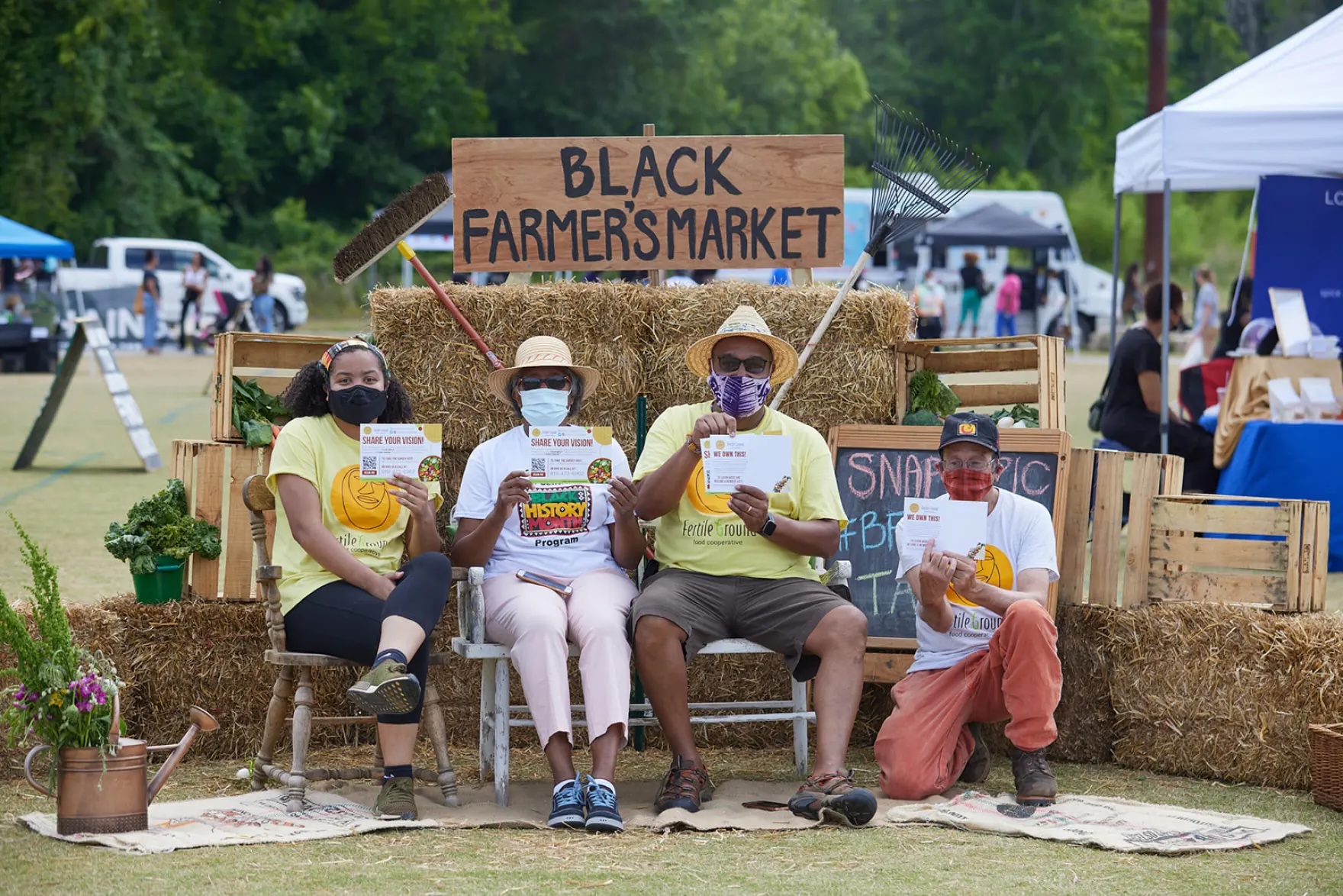
Gayle now sits on the board of the Fertile Ground Food Cooperative, an initiative to bring a Black-led, community-owned grocery store to southeast Raleigh. After over a decade of planning and fundraising, the co-op will break ground next month.
Expanding grocery access
Fertile Ground began in 2012 as a plan to develop a cooperative cafe. Ben Jones, the co-op's communications manager, said the concept evolved to give residents control of their own grocery store instead of relying on corporations that don't see value in southeast Raleigh.
Along with the store, Fertile Ground plans to create a community garden and offer gathering spaces for southeast Raleigh residents at its future space beside the JD Lewis Multipurpose Center on Garner Road.
The co-op now has more than 1,000 members that serve as partial owners and vote on the store's major decisions. Jones hopes to see that number double by the store's projected opening in 2027.
"There's just a history — especially in North Carolina, but in the U.S. — of African American communities joining together to overcome and help each other with what they're not receiving either from the government or through discrimination," he said. "They band together to support one another and bring about prosperity and all the necessities for everyone. This co-op is for everyone."
Sourcing from Black farmers
Erin Martin used to conduct outreach with Fertile Ground to educate locals about southeast Raleigh's food desert and the initiative to "pour our Black dollars back into our own community." She also manages Footprints in the Garden in Mount Olive, a farm that has been in her family for eight generations.
Footprints in the Garden sells produce to markets and donates to food hubs across the state. Martin says she makes an effort to provide Black residents with food they might not have access to otherwise. She finds the work crucial, especially as low-income residents across North Carolina and the country have lost access to SNAP and may struggle with localized food programs.
"Back in the day or a few years ago, I don't believe farming was a political thing. But it's becoming political, I would say," Martin said.
Along with her involvement with Fertile Ground, Gayle also works alongside Black farmers as the produce and procurement manager of The Produce Box. The organization delivers fresh produce to consumers and collaborates with churches, food banks, and local partners to aid underserved communities.
Gayle tries to source from Black-owned farms for The Produce Box as much as possible. Fertile Ground has similar plans — the cooperative is a longstanding partner of the Black Farmers Market, and once completed, the store will sell fresh food from Black farmers and regional sources.
'Build a little bit more economic resilience'
Fertile Ground has raised more than $5 million since its inception, but hopes to reach its goal of $11 million. Jones said the slower timeline is to prevent debt, which will help in both keeping the store afloat and bringing profitability to members sooner.
"We're still pretty set at this point in breaking ground," he said.
To celebrate progress and push for fundraising, Fertile Ground is hosting a Harvest Gala on Oct. 17 at the Greg Poole, Jr. All Faiths Chapel in Raleigh. The cooperative will highlight progress and feature keynote speaker Malik Yakini, a board member of the Detroit People’s Food Co-op.
Following the gala, the cooperative is hosting a groundbreaking ceremony on Oct. 24 at the JD Lewis Recreational Center. Jones said the store plans to be operational next year.
Gayle finds it especially important to support local food systems and initiatives like Fertile Ground, and she continues to educate Triangle residents about the food desert in their backyard.
"I think a lot of people are surprised, considering how much wealth seems to flow through Wake (County) and the Triangle area as a whole, but so few of the dollars actually stay in the community," she said. "We're just trying to change that and build a little bit more economic resilience for everyone."
