By Jordan Meadows
Staff Writer
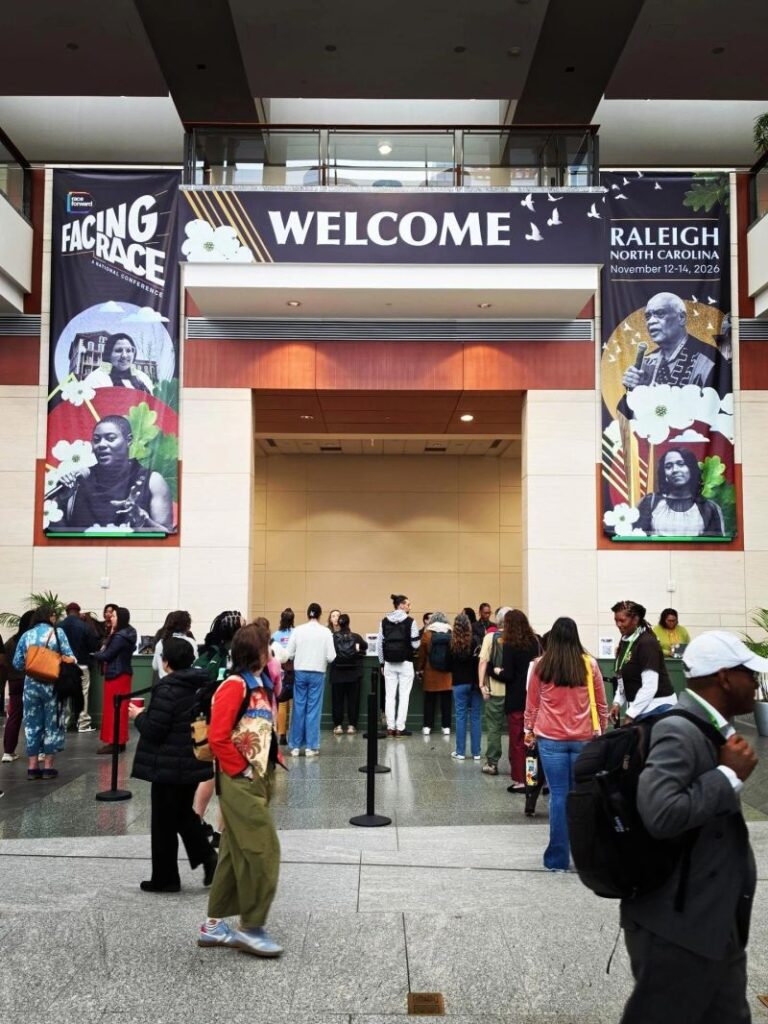
Raleigh became the gathering place for racial justice advocates, community organizers, educators, artists and scholars from across the country as Race Forward brought its Facing Race: A National Conference to the City of Oaks took place last Thursday to Saturday.
The three-day national gathering brought together people from different generations, racial backgrounds and professional fields around a common purpose: strengthening multiracial democracy, advancing racial equity and developing strategies to address systemic racism.
Facing Race is recognized as the nation's largest multiracial, intergenerational racial justice conference. Organized every two years by Race Forward, the gathering serves as a national meeting place for individuals and organizations working to address racial inequality and build stronger, more inclusive communities.
The conference is designed to turn shared concerns into collective action by providing participants with research, practical tools, policy discussions, leadership development, and opportunities to establish relationships across movements.
The conference's history reaches back to 2004, when the Applied Research Center hosted an early National Conference on Race and Public Policy. The gathering later adopted the Facing Race name in 2007, establishing an identity that reflected its broader commitment to connecting racial justice analysis with organizing and action. Over the years, the conference developed into a major national convening, bringing its programming to cities including New York, Baltimore, Dallas, Atlanta, Detroit and St. Louis.
The organization behind the gathering, Race Forward, has its own history of working to connect research, public policy and grassroots activism. The organization began in 1981 as the Applied Research Center, founded by Gary Delgado to bridge the divide between policy research and community-based organizing. In 2017, the Applied Research Center merged with the Center for Social Inclusion, an organization founded in 2002 by Maya Wiley and Jocelyn Sargent.
Today, Race Forward is a national racial justice nonprofit led by President Glenn Harris. Its initiatives include Color lines, a multimedia news outlet covering race and social justice, and the Government Alliance on Race and Equity, commonly known as GARE, a national network of more than 400 local, regional and state government jurisdictions working to incorporate racial equity into public policy and government practices.
The decision to bring Facing Race 2026 to Raleigh was especially significant because of North Carolina's central place in the history of the Civil Rights Movement and the broader struggle for racial equality in the United States. One of the most important connections is Shaw University, the historically Black university in Raleigh where the Student Nonviolent Coordinating Committee (SNCC) was established in April 1960. SNCC became one of the most influential grassroots organizations of the Civil Rights Movement.
Raleigh's significance also extends beyond the history of SNCC. North Carolina has a long tradition of Indigenous leadership, Black community organizing, labor activism, cultural resistance, and struggles for economic and political justice. Indigenous nations have stewarded the land for generations, while Black farmers, migrant workers, laborers, students, and community activists have fought for dignity, fair treatment and opportunities for their families and communities.
The conference's featured keynote speakers brought different perspectives to discussions about race, democracy, culture and institutional change.
Sociologist, author and New York Times columnist Dr. Tressie McMillan Cottom was among the featured speakers. Her work examines how institutions influence who is included, who is excluded, and who has the power to shape society.
Comedian, filmmaker, podcast host and author W. Kamau Bell also joined the keynote lineup. A four-time Emmy and Peabody Award winner, Bell is widely recognized for his CNN documentary series, United Shades of America, which explored race, identity and social issues across the country.
Another featured speaker was Vu Le, an award-winning writer, nonprofit leader, and former executive director of the Seattle-based organization RVC. Le is widely known for his blog, Nonprofit AF, where he examines the challenges, contradictions and possibilities within nonprofit organizations and philanthropy, particularly their relationships with communities of color.
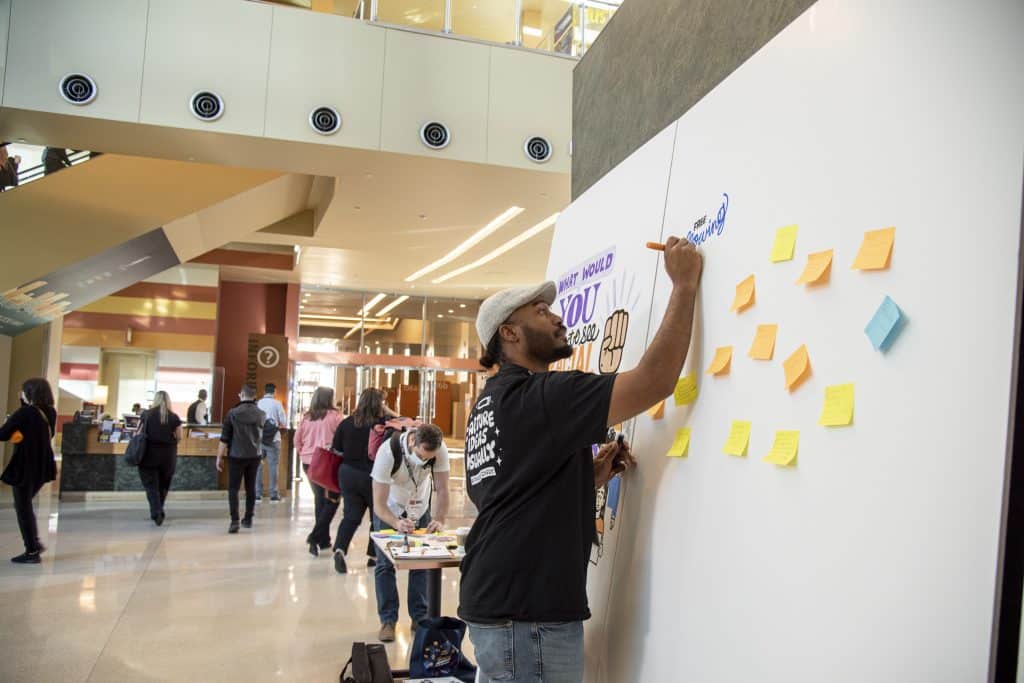
The conference offered an extensive program of workshops, breakout sessions, plenaries, cultural activities and opportunities for networking and collaboration. More than 70 breakout sessions covered subjects ranging from local racial equity commissions and public education to protecting voting rights and strengthening multiracial democracy. Participants explored practical approaches to strengthening grassroots movements, developing community partnerships, changing institutional policies, challenging harmful narratives and creating more meaningful relationships between government institutions and the communities they serve.
Opening day included pre-conference workshops, receptions, an opening ceremony, and a Raleigh bus tour known as the Bull & Oak Bus Tour. Pre-conference learning opportunities included an interactive workshop centered on liberation. The conference also featured a vendor marketplace highlighting businesses and organizations, while RaceFlicks, a film programming series presented in partnership with Working Films, used documentary storytelling to explore racial justice and community struggles.
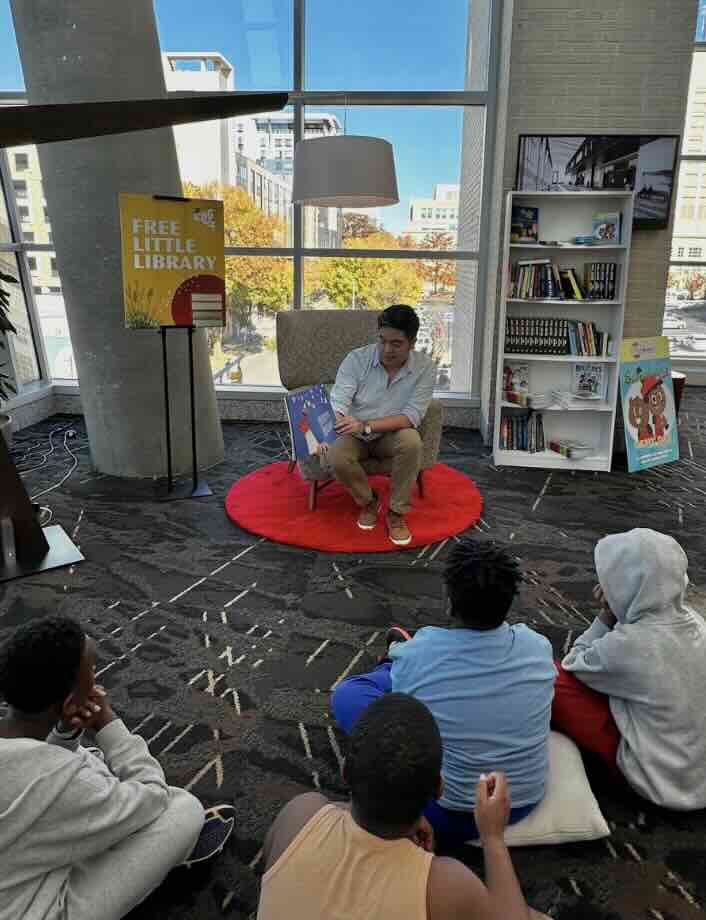
Racial Justice Reads provided opportunities to engage with authors and books addressing issues of race, identity, policy and social change, including discussions featuring Ralph Remington, Makani Themba and Dr. Karabi Acharya. On Friday evening, the conference shifted from its daytime discussions to a celebration of culture and community through Rooted & Rising, the Facing Race Party. The event featured a live performance by singer and songwriter KIRBY and music from DJ Boogie Lov.