
By Jordan Meadows
Staff Writer
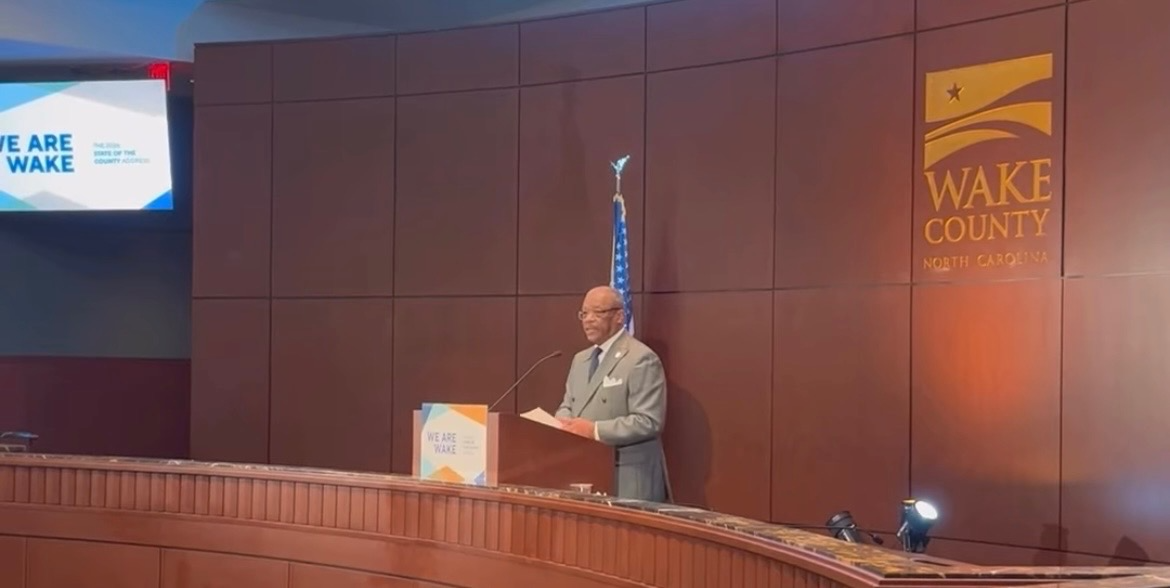
Wake County officials gathered Tuesday afternoon for the 2026 State of the County address, where Board of Commissioners Chair Don Mial highlighted the county’s growth and the work being done across the community over the past year.
The 2026 address, themed “We Are Wake,” brought county commissioners, mayors and other local government and community partners together for a presentation delivered by Mial, emphasizing the county’s rapid growth and the need for continued investment in schools, housing, health care, infrastructure and public services.
Born and raised in Wake County, Mial recalled growing up on a farm near Knightdale before his family moved to Walnut Terrace in Raleigh’s Fourth Ward. He described watching the county transform over more than six decades.
“My younger self could never have imagined the changes that I’ve seen in my 60-plus years here in Wake County,” Mial said. “I’ve seen where we’ve been and how we got here. And I’m grateful to be a part of where we are going.”
Mial pointed to continued corporate investment as one of Wake County’s major successes.
Since October, he said, the county has recorded 45 announcements involving new or expanding companies, representing more than $1.5 billion in investment. Among the region’s largest recent economic-development projects is Fujifilm’s biomanufacturing facility in Holly Springs. The project represents billions of dollars in investment and is expected to create thousands of jobs over time.
Mial said Wake County recently changed its business-development grant policy to make it possible to consider more projects, including those with lower barriers to entry and large-scale developments that could expand the county’s long-term tax base.

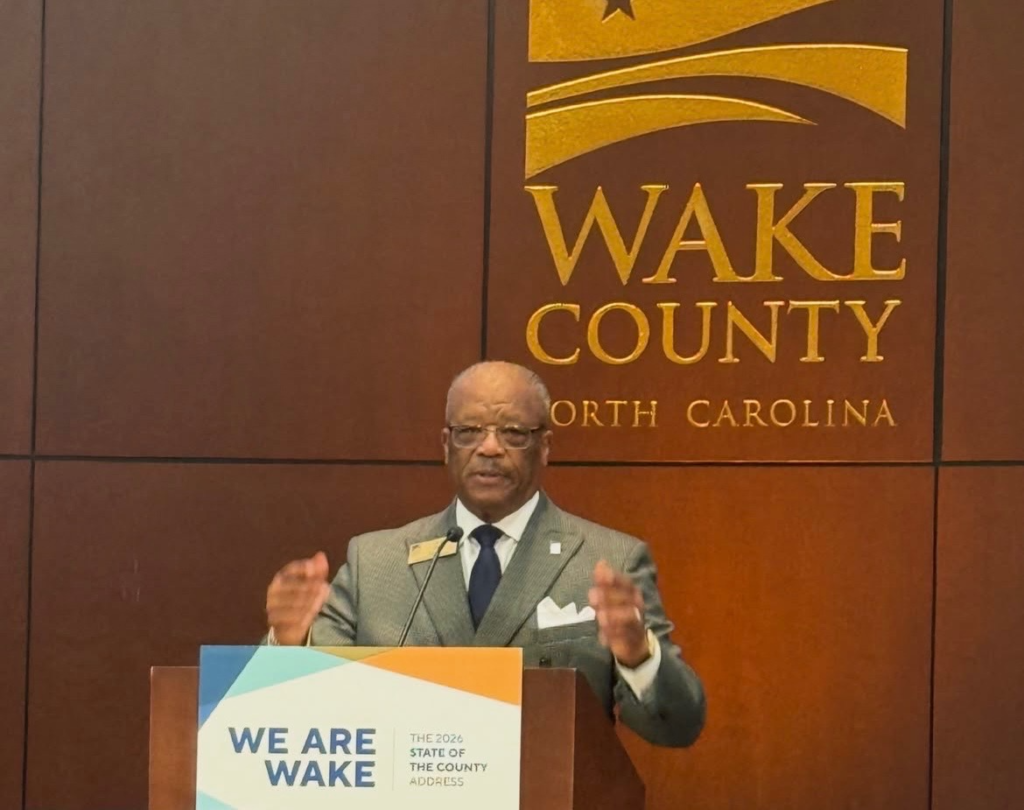
“But our biggest incentive is still our quality of life,” Mial said. “Companies consistently tell us that they want to be here, because this is a place to work, play, and stay.”
He also pointed to Wake County Public Schools as part of the region’s appeal to businesses and families. The district has reported its third consecutive year of academic proficiency gains, particularly in elementary and middle school mathematics, while its five-year graduation rate reached a historic 93.1%.
Wake County continues to add residents at a rapid pace, with Mial estimating that about 24,000 people are added to the county each year. The county surpassed 9,300 new home permits in a single year, reflecting continued construction throughout Wake, particularly in rapidly growing communities on the county’s eastern side.
That growth has also increased demand for affordable housing. Mial said Wake County has supported 2,840 affordable housing units since the beginning of 2024, surpassing its strategic-plan goal of 2,500 units by 2029. Planning officials are preparing the final two area plans for the county, including the Falls Lake area plan, as Wake attempts to balance new development with farmland preservation, transportation, and community needs.
While much of the address focused on accomplishments, Mial also devoted considerable time to the financial challenges facing the county.
He said Wake County is facing millions of dollars in additional costs and lost revenue tied to decisions made at the state level, including the county expecting to lose approximately $12 million this year because of what he called the “Blue Ridge loophole,” while other state policy changes could shift additional costs onto the county. He also cited approximately $12 million in potential SNAP-related costs, $3 million in additional jail expenses and another $9 million to renovate a facility for foster youth awaiting placement.
Mial criticized efforts by the General Assembly to limit local governments’ ability to increase property taxes, arguing that local governments need the authority to respond to the needs of their own communities.
“The General Assembly won’t fix the Blue Ridge loophole, but they will shift state costs back to the counties,” Mial said. “And now they’re trying to cap our ability to meet these unfunded mandates.”
He said the financial pressures could affect Wake County’s ability to maintain the quality-of-life residents have come to expect.
For the coming fiscal year, Wake County increased its operating contribution to Wake County Public Schools by $25.3 million, bringing the county’s total operating investment in the district to approximately $768 million, according to Mial.
North Carolina law assigns counties responsibility for school construction and facilities while the state is responsible for operating costs such as teacher salaries and supplies. Voters will also have an opportunity this fall to consider a $680 million school bond and a $149 million Wake Tech bond. The Wake Tech proposal would support renovations at the college’s Southern Wake Campus and workforce-development programs.
Wake County and public and private partners launched Wake at Home, an initiative designed to move people experiencing homelessness from encampments into stable housing while expanding the county’s ability to provide services. The first phase aims to connect 400 people living in encampments with housing and support services, help 1,000 people experiencing homelessness for the first time return to housing quickly and provide intensive assistance to people with complex behavioral-health needs.
“By investing in solutions that help house people quickly, we reduce the need for emergency intervention. Wake at Home is a moving initiative. It’s a commitment to solving homelessness with proven evidence and humanity," Commissioner Tara Waters said.
Mial said 33 people living in a local encampment recently accepted offers of housing and support after outreach workers spent eight weeks building relationships with them.
“What this is really about?” Mial said. “Helping neighbors who are down, pick themselves up, build the life they want, and deserve.”
The county is also marking the 50th anniversary of its Parks, Recreation and Open Space system.
“Wake County Parks, Recreation, and Open Space has come a long way in 50 years. Today, nearly every corner of the county has a park, Greenway, or nature preserve nearby, with two more in the works right now," Vice Chair Commissioner Safiyah Jackson said.
The county has also adopted a 50-year One Water Plan, bringing drinking water, stormwater, wastewater and groundwater planning into one long-term framework. The plan is intended to prepare for population growth, increased water demand, flooding and drought.
“It says water doesn’t stop at city limits, and neither should our planning. This framework helps us better prepare for population growth, changing land use, and more powerful together," Commissioner Seneca said.
Mial also revisited the county board’s decision to endorse the strategic combination between WakeMed and Atrium Health. The decision followed months of public meetings, calls, emails, and negotiations.
“Deciding to endorse the WakeMed and Atrium Health strategic combination was one of the most intense and focused decisions,” Mial said, describing the process as involving “many meetings, calls, emails, and many sleepless nights. At the end of the day, we all agree that WakeMed provides vital health care to our community. And its future must be protected,” he said. “The time for us to prepare for increased demand for healthcare is now.”
The address also highlighted Wake County’s new public health facility in East Raleigh, which opened in February. The four-story building contains nearly 90 exam rooms and 20 dental treatment rooms and is equipped with nearly 1,300 solar panels.
Wake County is also working to preserve farmland. Since the beginning of 2024, Mial said, the county has permanently protected 407 acres across seven farms, with additional conservation projects in the works.
Mial closed the address by returning to its central theme.
“Because I am you. You are we, and we are Wake County,” Mial said.
The event concluded with a performance by the 100 Men in Black Chorus, an all-male chorus founded in Durham whose members come from across the Triangle.
