
By Jordan Meadows
Staff Writer
The end of Reconstruction is usually remembered as a single political event: the Compromise of 1877, an informal agreement that resolved the disputed presidential election between Republican Rutherford B. Hayes and Democrat Samuel J. Tilden, who won the popular vote but fell one electoral vote short. Contested electoral returns forced the resulting compromise to help secure Hayes’s inauguration in exchange for concessions that included the withdrawal of the remaining federal troops protecting Republican governments in Louisiana and South Carolina.
But the idea that Reconstruction suddenly ended with a presidential deal misses the larger story.
Across the South, elections, legislative maneuvering, economic turmoil, organized intimidation, and declining Northern commitment to federal intervention had steadily weakened the post-Civil War political order for years.
In North Carolina, the retreat had begun in earnest in 1870, while the national political reversal accelerated with the Democratic landslide in the 1874 midterm elections. The Compromise of 1877 was less the beginning of Reconstruction’s collapse than the final confirmation.
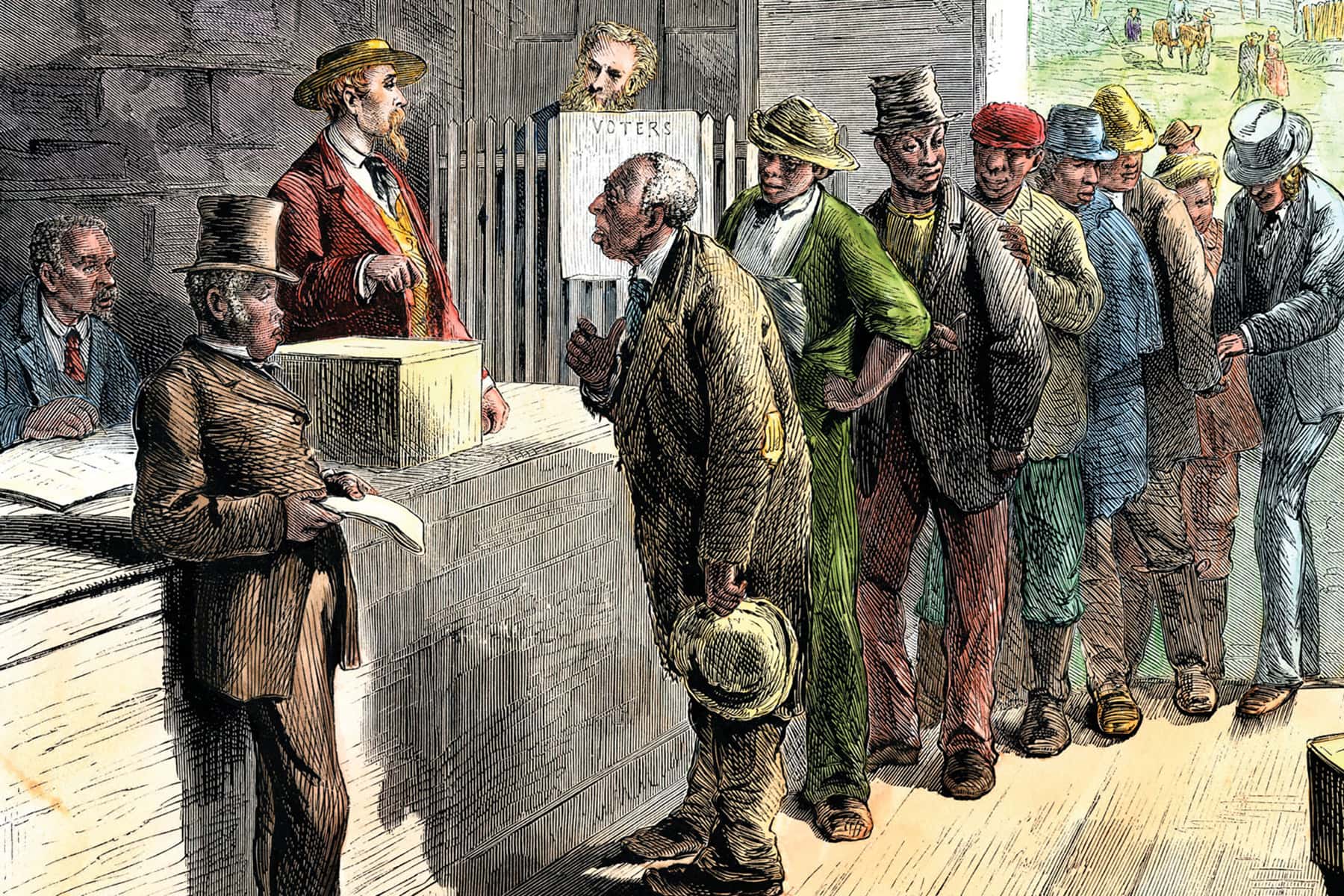
 In North Carolina, Black men voted in substantial numbers beginning in 1867 and helped elect delegates to a constitutional convention that produced the state’s 1868 constitution. The new political order expanded male suffrage, established a statewide public education system, and opened political offices to Black citizens who had previously been excluded from government.
One of the clearest turning points came in 1870. The Ku Klux Klan had launched a campaign of violence against Black political organizers and Republican officials, including the murder of Wyatt Outlaw, a Black town commissioner and Union League organizer in Alamance County. Republican state senator John W. Stephens was also murdered that year in the Caswell County courthouse.
In response, Republican Governor William W. Holden invoked state authority to suppress the Klan. Conservative Democrats portrayed Holden’s actions as an abuse of executive power and used public anger over the militia campaign to rally support ahead of the August 1870 elections. The Conservatives won the legislature, giving them the power to turn their opposition to Holden into official state policy. In March 1871, the Democratic-controlled Senate convicted Holden in an impeachment trial and removed him from office.
Holden’s removal mattered because it weakened the state government’s willingness and capacity to confront organized political violence, while demonstrating that the legislature could be used to reverse the policies of its predecessors. Conservative lawmakers subsequently repealed important anti-Klan measures and enacted protections that helped shield former Confederates and suspected Klansmen from prosecution.
Reconstruction in North Carolina did not end immediately in 1871, and Republicans continued to hold offices and win elections in parts of the state. Nevertheless, the defeat of Holden marked a decisive setback: it moved beyond the question of who could win votes to the question of who controlled the institutions responsible for enforcing laws.
In 1873 and again in 1875, constitutional changes helped concentrate power in Raleigh by allowing the legislature to exert greater control over county governments. These changes reduced the ability of local communities to choose their own officials and made it easier for the Conservative majority to influence local administration, including in areas where Black voters had considerable political strength. This was particularly consequential in eastern North Carolina, where Black voters formed a substantial share of the electorate and continued to elect Republican officials.
Black political participation did not disappear, and figures such as John A. Hyman continued to represent North Carolina in Congress. But the growing power of the state legislature meant that winning at the local level did not necessarily guarantee control over local institutions.
The national turning point came in the 1874 midterm elections. President Ulysses S. Grant had won reelection in a landslide in 1872, and Republicans entered the next election cycle with a commanding majority in the House. But the Panic of 1873 triggered a severe economic depression, bringing business failures, unemployment, and financial hardship.
Democrats capitalized on public dissatisfaction and gained 94 House seats, one of the largest flips in U.S. midterm history. More importantly, it changed the political environment in which Reconstruction had to survive.
That shift in congressional power is essential to understanding why Reconstruction was so vulnerable by 1877.
North Carolina’s 1876 gubernatorial election completed another important stage of the transition. Former Confederate officer and Democratic leader Zebulon B. Vance defeated Republican incumbent Curtis H. Brogden, restoring Democratic control of the governorship. With Democrats controlling the governorship and legislature, the state’s political transformation was substantially complete before the Compromise of 1877 settled the national presidential dispute.
By 1877, North Carolina did not need the removal of troops from its statehouse to begin returning to Democratic rule. That process had already advanced through the ballot box, the impeachment of a governor, changes to the state constitution, and the consolidation of legislative authority.
The end of Reconstruction enabled Southern Democratic governments to pursue policies that systematically weakened Black political participation and dismantled many of the period’s gains. Over subsequent decades, poll taxes, literacy tests, discriminatory election rules and other restrictions helped suppress Black voting, while segregation and racial exclusion became entrenched across the region.
That history offers a useful perspective as Americans approach the 2026 midterm elections, although the comparison should not be mistaken for an assertion that today's political circumstances are identical to those of the 1870s. Midterm elections can determine who controls the House of Representatives, the Senate and state legislatures, and those majorities influence government spending, oversight, legislation, public policy and the rules under which future elections take place. A president may enter office with a substantial agenda, but the midterms can strengthen that agenda, constrain it, or redirect it.
The real story of Reconstruction’s end is that 1877 was a conclusion, not a beginning. The Compromise of 1877 settled the presidential crisis at the expense of the remaining Reconstruction governments.
As the 2026 midterms approach, that history reminds us that elections determine who holds the levers of government, how those levers can be used, and which political priorities will endure once the votes are counted.
