
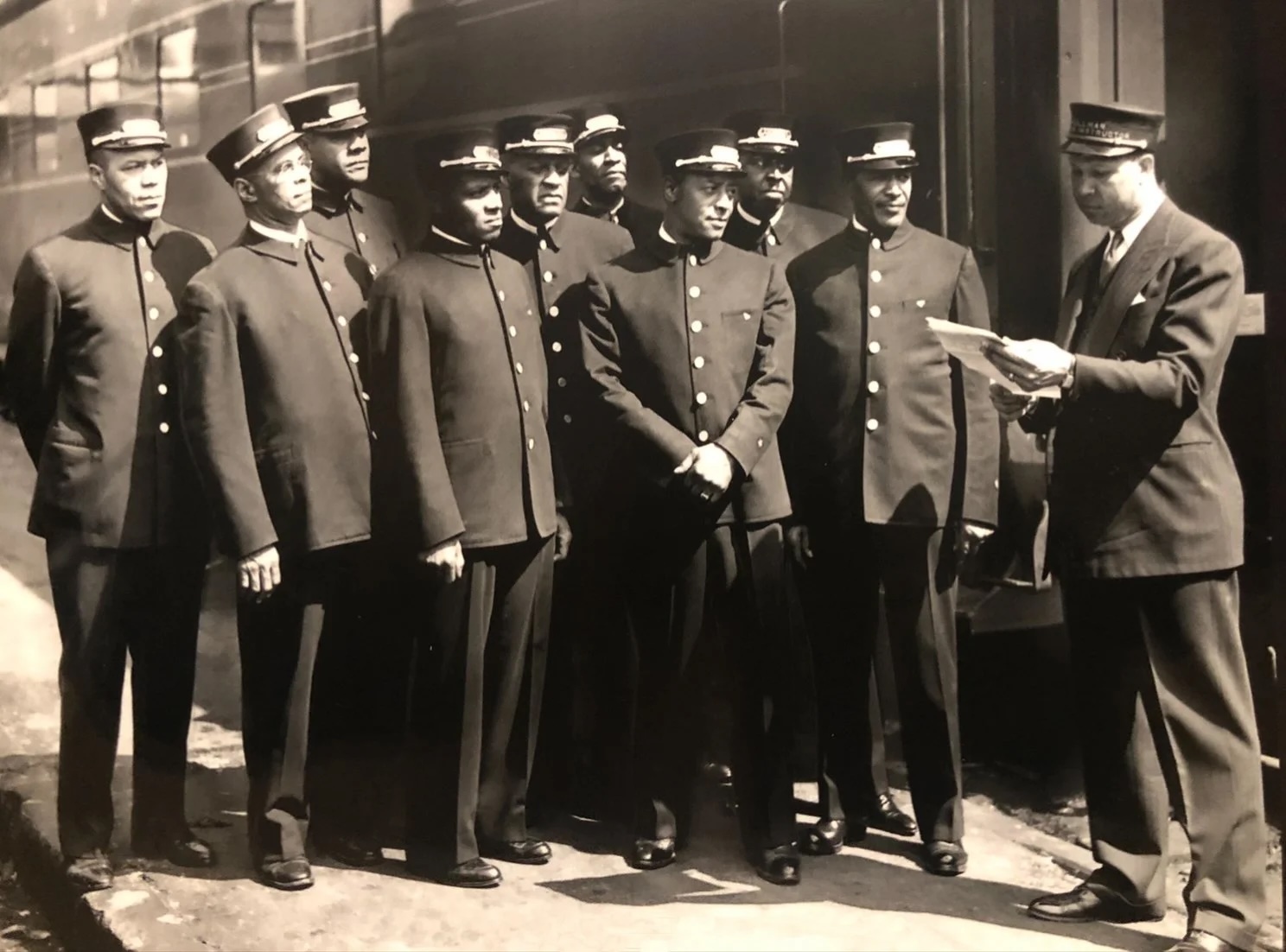
By: Jordan Meadows
Staff Writer
American engineer George Pullman began hiring formerly enslaved Black men as porters on his company's luxury sleeping cars shortly after the Civil War. Pullman founded the Pullman Palace Car Company to capitalize on the country's expanding rail network, introducing "Palace Cars"—dubbed "hotels on wheels"—outfitted with beds, chandeliers and high-end dining that let passengers socialize in lounge cars, eat in dining cars and rest comfortably in sleeping berths.
The first Pullman porters began working the trains around 1867, and Pullman was open about why he specifically recruited formerly enslaved men for the job: he believed they would be, in his words, “fully acclimated to servitude, eager to please and unlikely to protest low wages or long hours”.
The arrangement became so identified with Pullman personally that a phrase circulated at the time: "Abe Lincoln freed the slaves, and George Pullman hired 'em."
Pullman wanted white passengers to regard porters as part of the train's furnishings rather than as people, and porters were expected to perform an extensive range of duties—carrying baggage, shining shoes, making up berths, serving food and drink, providing security, and in some cases singing or dancing for customers. Passengers routinely called every Black porter "George," regardless of his actual name, a direct continuation of the plantation-era practice of referring to enslaved people by their enslaver's name; other passengers used the term "boy."
Struggling to maintain profitability during an 1894 downturn in manufacturing demand, Pullman halved wages, but did not lower prices of rents and goods in his company town. He gained presidential support from Grover Cleveland for the use of federal military troops, which left 30 strikers dead in the violent suppression of workers there to end the Pullman Strike of 1894. To appease voters and mend ties with the labor movement during an election year, Congress rushed through a bill to make Labor Day a legal national holiday.
Later, in the 1920s, a group of wealthy white men who all happened to be named George formed a tongue-in-cheek organization called the Society for the Prevention of Calling Sleeping Car Porters George, begun largely because its members didn't want their own names associated with servile labor. The group's roughly 31,000 members ultimately pressured the Pullman Company into installing nameplates in the cars so passengers could address porters by their real names.
Porters were required to work at least 400 hours or 11,000 miles a month, whichever came first, to receive their full monthly pay, which sometimes meant shifts as long as 20 hours with only a few hours of rest in between. They were paid less than nearly any other position at the company and depended heavily on tips to make a living wage. Porters also had to cover their own meals, perform unpaid preparation and cleanup work, and purchase their own uniforms, all while enduring persistent racism from passengers and colleagues alike.
Despite the conditions, the job became highly coveted within Black communities because it offered rare access to steady cash income, and by the 1920s, the Pullman Company employed 20,224 African Americans as porters and train personnel, making it the largest single category of Black labor in the United States and Canada at the time. That steady income gave porters something few Black workers in the Jim Crow South had: geographic mobility, and they used it to help ignite the Great Migration. Because porters traveled continuously between the Jim Crow South and booming Northern industrial cities such as Chicago, New York and Detroit, they effectively became a moving communications network for Black America.
Porters formed a working alliance from 1914 to 1939 with five major Black newspapers, smuggling bundles of those papers into the Deep South, where they carried news of manufacturing jobs, better schools, and life beyond state-sanctioned terror that helped drive millions of Black Southerners north. Porters also used their earnings to buy property in Northern cities, creating safe landing places and offering temporary housing and financial help to relatives and neighbors fleeing the South.
Despite the scale of their workforce, Pullman porters were largely absent from the 1894 Pullman Strike. The American Railway Union, led by Eugene V. Debs, backed the strike with a national boycott, but the union historically excluded or failed to welcome Black workers into its ranks.
It would take more than three decades for porters to organize on their own terms.
In August 1925, A. Philip Randolph was elected president of the newly formed Brotherhood of Sleeping Car Porters, the first all-Black labor union in the United States; the union also included Pullman's female maids, who worked alongside porters and were additionally required to look after white children traveling on the trains. The union initially faced resistance not only from the Pullman Company but from porters themselves, who feared losing their jobs, and from some members of the Black community who viewed George Pullman as providing rare employment to formerly enslaved people.
The Brotherhood became the first Black labor organization admitted to the American Federation of Labor in 1935. After 12 years of resistance, the Pullman Company finally signed a labor agreement with the Brotherhood in April 1937, raising wages and capping working hours at 240 a month—a landmark contract that made the Brotherhood the first African American union to reach a collective bargaining agreement with a major U.S. corporation.
Former Pullman porter E.D. Nixon went on to organize the Montgomery Bus Boycott, carrying the Brotherhood's decades of institutional experience directly into the next chapter of the fight for civil rights.
