
By Jordan Meadows
Staff Writer
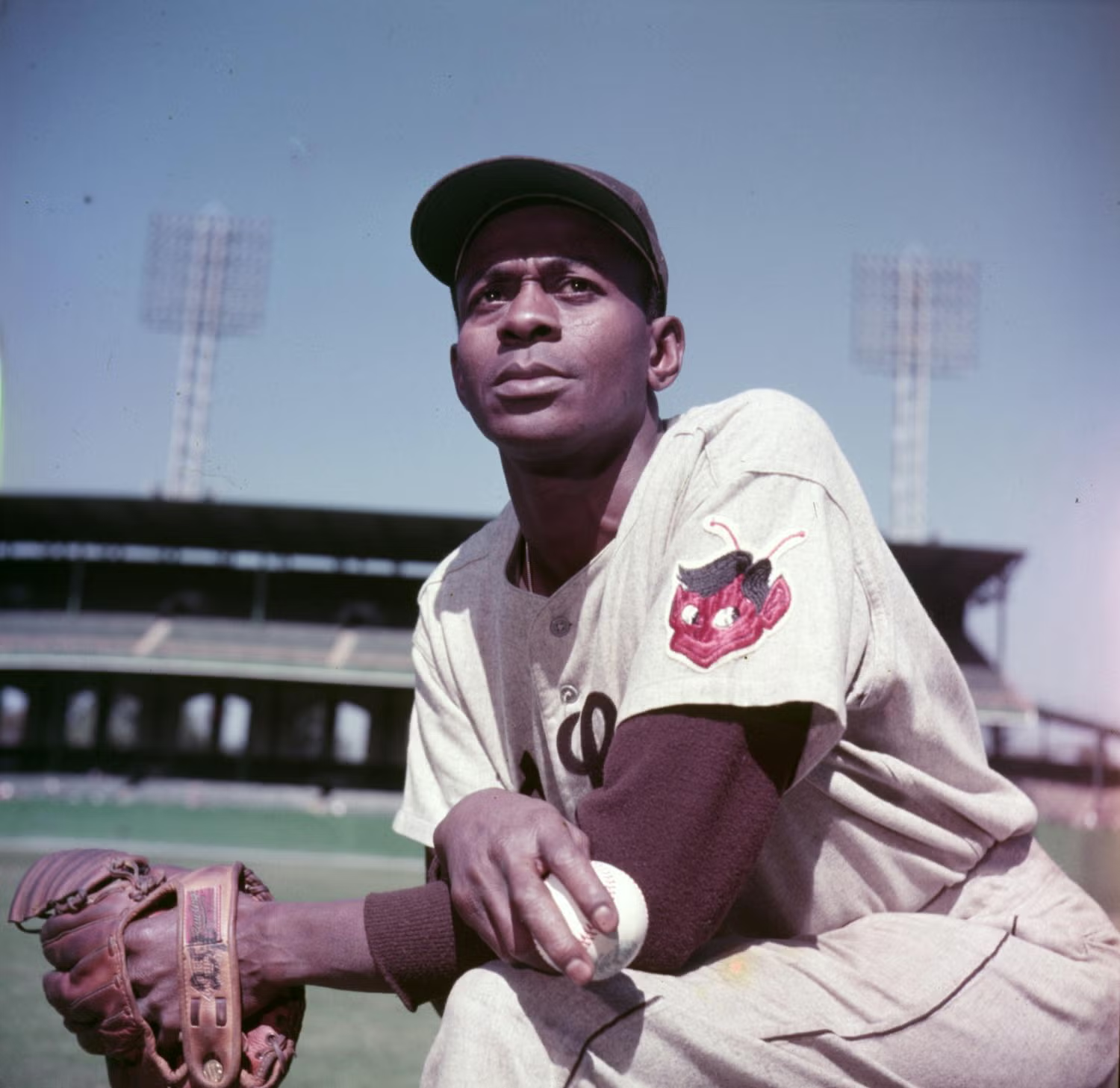
Born Leroy Paige on July 7, 1906, in Mobile, baseball legend Satchel Paige rose from difficult beginnings to become one of the most iconic figures in the sport’s history. His family altered the spelling of their last name to distance themselves from his father, and he earned the nickname “Satchel” as a child while working as a porter at a train station, where he devised a way to carry multiple bags at once. After a troubled youth that included time at a reform school, Paige discovered baseball—a turning point that would shape the rest of his life.
Paige turned professional in the late 1920s, launching a long and unconventional career in the Negro Leagues. For more than two decades, he pitched for teams across the United States and internationally, becoming known for his blazing fastball, pinpoint control, and unmistakable showmanship. His personality matched his talent; Paige often entertained crowds by calling his outfielders in before striking out opposing batters. His tenure with the Kansas City Monarchs in the late 1930s and early 1940s solidified his reputation, as he led the team to multiple league pennants and starred alongside players like Josh Gibson.
Despite his dominance, Paige’s prime unfolded during an era of racial segregation that barred Black players from Major League Baseball. By the time integration began, he was already in his 40s. In 1948, owner Bill Veeck signed him to the Cleveland Guardians, making Paige one of the oldest rookies in league history. He quickly proved he still belonged, finishing the season with a 6–1 record and helping Cleveland capture a World Series title. He later earned All-Star selections in 1952 and 1953, further underscoring his enduring skill.
Over the course of his career, Paige overcame arm injuries and adapted his pitching style as he aged, relying more on control and strategy while remaining highly effective. His longevity and charisma made him a cultural icon, and his name became widely recognized across the country, even among those who had never seen him pitch.
On September 25, 1965, Paige added a remarkable final chapter to his career. Taking the mound for the Kansas City Athletics against the Boston Red Sox, the 59-year-old delivered three scoreless innings, allowing just one hit. The appearance made him the oldest player ever to appear in a Major League Baseball game. Before the game, he famously sat in a rocking chair in the bullpen while a nurse tended to his arm, but once play began, he commanded the field with the same poise and precision that had defined his career.
In 1971, Paige became the first player inducted into the National Baseball Hall of Fame specifically for his Negro Leagues accomplishments. He died in 1982, leaving behind a legacy as one of baseball’s greatest pitchers. While many details of his career—such as his total number of wins—remain uncertain, his impact on the game and his place in its history are beyond dispute.
