
By Andrew Jones
KFF
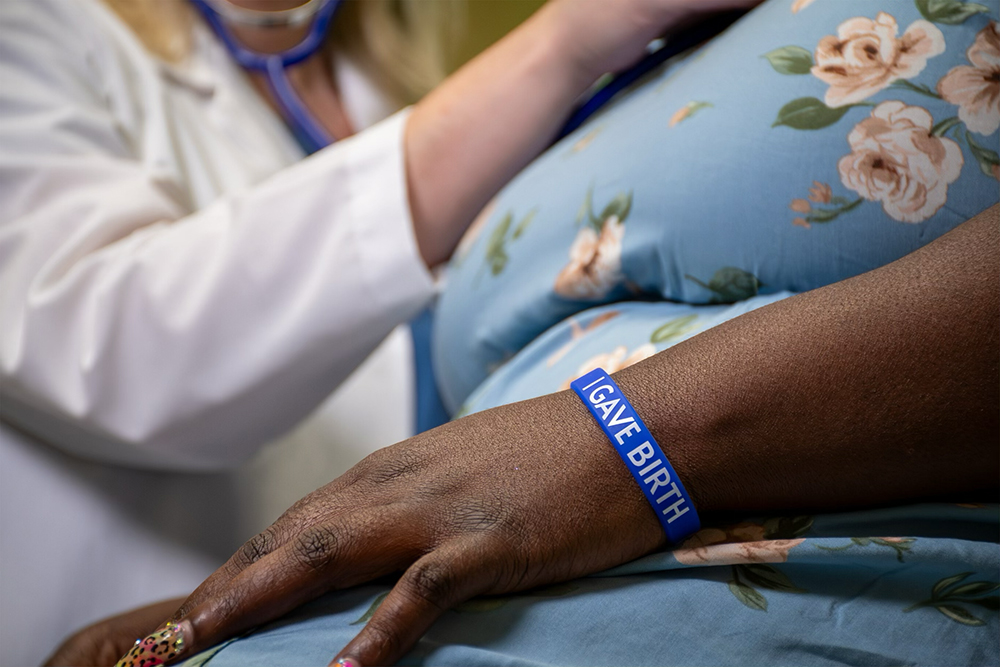
Hospitals across the U.S. are trying to reduce maternal deaths and complications after pregnancies using one small tool: a silicone wristband stamped with the declaration “I Gave Birth.”
The wristbands are part of a growing initiative first launched by North Carolina-based ECU Health as Congress sought to address the nation’s growing maternal mortality crisis during the covid pandemic. Since 2021, nearly 50 North Carolina hospitals and the state’s health department have begun distributing the wristbands, to give mothers and care providers a visual reminder of the life-threatening health risks after birth.
The Connecticut state health department; large health systems in Arkansas, Georgia, and Mississippi; and hospitals in at least 24 other states have also embraced the program. The wristbands are intended to make emergency workers aware of postpartum risks, ensure better treatment, and help lower maternal mortality rates in the U.S., where nearly 70% of pregnancy-related deaths happen after the day of delivery — and nearly 40% happen after the six-week mark.
This year, North Carolina plans to expand the initiative with part of the $213 million it received through the Rural Health Transformation Program, a provision of President Donald Trump’s signature One Big Beautiful Bill Act, also known as HR 1.
Tamika Auguste, a physician and the board chair at the American College of Obstetricians & Gynecologists Foundation, praised the wristbands as a useful tool “to increase awareness and education around postpartum health.” But she and others who focus on maternal health said efforts like the wristband campaigns are only part of what’s needed to combat the broader maternal mortality crisis in the U.S.
And they noted the wristbands’ popularity is emerging as Trump’s 2025 law is expected to reduce Medicaid spending by more than $900 billion over 10 years, according to a Congressional Budget Office analysis. Medicaid, the federal-state program that covers healthcare for low-income families, pays for at least 40% of births nationwide.
Elisabeth Wright Burak, a policy researcher at Georgetown University’s Center for Children and Families, said Trump’s tax-and-spending law is stifling the momentum states had been gaining with maternal care since 2022. That’s when Congress allowed states to extend postpartum Medicaid coverage from 60 days to a year, which nearly every state did.
Now, those extensions could end up on the chopping block, Burak said, as states seek ways to manage Medicaid losses.
“There is no question that HR 1 risks setting the clock back for maternal health,” Burak said.
A report she co-authored in July warned that postpartum patients have more to worry about with the new law than simply cuts to Medicaid. States are also setting up systems that may not adequately track pregnant and postpartum enrollees who should be exempt from the law’s new work requirements, erroneously dropping them from coverage, Burak’s report said.
U.S. maternal mortality rates have risen and fallen over the past seven years, with 649 maternal deaths in 2024, according to the most recent Centers for Disease Control and Prevention data. Tennessee had the worst maternal mortality rate in the nation from 2020 to 2024, around 42 deaths per 100,000 births, according an analysis of CDC data by the Congressional Research Service. North Carolina’s rate was about 29 in 100,000, with a national average of 23.
In its Rural Health Transformation Program application, North Carolina said the initiative creating the “I Gave Birth” wristbands reduced postpartum readmissions by nearly a third at ECU Health Medical Center in Greenville, without elaborating. In online promotions, some hospitals have claimed the wristband campaigns can save lives, though many have recently launched and their impact has yet to be studied.
“Additional research is needed to conclusively confirm the outcomes of such initiatives,” said Hannah Jones, a spokesperson for the North Carolina health department.
Hospitals provide a wristband to patients who have given birth and instruct them to wear it for weeks or months, hoping they’ll be reminded to check in with a physician if they feel chest pain, have headaches, or start bleeding. The accessory resembles the yellow Livestrong wristband, part of a cancer awareness campaign launched by cyclist Lance Armstrong’s foundation. A nurse also talks through postpartum risks with the patients, and they’re sent home with pamphlets and guidebooks on how to care for their new child and themselves.
“The bracelet itself is simply a reminder of, ‘Hey, I got education,’” said Jessica Noble, a nurse with East Carolina University-connected ECU Health who pioneered the initiative.
It’s also intended to alert first responders and other healthcare providers that a woman has recently given birth and to check for postpartum complications, such as low blood pressure, bleeding, or infections. Emergency department staff and EMS workers sometimes don’t have adequate training to recognize postpartum complications, research shows, which can be dangerous when those patients end up in an emergency room.
