
By Judaea Ingram
Special To The Carolinian
For many college football players, the NFL Draft represents the culmination of years of work, sacrifice, and expectation. But for athletes from Historically Black Colleges and Universities (HBCUs), the path to that moment often looks different, less guaranteed, more uncertain, and heavily dependent on visibility rather than talent alone.
Even as the 2026 NFL Draft unfolded, HBCU athletes remained part of a broader conversation about opportunity in professional football. While no players were selected directly from HBCU programs this year, the presence of HBCU-connected talent was still felt through athletes who began their careers at HBCUs before transferring to larger programs and ultimately reaching the draft stage.
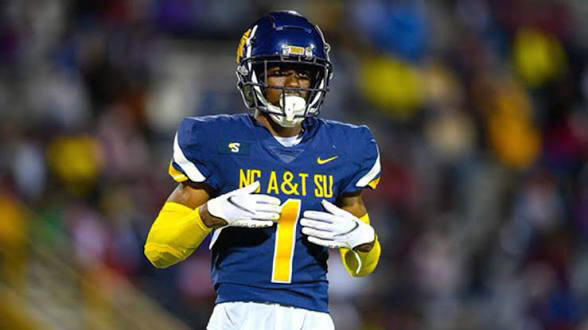
Former North Carolina A&T standout Karon Prunty was selected by the New England Patriots after continuing his development at the FBS level. Former Jackson State wide receiver Kevin Coleman was also drafted by the Miami Dolphins, and former Arkansas-Pine Bluff defensive back Andre Fuller heard his name called by the Seattle Seahawks. Each player carried a connection to the HBCU landscape, reflecting a growing pattern where exposure at higher-profile programs becomes part of the pathway to draft recognition.
Programs like North Carolina Central University and Shaw University continue to develop talent that competes at a high level, even if national attention does not always reflect it. Coaches and supporters argue that the issue is not a lack of skill, but a lack of consistent visibility compared to larger Power Five programs.
To address that gap, initiatives such as HBCU showcases and NFL scouting events have created additional opportunities for athletes to be evaluated. These platforms allow players to perform in front of scouts who might not otherwise attend HBCU games during the regular season.
Still, challenges remain. Many HBCU athletes must consistently outperform expectations to receive the same level of attention as their counterparts at larger programs. The pipeline to the NFL exists, but it is narrower and often requires additional steps, including transfers or standout performances in limited exposure settings.
Only a small group of roughly half a dozen true HBCU program players entered the 2026 NFL Draft cycle with draftable expectations, underscoring the limited visibility and narrow pipeline from HBCU football to the professional level.
For players, that reality shapes their mindset. The goal is no longer just getting drafted, but staying ready for any opportunity, at any time, and in any environment where their talent can be seen.
Whether selected directly or developed through multiple program paths, HBCU-connected athletes continue to represent a legacy of resilience and excellence that stretches far beyond draft weekend.
