By Jheri Hardaway
Staff Writer
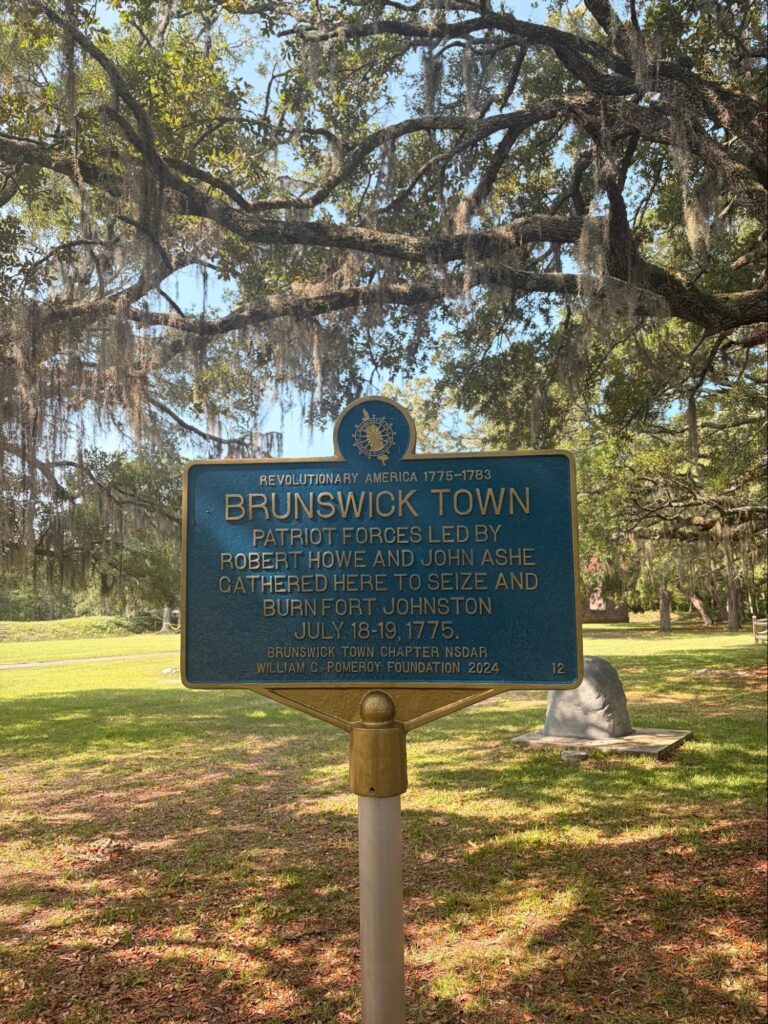
Winnabow, NC - Amidst the heavy, sun-drenched air of the lower Cape Fear, history and art converged at the Brunswick Town Fort Anderson State Historic Site on Thursday, July 16. Dozens of community members, historians, and state officials gathered for the historic unveiling of the "Africa to Carolina" public art installation. Commissioned by the North Carolina African American Heritage Commission (NCAAHC) and funded through the Z. Smith Reynolds Foundation’s Inclusive Public Art initiative. The monument stands as the only public art piece in the region dedicated exclusively to commemorating the disembarkation point of enslaved Africans in North Carolina.
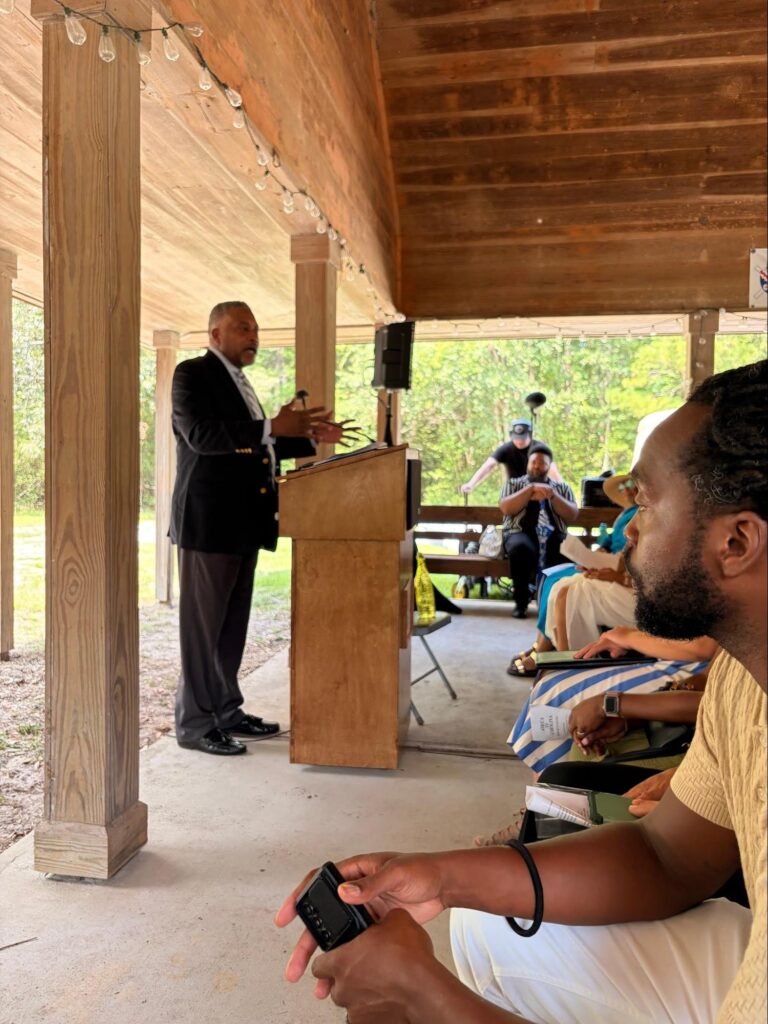
The outdoor ceremony, opened by NCAAHC Associate Director Natalie Rodriguez, empowered an overwhelming sense of ancestral reverence, grief, and cultural resilience. "We are gathered here now, not just to unveil a work of art," Rodriguez noted to the crowd, "but to honor stories, passion, and the people behind it."
The program formally commenced with a deeply moving libation ritual led by historian, performance artist, and seventh-generation Brunswick County descendant Tianne Parker West. Standing near the historic waters of Port Brunswick, Parker West offered prayers to the stolen souls who built the literal infrastructure of the county and state.
"Right now, I want to give honor to those who were stolen and enslaved here on this very sacred soil," Parker West prayed. "Those who were forcibly stripped away from their families... may we never forget those who suffered tremendously and still were able to survive and even thrive."
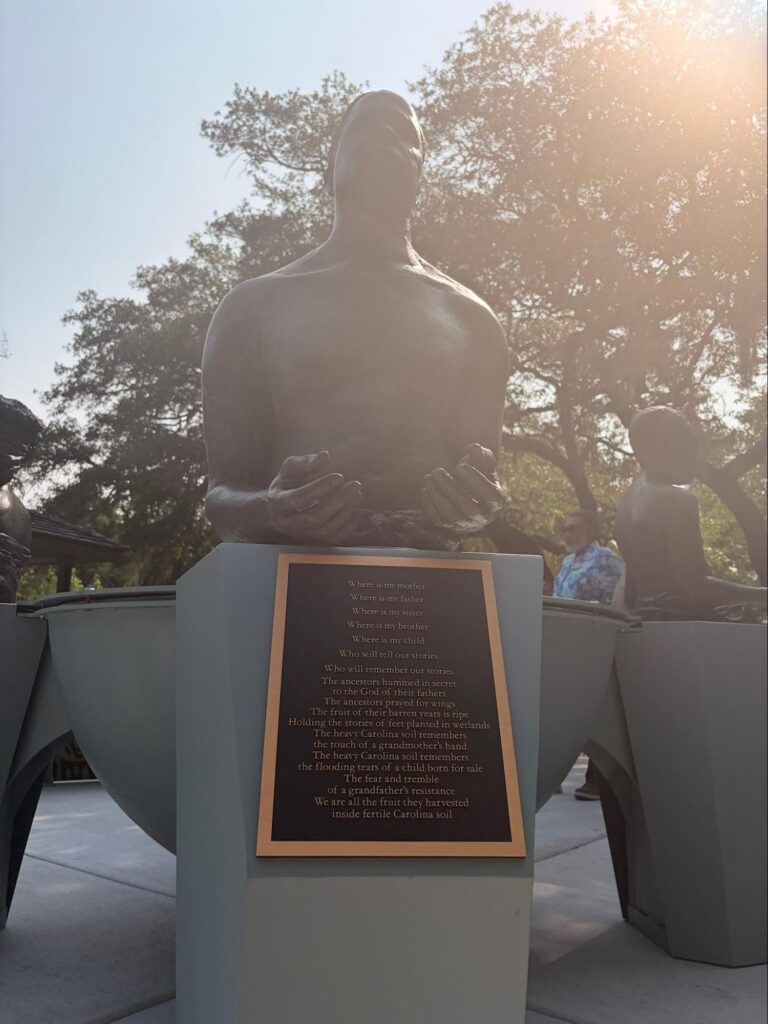
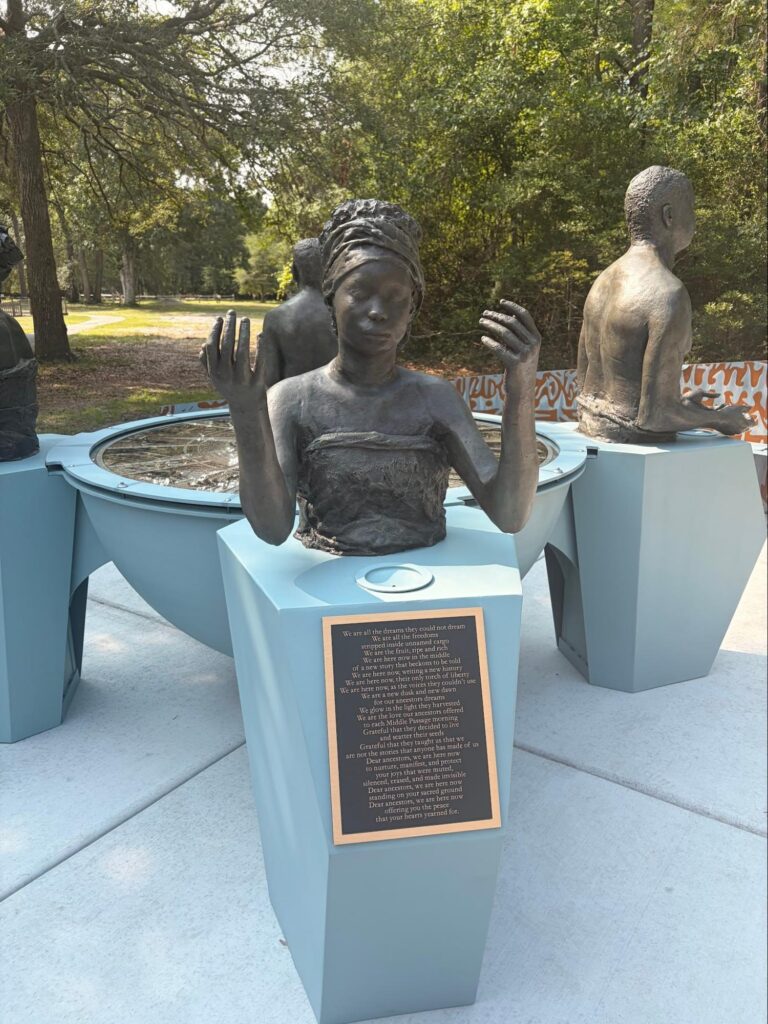
Following the libation, North Carolina Poet Laureate Jaki Shelton Green took the podium to debut a transformative, lyrically rich poem woven directly from community listening sessions. Reciting the piece publicly for the first time, Green captured the raw geographical memory embedded in the coastal landscape. "The ocean is a storyteller, carrying the whispers of ancestors," Green structuralized, evoking the imagery of the Middle Passage, the labor of Carolina Gold rice cultivation, and the prayers of Islamic scholar Omar Ibn Said. "We are all the fruit they harvested inside fertile Carolina soil... We are here now, writing a new history. We are a new dust, a new dawn for our ancestors."
The physical monument is the collaborative masterwork of a renowned Durham-based public art team: multimedia sculptor Stephen Hayes, an assistant professor at Duke University, and placemaker David Wilson, a celebrated public artist and mentee of John Biggers.
Wilson detailed the profound creative journey, which began while Hayes was completing an art residency across the Atlantic in Senegal. Operating on a foundational bedrock of mutual trust, the duo navigated communication barriers to forge an authentic, community-centric design. They engaged directly with historians, local scholars, and descendants to ensure the final product resonated with the public.
"Stephen has a remarkable ability to transform history into something deeply human," Wilson explained. He credited the meticulous engineering of Cricket Forge, which fabricated the towering steel sculpture, and Vetro Glass, which molded the central glass hemisphere representing reflection, resilience, and hope. "The strength of steel and the transparency of glass reminds us that history can be enduring and illuminating. Public art belongs to everyone... it simply waits for you to come and engage with it."
Hayes stepped up briefly to echo that sentiment, expressing profound gratitude to the community for trusting them to guard a legacy facing ongoing threats of historical erasure. "This Africa to Carolina project does not stop here," Hayes asserted. "It becomes here with us, and it’s going to continue telling the story."
In one of the event's most emotionally arresting segments, Michelle Lanier, Director of the North Carolina Division of State Historic Sites and founding Executive Director of the NCAAHC, took the stage. Lanier drew attention to a stylized headwrap, or gele, featured within the monument, calling it a traditional Yoruba symbol of adornment acting as "a refusal to be claimed as property." In an extraordinary moment of institutional continuity, Lanier stood alongside her successors, second director Angela Thorpe Mason and current director Adrienne Nirdé, marking a rare convergence of all three NCAAHC leaders since the 2023 opening of North Carolina Freedom Park which sits between the North Carolina General Assembly and our State Library.
To anchor the monument in primary source reality, Lanier read aloud a transcribed list of historical names uncovered by historic site manager Jim McKee. These were real human beings documented in old port records who endured bondage on those exact grounds: Samson, Clarindo, Hannah, Santee Peter, Elisee, Thomas Peters, Hugh Sparrow, Bristol, London, Will Peter, and an enslaved woman known simply as Grace.
Current NCAAHC Director Adrienne Nirdé delivered a candid address regarding the modern socio-political hurdles facing Black historical preservation.
"As you can imagine, it has been a difficult season to continue moving forward the work of the African American Heritage Commission," Nirdé stated frankly. "Our history and our work is in jeopardy. Our funding and our staffing are being eliminated... Our morals and judgment as historians have also come under question."
Despite these systemic pressures, Nirdé praised her staff and local allies like McKee for forging ahead. She dismantled the long-held historical misconception that North Carolina was not a direct site of transatlantic disembarkation, citing records of at least a dozen voyages arriving straight from the West African coast (including Senegal, Sierra Leone, and the Gambia) between 1759 and 1787. Ballast stones, still visible in the Cape Fear waters today, mark the precise spots where those ships once docked.
Concluding the ceremony, Dr. Darin Waters, Deputy Secretary for the Office of Archives and History, shared reflections on his late mentor, pioneering historian Dr. John Hope Franklin. Dr. Waters recalled showing Dr. Franklin the initial legislation creating the commission in 2009, prompting the iconic scholar to immediately ask, "Do you have a budget?" Dr. Franklin well understood that without money behind the initiative it wouldn’t move forward and our great scholar assisted in ensuring the financing behind this enduring venture. While modern budget battles remain torturous, Dr. Waters affirmed that the state's ongoing commitment to telling a comprehensive, true story remains unshakeable. Following the closing remarks, guests moved toward the work of art to absorb, touch, and experience the newly unveiled monument, cementing the day as a definitive milestone in North Carolina's cultural landscape. This is an essential element of our American heritage and a testament to collaboration.