
By: Jordan Meadows
Staff Writer
Gov. Josh Stein chastised state Republicans at the state Democratic Party's Unity Dinner in Raleigh on Saturday, escalating a months-long feud with GOP lawmakers and Republican State Auditor Dave Boliek over control of the state's voting system.
Gov. Stein argued a 2024 bill stripped the governor's office of its authority to appoint state and county election board members and handed that power to the auditor's office instead. He said Boliek and his former election liaison, Dallas Woodhouse, have used that authority to pressure local election officials into curbing Sunday voting hours and rejecting early voting plans that included certain college campuses.
Stein has said that the new rules "invites the auditor and state board to sow mistrust in our elections."
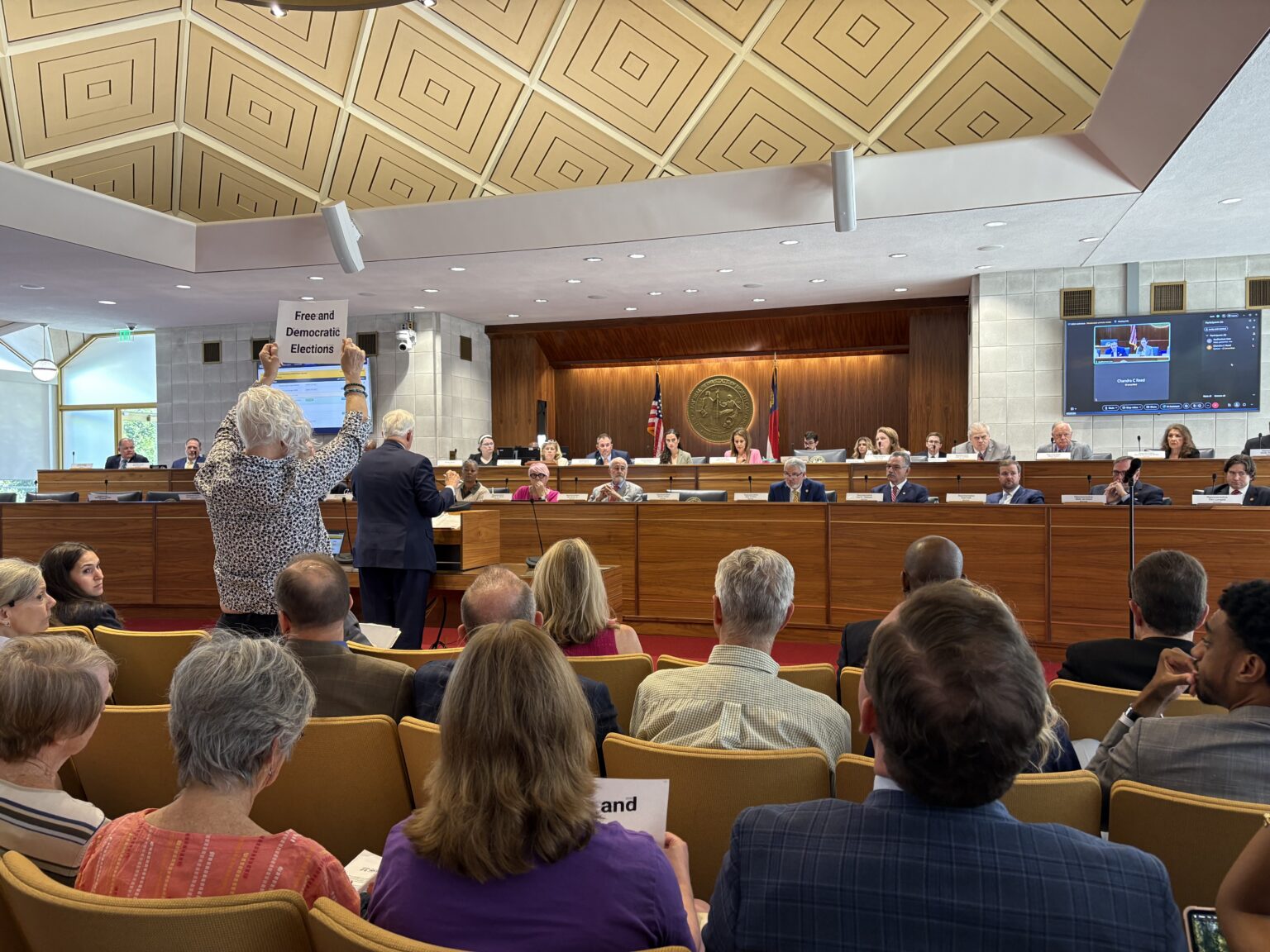
Sweeping changes to how North Carolinians vote continue moving through the Republican-controlled General Assembly ahead of the November midterms. The state Senate passed two election bills along party lines late last month: House Bill 958, which cleared the chamber 28-13 with all Republicans in favor and all Democrats opposed, and House Bill 834, which passed 42-0. The two bills originated as a single sweeping elections package that passed the House in June before Senate Republicans split it in two.
House Bill 958 would shorten early voting during primary, second primary and runoff elections from 17 days to 10, tighten rules aimed at preventing noncitizens from registering to vote, hand Boliek's office new authority to audit county election systems, and require the state Division of Motor Vehicles to turn over voters' full Social Security numbers to the State Board of Elections. House Bill 834 would extend the window voters have to fix problems with their ballots from three business days after an election to five, and would allow voters to continue using expired driver's licenses as valid photo ID.
Most provisions in both bills would not take effect until Jan. 1, 2027, meaning they would not apply to this November's general election. House Bill 958 has since cleared the full General Assembly and now awaits action from Stein; a veto would require a three-fifths vote in both chambers to override.
Democratic lawmakers have filed a competing package, House Bill 1246, that would ban the deployment of troops or other armed agents at polling places, increase criminal penalties for harassing voters or poll workers, protect early voting from further cuts, and bar election officials from refusing to certify results without evidence. The bill would also make clear that ballots cannot be thrown out after an election based on new interpretations of the rules — a direct response to the 2024 effort by Republican state Supreme Court candidate Jefferson Griffin to challenge more than 60,000 ballots after the fact, an effort a federal judge ultimately ruled unconstitutional.
"Efforts to subvert vote counting and the recognition of election winners are, by definition, destructive to our system of democracy and the rule of law," the bill states. "There can be no government 'of, by and for the people' if officials are dishonest about election results."
Democrats hold the minority in both chambers, and the bill is not expected to receive a vote.
The State Board of Elections has also been busy. At a meeting last month, the board's Republican majority approved on a 3-2 vote the rule change lowering the threshold for county boards to reject a voter's photo ID exemption request from a unanimous vote to a simple majority; the rule takes effect for the midterms and beyond pending approval from the state's Rules Review Commission.
At the same meeting, the board adopted amendments to three existing rules governing discretionary and mandatory recounts, along with a new set of rules dictating how county boards establish buffer zones, electioneering zones and curbside voting areas, and how officials maintain order at polling sites — including a provision letting site volunteers remove any voter, campaigner, candidate or protester they deem too disruptive, which several members of the public have argued comes uncomfortably close to infringing on First Amendment rights.
Those recount and polling-place rules have also been sent to the Rules Review Commission, which is expected to take them up at its Aug. 27 meeting.
Separately, the board voted along party lines to adopt six new rules governing absentee ballots, including a change that would require an unsealed inner ballot envelope to be treated as spoiled rather than resealed by election workers as before.
The State Board of Elections is also taking public comment through Aug. 31 on proposed rules outlining reporting requirements for political party headquarters building funds, along with a proposed rule change on waivers of civil penalties for late campaign finance disclosure reports.
The NC Senate was scheduled to reconvene Wednesday morning.
