
By Jordan Meadows
Staff Writer
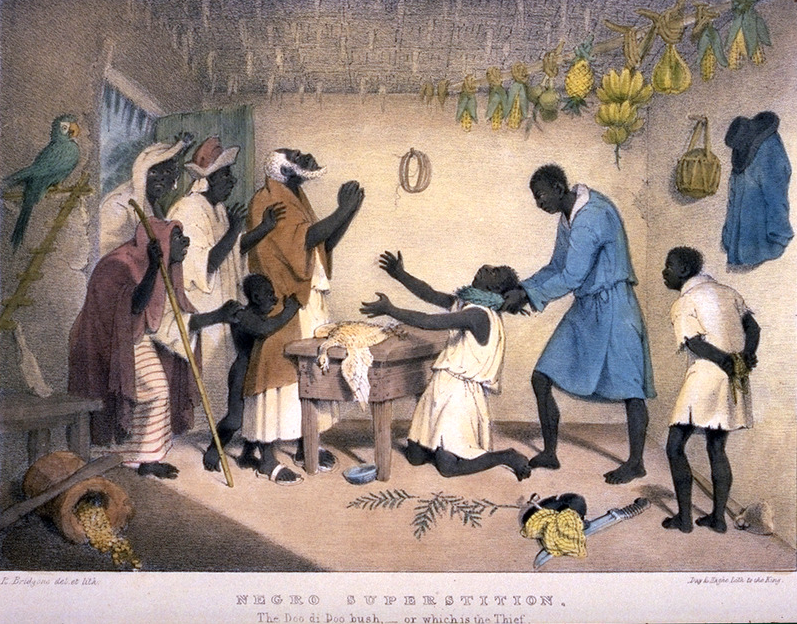
Historians examining colonial and antebellum North Carolina are continuing to uncover how enslaved people exercised agency in their daily lives, often through clandestine spiritual and medical practices rooted in African traditions, according to compiled archival records and academic research.
These practices—commonly referred to as Hoodoo, Obeah, or conjuring—blended herbal knowledge, ritual, and belief systems to influence health, relationships, and, at times, the balance of power between enslaved individuals and their enslavers. Despite the constraints of bondage, enslaved people used conjuring as a means of making independent choices outside the view of enslavers.
In North Carolina, records show that these practices frequently centered on plant-based remedies, particularly roots believed to hold protective or transformative properties. Enslaved conjurers offered services that promised to alter circumstances in subtle but meaningful ways.
In Johnston County, for example, an enslaved conjurer named Bristoe gave a man named Tom a root that he claimed would persuade Tom’s enslaver to purchase his wife from another enslaver. In a similar case, an enslaved woman named Lucy sought out Bristoe to prevent her own sale to a distant plantation, receiving another root intended to influence her enslaver’s decision.
Conjuring was also used as a form of protection against violence. According to testimony from the period, Bristoe performed a ritual for an enslaved man named Jacob, applying a powder to his hand that was said to prevent his enslaver from whipping him. In another instance, a conjurer named Quash provided a talisman to a different enslaved man, also named Jacob, instructing him to hide it at his enslaver’s doorway to encourage kinder treatment.
Whether or not these practices were effective in a literal sense, historians note that they represent deliberate efforts by enslaved people to assert some control over their conditions.
In some cases, these same systems of herbal knowledge were used in more direct and dangerous forms of resistance.
Legal records from the 18th century show that colonial authorities frequently prosecuted enslaved individuals for poisoning, which was viewed as a covert method of resistance. One such case occurred in Hyde County in 1756, when an enslaved man named Daniel became fearful after learning that his enslaver would marry a woman reputed to be especially harsh. After expressing his concerns to another enslaved man, Peter, Daniel later used a dried rattlesnake head to create a powder that he secretly administered in his enslaver’s food and drink, resulting in her death. The act, however, was revealed through testimony, and Daniel was convicted of murder.
Other uses of conjuring and herbal remedies focused on bodily autonomy rather than retaliation. In 1779, an enslaved woman named Jane sought out a conjurer named Caesar for a substance referred to as “truck,” which was believed to function as a contraceptive. Historians note that enslavers often encouraged or coerced reproduction among enslaved people to increase their labor force. By seeking contraception, Jane made a personal decision about her body that directly conflicted with her enslaver’s economic interests.
In Chowan County, an enslaved woman named Esther, who had likely spent most of her life in the household of Anne Hall Blount, attempted to poison her enslaver in 1779 by placing verdigris—a substance sometimes used medicinally—into her tea. The act came just a few years after Blount had participated in the Edenton Tea Party Resolves, a political protest against British taxation that symbolized women’s role in the independence movement.
Scholars emphasize that conjure practices were not solely acts of resistance but also served as a widespread alternative medical system in the South. Due in part to a shortage of formally trained physicians—evidenced by high patient-to-doctor ratios in the 19th century—Black conjurers and herbal healers served both Black and white populations. Their knowledge of botanical remedies filled critical gaps in healthcare, even as these practices were often dismissed.
While rooted in Afro-Atlantic spiritual systems, these practices evolved through interactions among African, Native American, and European communities in the South. Historical evidence indicates that people across racial and class lines sometimes sought out conjurers for treatment or guidance.
Court records from North Carolina and Virginia show multiple indictments of enslaved individuals accused of using powders, roots, or other substances to cause harm. Authorities often interpreted conjuring not just as superstition, but as a direct threat to social order and control.
Taken together, these accounts illustrate how enslaved people navigated an oppressive system using the tools and knowledge available to them. Historians caution, however, that the archival record remains incomplete, leaving many individual motivations and experiences open to interpretation as research into this aspect of early American history continues.
Additional materials are available from Conjuring Realities: Southern Supernaturalism and Race from the Antebellum Era to the Early Twentieth Century (Summer 2025), produced by the University of South Carolina, as well as digital exhibits and archival records provided by MosaicNC.
