
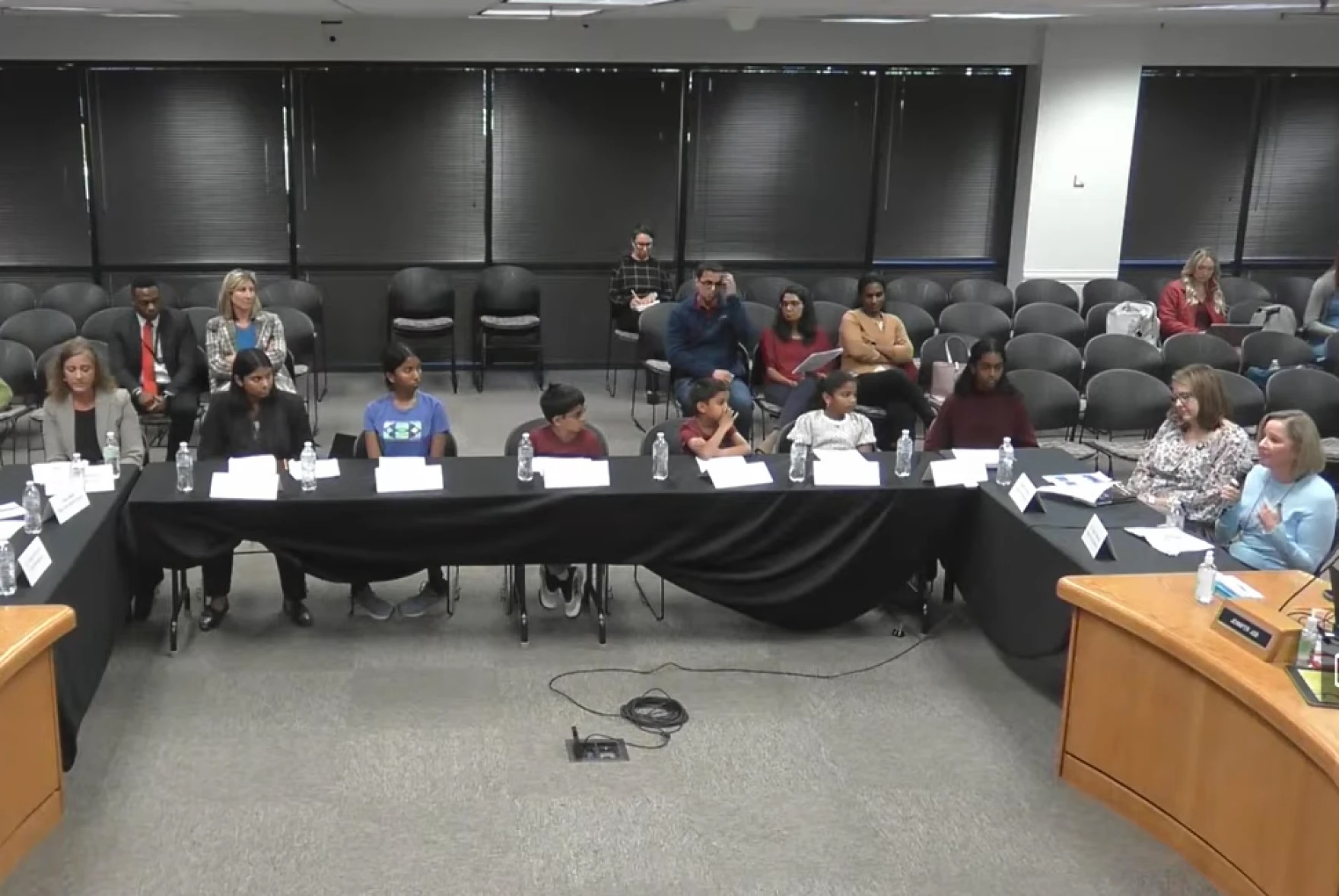
WUNC - The Wake County school board met with a panel of students and principals this week to discuss the pros and cons of 1-to-1 devices. This comes as the board is developing a new strategy for purchasing student laptops.
The group of students invited onto the panel have been advocating for less screen time in schools at past board meetings. They described eye strain, glitches that upended lessons, students struggling to write by hand, and endless distractions. One principal added that screens are affecting students' attention spans, and their ability to retain information that they read.
"Technology is turning school into a daycare," said fourth grader Raj Murthy. "Kids aren't listening to teachers anymore and getting distracted by their computers."
The school board will continue discussing device procurement at its November facilities committee, and district officials will give recommendations for a device plan in December.
The new "sustainable instructional device strategy" might include buying fewer devices to save money.
"Sustainable, meaning that we can actually afford it," commented school board member Wing Ng.
Most school districts bought a device for every student using federal pandemic relief funds that have now dried up. Refreshing the technology on a routine basis could require additional county funding.
Limitations: 1-to-1 devices aid in testing, tailoring lessons, and access for low-income students
Principals on the panel cautioned there are limitations to reducing devices in schools. Several pointed out that computers are necessary for testing required by the state. Ng said that's a serious consideration.
"If you're going to do a test on a computer, you better know how to use a computer for those exam purposes," Ng said.
Some students said they'd rather have paper textbooks, but Superintendent Robert Taylor said it would be almost impossible to get textbook companies to switch back from e-books, which are less expensive to produce.
"That would impact their profit margin," Taylor said. "They are just simply not producing textbooks anymore."
Nor does the North Carolina General Assembly currently fund paper textbooks for schools, board member Sam Hershey noted.
Several principals argued technology helps tailor lessons to students' abilities. Principal Sarah Simmons of Banks Road Elementary said software can create different lessons for students at their own reading level.
"They can enlarge it for students with visual impairments. They can have it read aloud. A student can have it read aloud to them in Spanish," Simmons said. "Teachers are using this purposefully to really enhance and increase access for all different types of learners."
And a few principals noted that some students wouldn't have any access to computers if they weren't given one at school.
"For some of our kids, devices give them access to the world," said Olds Elementary principal Kristen McCollum.
The school board might consider buying half as many Chromebooks in lower grades in future years. In that case, classes would take turns using them.
Superintendent Taylor said the district is looking for a healthy balance.
"I don't want you to come into an elementary school and we have no technology. I don't want you to come into an elementary school and technology dominates everything," Taylor said.
