
By Judaea Ingram
Special To The Carolinian
GOLDSBORO, N.C. — Cheryl Lewis Alston did not plan to become a farmer. A retired educator, she first brought gardens into classrooms as a way to teach science through hands-on learning. Today, that approach has grown into a community farm project that blends food production, education and access on city-owned land in Wayne County.
Alston, founder and director of the Little Washington Growing Group, has built her work around the idea that food production can also function as education and community building. With a background in science education, she spent years teaching in local schools before expanding into agriculture and food systems. That shift came through school gardens used in classroom instruction, where science, reading and math were taught through planting and harvesting. Over time, that approach grew into broader community-based food work across Wayne County.
“She encouraged me to start my own farm,” Romaine Barnett said. “Now I’m doing it.” Barnett now runs WildRoot Fresh Farms, and said Alston served as a mentor in helping her take that step into farming.
According to regional agricultural documentation, Alston’s work has included partnerships with schools and local organizations focused on food access and education, including leadership connected to the Wayne Food Initiative and later development of the Little Washington Growing Group, which focuses on growing and distributing fresh produce in underserved areas while teaching agricultural skills.
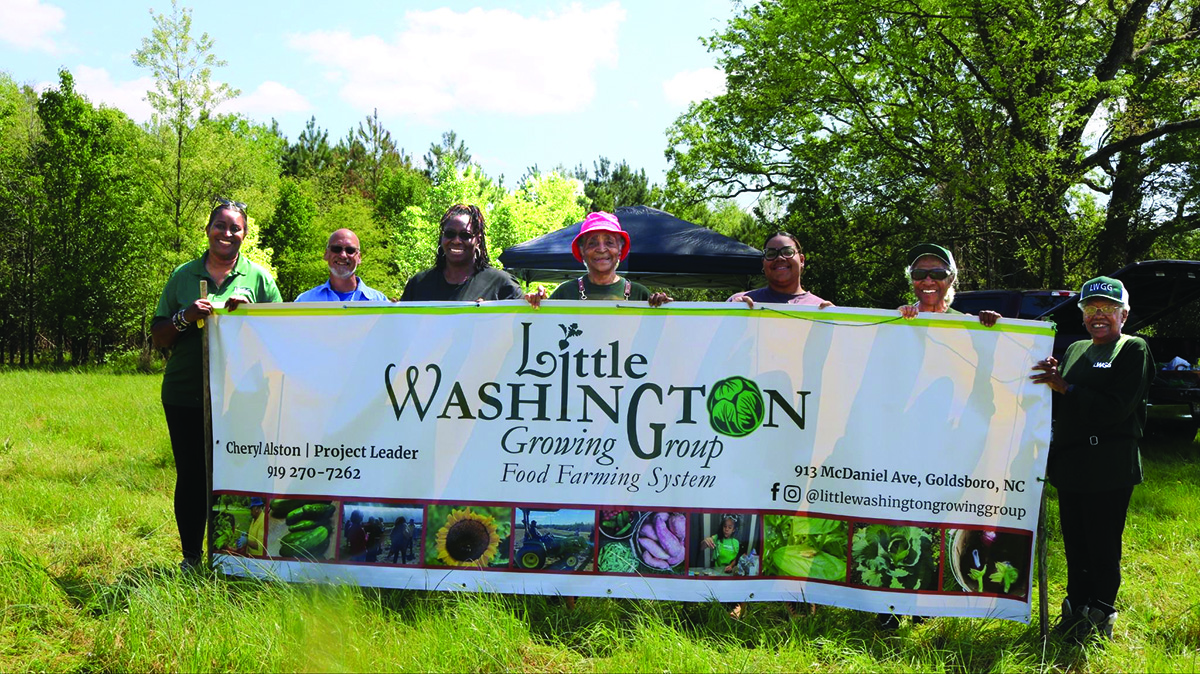
That educational foundation is still visible in the work taking place on the farm today. Volunteers, family members and collaborators move through planting beds and work areas where production and learning happen side by side.
“It’s not just coming out here to farm,” one volunteer said. “You’re learning why things grow the way they do, and you’re learning it together.”
Among those working on site is DyNasia Dawson, who manages the farm’s chicken operation. The chickens provide eggs while also serving as part of the group’s hands-on learning environment. During a recent visit, Dawson’s daughter was also present and actively involved, including operating a tractor to help maintain and mow portions of the land for continued planting.
The work is highly collaborative, with roles shared across generations and skill sets. Volunteers describe the environment as productive but also social, with laughter, joking and conversation woven into the workday.
Tim Norris, who previously worked with Alston through the Wayne Food Initiative, has contributed to the group’s soil and sustainability practices. His work includes using organic and repurposed materials to improve soil health, part of a broader effort to reduce waste while strengthening growing conditions.
“A lot of what we’re doing is about rebuilding the soil and not just taking from it,” Norris said. “If you take care of the land, it takes care of you.”
The educational aspect of the initiative also extends beyond agriculture. Shirley Sheread, a retired teacher who worked with Alston at the same school, remains connected to the project. Her background in education reflects the group’s broader belief that learning does not stop in the classroom and can continue in community spaces like the farm.
Alston’s daughter, Joanne Spruill, also plays an active role in the operation. During a recent workday, she was on a tractor mowing sections of the land, helping prepare space for expansion and ongoing planting. Her presence reflects the family’s continued involvement in the project and its generational approach to land stewardship and food access.
The initiative builds on earlier regional food work, including efforts tied to the Wayne Food Initiative, which focused on addressing food insecurity through local production and distribution networks. Those efforts helped shape the foundation for Alston’s current work, which combines production, education and community distribution on a smaller but active local scale.
Today, the Little Washington Growing Group continues to expand its vision for the site. Plans include a dedicated produce pickup area, expanded crop production and future additions such as beehives for honey and additional livestock integration.
The project is rooted in addressing food insecurity in Goldsboro and surrounding areas while also rebuilding hands-on knowledge of growing food. Alston’s long-term vision includes producing vegetables, eggs and honey that can be distributed directly back into the community through an on-site pickup system.
“We want people to be able to come in, get what they need, and go,” she said. “Fresh food should be accessible.”
As the group finished labeling trays of seedlings, the tables were lined with small pots, each marked with a date, a name and a future harvest.
In a region where access to fresh produce remains uneven, the project reflects both necessity and hope, a belief that food systems can be built locally and knowledge grows when it is shared.
“We’re going to keep building. One plant at a time,” Alston said.
