
By Jordan Meadows
Staff Writer
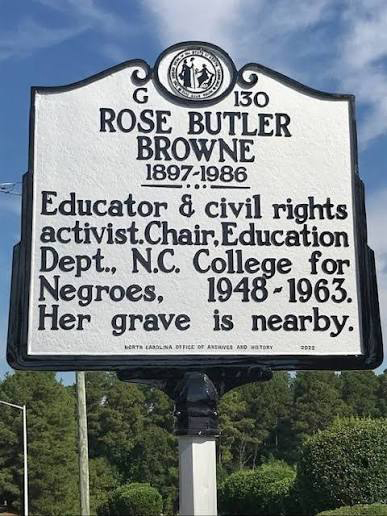
Educator and civil rights advocate Rose Butler Browne played a key role in advancing educational access in North Carolina and across the United States during the 20th century.
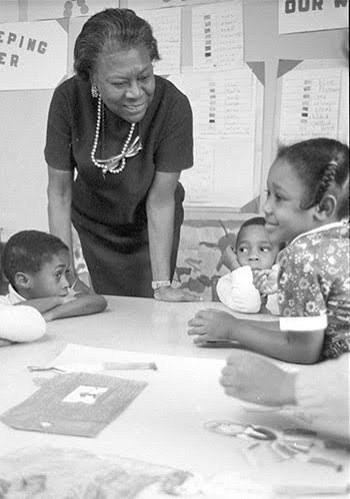
Born in Boston in 1897, Browne was raised in a family that emphasized education despite financial hardship. In her autobiography, Love My Children, she described the influence of her great-grandmother, whom she called the “High Priestess,” as central to her development and determination to succeed.
In 1939, Browne became the first Black woman to earn a doctorate in education from Harvard University, marking a significant milestone at a time when both racial and gender barriers limited access to advanced degrees. Browne’s career included teaching and administrative roles at institutions such as Virginia State University before she moved to North Carolina, where she would have her most lasting impact.
At North Carolina College—now North Carolina Central University—she was appointed chair of the Department of Education in 1948. In that role, she led major developments, including expanding teacher training programs, guiding accreditation efforts, and helping establish what became the state’s first doctoral program in education. Her work at the university also included physical and programmatic expansion. Browne advocated for improved facilities and resources for education students, contributing to the construction of new academic spaces and strengthening the institution’s ability to prepare future educators.
Beyond campus, Browne was active in statewide and community initiatives. She introduced literacy efforts such as a “Pleasurable Reading Program,” aimed at improving reading engagement and outcomes among students. She also participated in civic and service organizations including Alpha Kappa Alpha, the Girl Scouts and the Young Women’s Christian Association. Her work extended into public policy when she was appointed by former Gov. Terry Sanford to serve on a committee studying the needs of children with developmental disabilities.
Earlier in her career, Browne took a public stand against racial inequities in teacher pay while working in West Virginia. She refused to recommend her students for positions in school systems that paid Black teachers less than their white counterparts.
 “What resulted was that Negro education became an afterthought on the part of the board of education… and consequently Negro teachers were paid correspondingly lower salaries,” Browne said.
Her stance drew attention to proposed changes in racial discriminatory salary practices.
Browne consistently emphasized the connection between education and economic mobility.
“The opportunity for upward mobility is the single most essential factor in guaranteeing social justice,” she said. “And the way Negroes can assure themselves of this is through education.” She also maintained a strict personal standard in her work, stating, “I’m not a compromiser… I have never reconciled myself to a substandard effort or below par achievement.”
After retiring from North Carolina College in 1963, Browne remained active in education at the local level.
In Durham, she operated a child care center at Mount Vernon Baptist Church, where her husband served as pastor. The program focused on preparing preschool-aged children for formal schooling, continuing her emphasis on early education and long-term academic success.
Browne died in 1986 and is buried in Durham. Her contributions continue to be recognized in North Carolina and beyond, including honors at North Carolina Central University and Rhode Island College, where a residence hall bears her name.
