
By: Jordan Meadows
Staff Writer
Golden Asro Frinks spent decades challenging racial segregation, discriminatory public policies, and unequal treatment of African Americans throughout eastern North Carolina and beyond. Known for his forceful organizing style, commitment to nonviolent action, and willingness to face arrest, Frinks became a central figure in several civil rights campaigns that helped reshape public life in communities across the state during the 1960s and 1970s.
Frinks was born on August 15, 1920, in Wampee, South Carolina, to Mark and Kizzie Frinks. When he was about 9 years old, his family moved to Tabor City, North Carolina, where he spent much of his childhood. Accounts of Frinks' early life describe the influence of Fannie Lewis, the mayor's wife, who developed a close relationship with him and exposed him to aspects of the white community's social and civic life that were generally inaccessible to Black children under segregation.
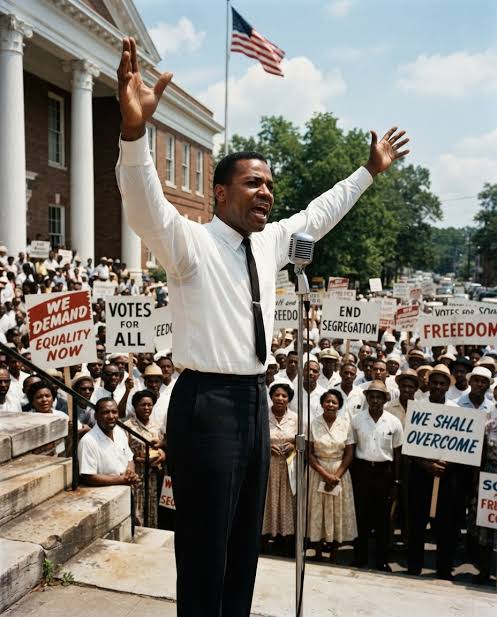
Growing up in North Carolina during the Jim Crow era, Frinks witnessed a society in which racial discrimination affected education, public accommodations, employment, political participation, and access to public services. State and local practices restricted Black residents' access to institutions and opportunities available to white residents. Segregated schools frequently operated with unequal facilities and resources, while discriminatory practices and intimidation limited Black citizens' ability to exercise political power.
As a teenager, Frinks left Tabor City and headed toward Norfolk, Virginia, intending to enter military service. During his journey, he stopped in Edenton, the historic county seat of Chowan County, NC. He found work and remained in the community for several years.
During that period, he became involved in African American civic activities, including the Youth Improvement Society and the Junior Civic League, and developed connections within the local Black community. He also met Mildred Ruth Holley, whom he married in 1942.
Frinks served in the United States military during World War II, including service in the Army as a staff sergeant. His military experience exposed him to the inequalities that persisted between Black and white Americans. After the war, he faced the same racial restrictions that affected Black civilians in the South, including barriers to voting and equal treatment.
Following his military service, Frinks moved to Washington, D.C., where he studied photography at the Scurlock School of Photography using benefits associated with the GI Bill. He also encountered a more organized tradition of civil rights protest. During this period, he became familiar with the work of the NAACP and participated in efforts to challenge discriminatory business practices.
Frinks returned to Edenton in the 1950s and became increasingly active in local civil rights organizing. He worked with the Chowan County branch of the NAACP and served as its secretary. He attended meetings of the Edenton Town Council and the Chowan County commissioners, where he challenged discriminatory practices and called for equal access to public facilities. He also opposed local restrictions on picketing that resulted in arrests of African American demonstrators.
In March 1960, Frinks challenged local reluctance to support a campaign to desegregate a theater in Edenton. According to accounts of the movement, the local NAACP leadership was unwilling to endorse the proposed protest because of concerns about the financial consequences of confronting white business interests. Frinks resigned his position in the local organization and organized demonstrations with young people associated with the NAACP Youth Council.
The theater protest developed into what became known as the Edenton Movement, a series of demonstrations and boycotts aimed at ending segregation in public facilities and institutions. Frinks helped organize young demonstrators, many of them school-age children, who marched and picketed businesses and public spaces.
The movement also brought personal danger to Frinks and his family. Accounts of the period describe threatening telephone calls, racial intimidation, and a burning cross placed on the family's property. A dead rabbit accompanied by a threatening message was reportedly left on the doorstep as a warning against continuing the demonstrations.
The Frinks family home at 122 West Peterson Street in Edenton became known locally as Freedom House. The home hosted numerous civil rights figures, including William M. Kunstler, Diane Nash, James E. Orange, Wyatt Tee Walker, and Hosea L. Williams.
Dr. Martin Luther King Jr. also visited the Frinks home during his engagement with the North Carolina movement. On Dec. 20, 1962, King spoke at the North Carolina National Guard Armory in Edenton, toured local historic sites, and dined at the Frinks residence. He returned to Edenton on May 8, 1966, when Frinks again hosted him for dinner. The house's role in the movement was formally recognized in 2023, when Freedom House was listed on the National Register of Historic Places.
Frinks’ frequent confrontations with law enforcement earned him the nickname "The Great Agitator".
Frinks continued to work in rural North Carolina after King's assassination.
In 1969, Frinks led two major marches to broaden public awareness of the Hyde County boycott. One march traveled from Swan Quarter toward Raleigh, while another, known as the Mountaintop to Valley March, traveled from Asheville toward the state capital. The effort culminated in a November 1969 referendum in which Hyde County voters approved funding needed to desegregate Mattamuskeet School.
The victory was followed by controversy. North Carolina Gov. Robert Scott called for an investigation by the State Bureau of Investigation into allegations that Frinks had misused money donated to support the boycott.
Frinks continued to advocate for communities facing discrimination beyond the immediate demands of school desegregation.
In April 1973, he assisted the Tuscarora Indians of Robeson County in a campaign for tribal recognition and federal assistance; He led a march to the North Carolina state capitol in Raleigh about the treatment of Native American communities in North Carolina; He participated in the Wilmington Movement of 1978.
Over the course of his career, Frinks received recognition from civil rights and community organizations for his activism. Honors included the Chowan County NAACP Achievement Award, the Edenton Movement Service Award, the Rosa Parks Award, the North Carolina Black Leadership Caucus Award, the Hyde County NAACP President's Award, and recognition from the SCLC. He also received a resolution from the Georgia General Assembly.
Frinks died in Edenton in 2004, at the age of 83.
