
By Jordan Meadows
Staff Writer
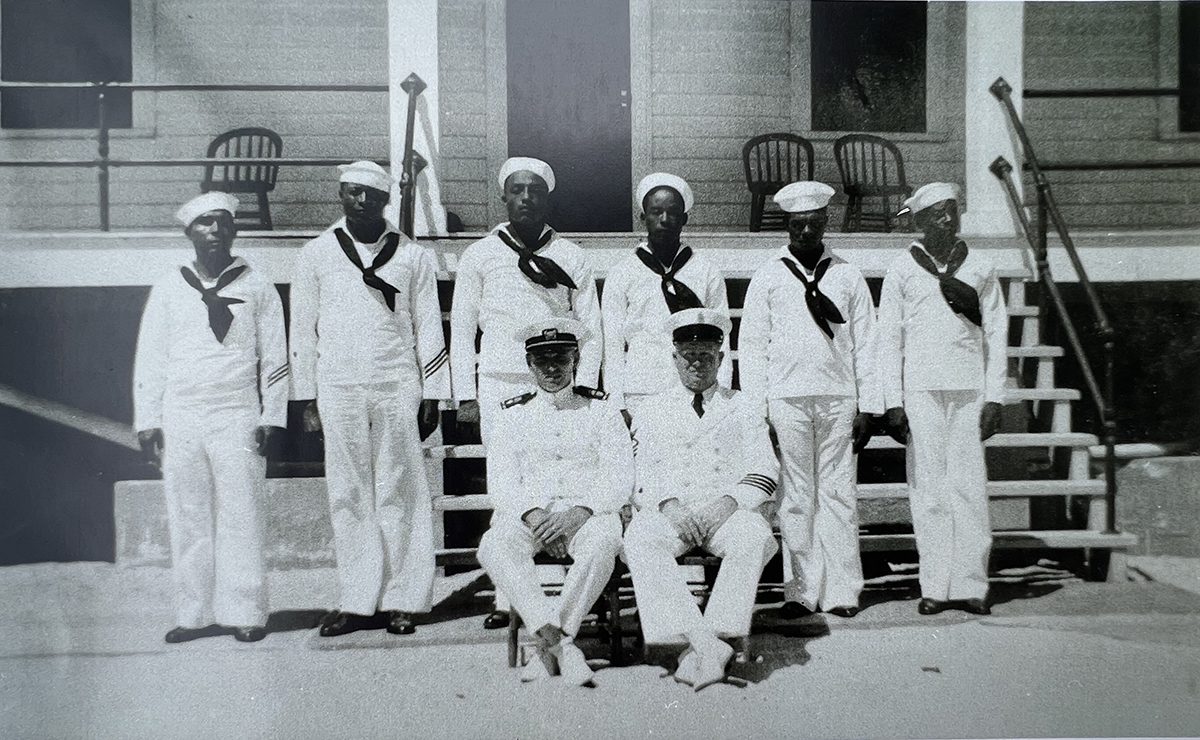
The Pea Island Lifesaving Station was the first in the United States to be commanded by a Black keeper and staffed by an all-Black crew. Located along a stretch of coastline known as the “Graveyard of the Atlantic” because of its dangerous waters and numerous shipwrecks, the station became a significant part of North Carolina’s maritime history.
At the center of that history was Richard Etheridge, who was born into slavery in January 1842 on the Outer Banks. Although North Carolina law made it illegal the teach enslaved people the read and write, Etheridge learned both skills. Like many residents of the Outer Banks, he also developed an early familiarity with the sea, working in fishing, boat piloting, and other maritime activities.
The Civil War changed the course of Etheridge’s life.
After Union forces arrived in the Outer Banks in 1862, Roanoke Island became a refuge for people escaping slavery. Black men began enlisting in the Union military, and Etheridge joined Company F of the 36th United States Colored Infantry in August 1863.
The regiment served in North Carolina and Virginia and participated in the Battle of New Market Heights in September 1864, a significant Union victory in which Black troops distinguished themselves. Etheridge was promoted to sergeant two days after the battle.
In 1865, Etheridge and fellow soldier William Benson wrote to Union military authorities to protest the mistreatment of Black families on Roanoke Island by occupying troops. Their letter described theft and abuse and asked officials to intervene. Etheridge signed the appeal on behalf of humanity, documenting concerns about the safety and treatment of Black residents even while he was serving in the Union Army.
After leaving military service in 1866, Etheridge returned to the Outer Banks, married, and worked as a fisherman before joining the federal Life-Saving Service. He served at Oregon Inlet and Bodie Island before being appointed keeper of the Pea Island station in 1880. Etheridge, then an experienced surfman, was selected to lead the station because of his ability, experience, and knowledge of the coast.
Etheridge became the first Black man to serve as keeper of a U.S. lifesaving station. White surfmen assigned to Pea Island reportedly refused to serve under his leadership, resulting in a station staffed entirely by Black men. Etheridge recruited local Black men, including fellow military veterans, and trained them in the demanding work of maritime rescue.
About five months after Etheridge assumed command, a fire destroyed the station building. Arson was suspected, although responsibility was never established. The station was rebuilt, and Etheridge established a strict training and operational routine. Under his leadership, the crew developed a reputation for discipline and effectiveness, rescuing more than 200 people from nearly 20 shipwrecks, according to historical accounts.
One of the crew’s most notable rescues occurred on the night of Oct. 11, 1896, when the E.S. Newman ran aground during a hurricane. The vessel’s captain, his wife, and their 3-year-old son were among those aboard.
The Pea Island crew transported rescue equipment to the wreck site, where enormous waves prevented conventional rescue methods. Two of the crew’s strongest swimmers entered the turbulent water and made their way to the schooner with a line. Using the line, the lifesavers repeatedly entered the water to bring those aboard to safety. The rescue continued until all nine people aboard, including the captain’s wife and young son, had been brought ashore.
Despite the significance of the E.S. Newman rescue, Etheridge and his crew did not receive the national recognition later associated with their achievement during their lifetimes. Etheridge served as keeper for approximately 20 years before becoming ill and dying at the station in January 1900, at age 58.
His death did not end the station’s role in maritime rescue. Black keepers and crew members continued serving at Pea Island for decades, maintaining its distinction as the nation’s only lifesaving station staffed entirely by Black personnel.
Among the keepers who followed Etheridge were Benjamin Bowser, Lewis Wescott, William Irving, George Pruden, and Maxie Berry Sr. The station remained in operation through World War II before being decommissioned in 1947, as the federal lifesaving system evolved into the modern U.S. Coast Guard.
Recognition of the crew’s achievements came much later. In 1996, the U.S. Coast Guard posthumously awarded Etheridge and his crew the Gold Lifesaving Medal for the E.S. Newman rescue. The award brought national attention to an operation that had demonstrated exceptional courage a century earlier.
Etheridge and members of his family are memorialized on the grounds of the North Carolina Aquarium on Roanoke Island, and a life-size statue of Etheridge stands in a traffic circle in Manteo. The legacy has also been recognized by the Coast Guard through the naming of a vessel in Etheridge’s honor.
Another effort to preserve the history is the Pea Island Cookhouse Museum in Manteo. Opened in 2008 following renovations to the historic cookhouse, the museum commemorates Etheridge, his crew and the Black lifesavers who served at the station. Its collection includes the E.S. Newman signboard, a Lyle gun used in lifesaving operations, photographs, artifacts, memorabilia and historical records documenting the station and its personnel.
