
By Jordan Meadows
Staff Writer
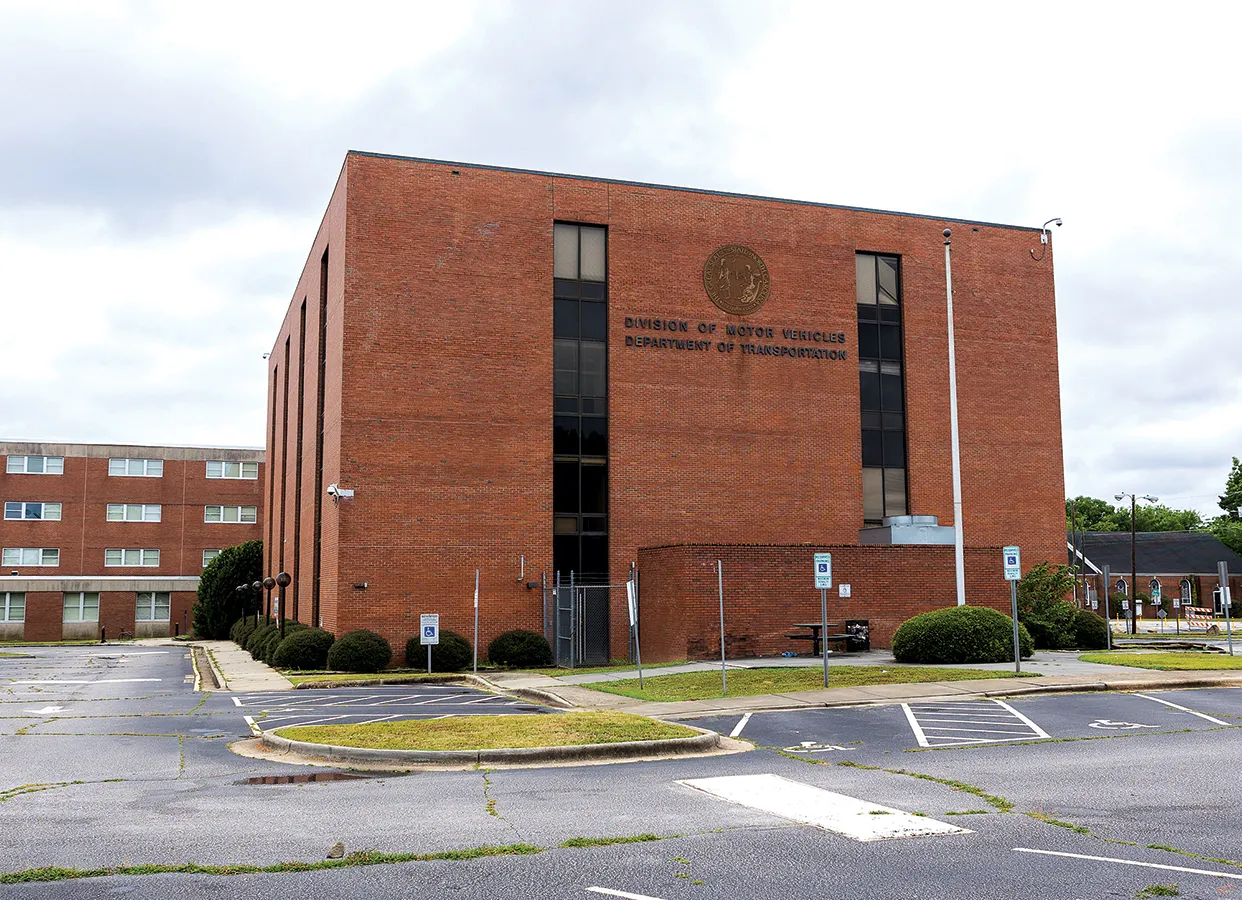
Raleigh’s long-vacant former Division of Motor Vehicles headquarters on New Bern Avenue is moving closer to redevelopment, with city leaders now weighing multiple proposals centered on affordable housing, retail space, and community-focused development along the future New Bern Bus Rapid Transit corridor.
Demolition of the former DMV campus is roughly halfway complete, although city officials say the project has been delayed due to the scale of asbestos removal required on the site. Crews are now expected to finish tearing down the property by November.
The city purchased the roughly six-acre site in 2023 for $20 million, aiming to maintain public control over a strategically located parcel in one of Raleigh’s fastest-changing corridors. City planners say the goal is to transform the property into a dense, transit-oriented development that also serves longtime residents and surrounding neighborhoods.
Over the last two years, officials have held dozens of community meetings and engagement sessions to gather feedback on what residents want to see built there, with affordable housing, neighborhood retail, public gathering spaces, and local business opportunities consistently ranking among the top priorities.
“This site is really an opportunity to shape growth in a way that benefits the community,” Raleigh Planning and Development Deputy Director Ken Bowers told city council during a recent presentation outlining possible redevelopment options.
The city is currently evaluating three primary development scenarios, all of which include affordable housing components alongside market-rate apartments, townhomes, parking, and retail or community space. Each proposal relies in part on low-income housing tax credits to make the projects financially viable.
Under the first option, the city would pursue a 9% low-income housing tax credit to build 269 apartments, including 60 affordable units, along with 36 townhomes, 20,000 square feet of retail space, and roughly 300 parking spaces. City staff said this option would likely avoid the need for additional public subsidies beyond the city’s initial land purchase.
The second proposal would also include 269 apartments but would expand the affordable housing component to 110 units. That version would include 22 townhomes, retail space, and parking, but staff estimate it would require between $6 million and $10 million in additional city subsidies.
A third scenario would build 368 apartments, including 111 affordable units, along with 20 townhomes and nearly 450 parking spaces housed in a city-subsidized parking deck. Officials estimate that option would require between $6.4 million and $7.4 million in additional public funding.
Despite the city’s housing goals, officials acknowledged that current market conditions are complicating redevelopment plans. A surge in apartment construction across Raleigh has slowed rent growth, while construction costs and interest rates remain elevated, making multifamily housing projects more difficult to finance.
“Unfortunately, where we are at in the market today is there is a glut of multifamily supply and still relatively high construction pricing and interest rates,” Bowers said.
City leaders say they are trying to avoid heavily subsidizing the project beyond the original $20 million land acquisition. The next step will involve issuing a request for interest to gauge how much demand exists from private developers before moving into a formal request-for-proposals process.
Councilman Corey Branch, who represents the district that includes the former DMV site, said the aim is to incorporate as many of the community’s top priorities as possible into the final plan before the request for proposals is issued.
"We're going to put as much as we can from the community group as far as what's going on at that site," Branch said.
Community advocates and nearby small business owners say they hope the redevelopment prioritizes accessibility and affordability beyond housing alone.
Raleigh continues to reshape the New Bern Avenue corridor ahead of the planned bus rapid transit line, which city leaders see as a major opportunity to expand housing density while connecting residents to jobs, services, and transit. Officials say the former DMV site could ultimately become one of the city’s most prominent examples of transit-oriented redevelopment focused on balancing growth with affordability.
