
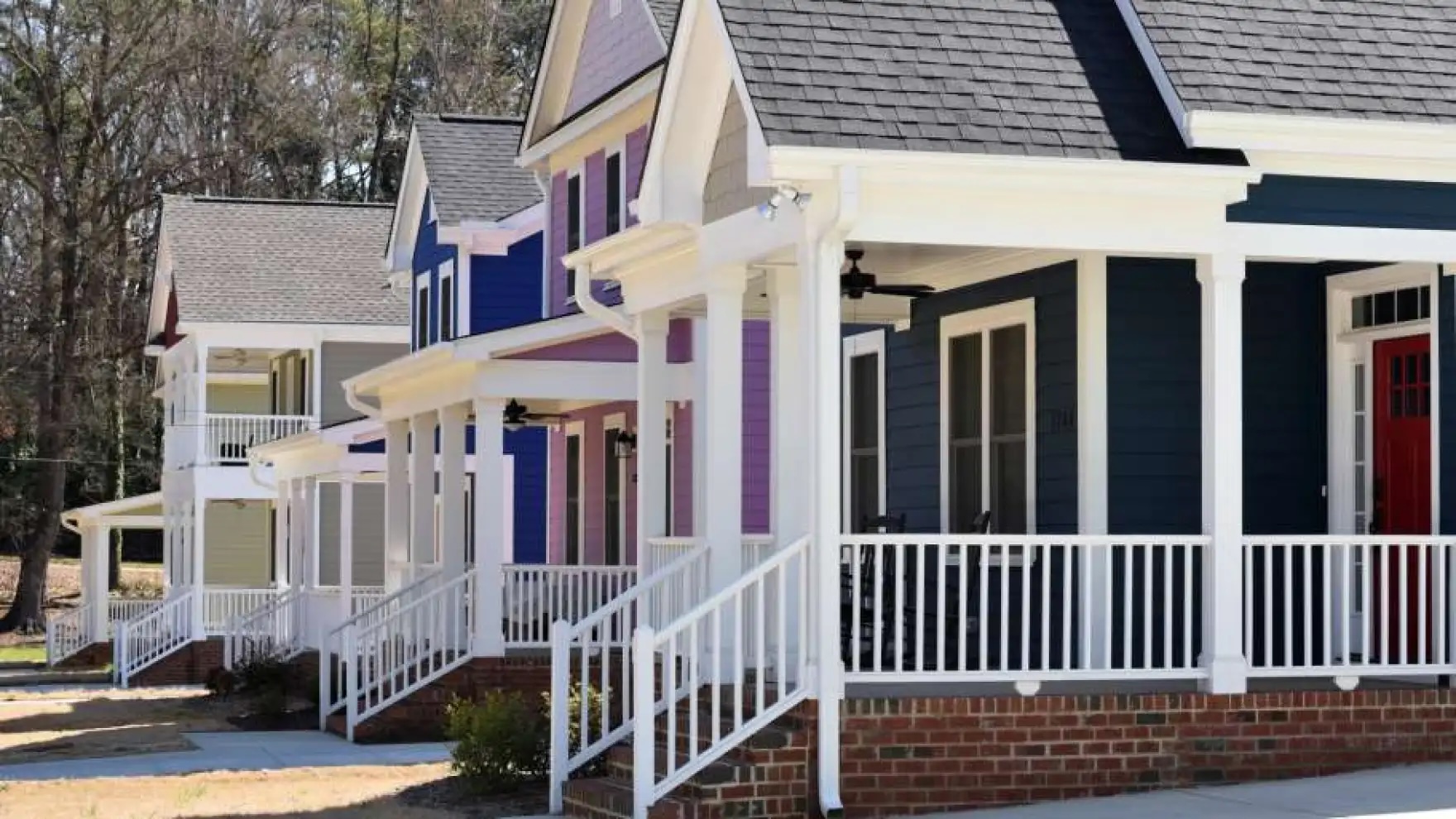
WUNC - Raleigh created more "missing middle" housing and lowered rent through changes to land-use rules in recent years, according to a new report by the Pew Charitable Trusts.
The report, released Monday, highlights how Raleigh zoning reform, building rules and eliminating parking requirements since 2021 spurred the building of townhomes, apartments and other smaller, denser types of dwellings while at the same time lowering rent after accounting for inflation.
Raleigh's annual housing production increased 74% after the reforms, according to the report. The city issued permits for an average of 3,301 new units of housing annually from 2017 to 2020. From 2021 to 2024, when reforms were passed and kicked in, permits jumped to an average of 5,731 units. In North Carolina, permits rose 29% during the same period.
"Raleigh didn't just rely on one change," said Seva Rodnyansky, research manager of the housing policy initiative at Pew. "They did multiple things, tackling several barriers that were making it more difficult and more costly to build and to open the door to the wider range of homes."
Finding the missing middle
Missing middle housing sits in scale and density between single-family homes and large multi-unit buildings, and in recent years advocates have been pushing for cities to build these types of homes to fill needs for more living space.
In 2021 and 2022, Raleigh removed certain density restrictions in all non-single-family districts and reformed building rules to allow for townhouses and apartment buildings, cornerstones of missing middle housing, to be built in more areas and to have more units, the report said.
Reforms also allow more duplexes, triplexes and quadplexes, tiny homes and accessory dwelling units, or smaller houses on single-family properties. The city allowed more apartments to be built near transit stops, the report points out.
Housing in Raleigh now has "greater variety and greater availability that the flexing of these rules has allowed," Rodnyansky said. More missing middle housing types are "actually rightsizing the demand."
From 2015 to 2020, the city permitted about 18,370 new housing units, but from 2021 to 2026, it permitted almost 33,800 units, according to the report. The proportion of large apartment buildings and townhouses skyrocketed. Large apartment buildings with 26 or more units went from 47% of housing permits in those earlier years to 65% in recent years. Compared to the past decade, the number of townhouses permitted significantly increased in the past five years compared to the latter half of the prior decade. The percentage of single-family home permits decreased across the decades, making up 29% of permits from 2015 to 2020 but only 12% from 2021 to 2026, according to the report.
Bert Fox, executive director of WakeUP Wake County, a nonprofit focused in part on housing, who used to work for Raleigh's planning wing, said that prior to the city's building reforms, "You could live in a big building and you can rent it or you could live in a single-family home on your lot in a subdivision probably with an HOA, and those were your two choices.
"The diversity that we're now allowed to have only makes the city better," she added.
Lower rent, less parking
The increase in housing options went side by side with rent prices declining in Raleigh, according to the report. Rent had risen 38% between 2017 and 2022. As loosened building restrictions took effect, rent fell 15% from 2022 to 2025 when adjusted for inflation, with the steepest decrease for older apartments that generally house lower-income tenants, according to the report.
The report also pointed to Raleigh abolishing citywide parking minimums in 2022 as a reason for growth in missing middle housing units. Before the abolition of these minimums, developers had to spend tens of thousands of dollars building parking spaces, costs that were passed on to residents. By removing the parking minimums, developers were freed up to build more affordable housing.
Making more affordable housing of different varieties is exactly what Raleigh needs to continue creating for current and future residents and people like her daughter, a college student who will eventually graduate, Fox said.
"I would like to have a Raleigh where she was able to afford a place to live," said Fox. Whether that's temporarily living in a tiny home or finding an affordable apartment or buying a townhouse, "I would love to be able to say that Raleigh was a place that allowed those things to happen and allowed people to build their lives here."
