By Jheri Hardaway
Staff Writer
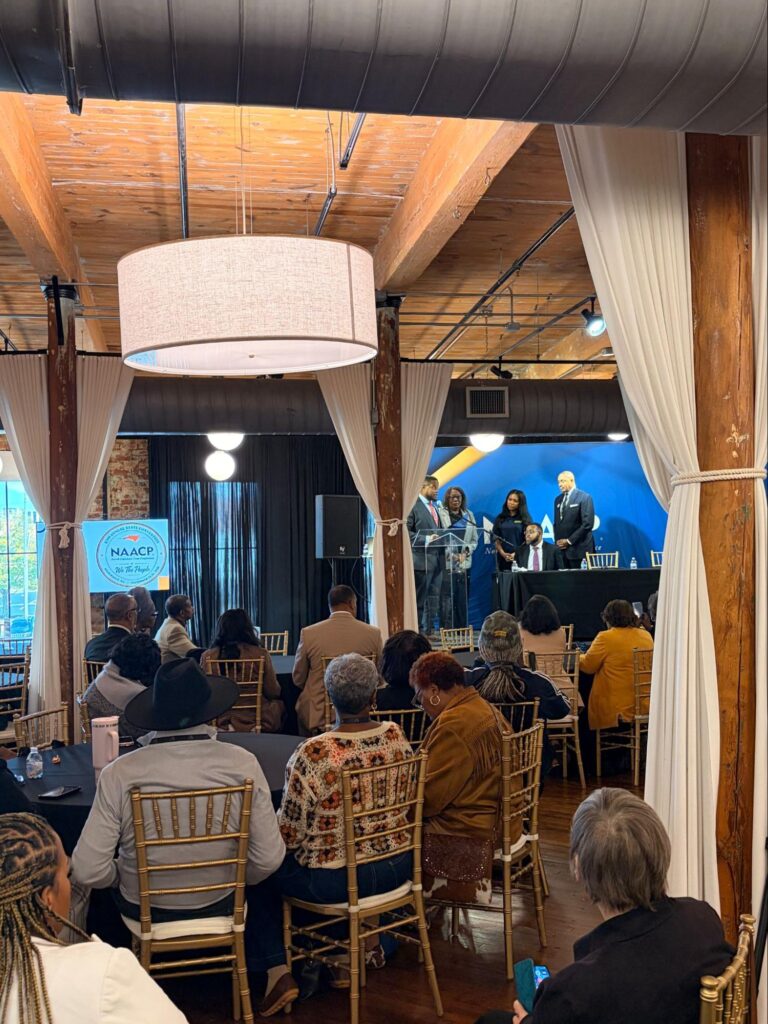
High Point, NC - Delegates, youth organizers, veterans, and civic leaders from across the state assembled at Congdon Yards on September 25–26, 2026, for the 83rd Annual State Convention of the North Carolina State Conference of the NAACP. Convening under the theme “We the People,” the gathering confronted systemic racial disparities, the protection of voting rights, healthcare inequities, and the deliberate transfer of political and economic inheritance across generations. State Conference President Deborah Dicks Maxwell and Conference Chair Gerry McCants did an outstanding job of bringing people and information together in a beautiful and inviting space.
The convention opened with an official civic proclamation by High Point Mayor Cyril Jefferson, who declared September 25–26, 2026, as "We the People Days" across the city. Mayor Jefferson reminded attendees of High Point's historic role in the civil rights struggle, specifically noting February 11, 1960, when students from William Penn High School staged a courageous lunch counter sit-in at the local Woolworth’s just days after the Greensboro Four. “The arc of the moral universe is long, and it bends toward justice,” Mayor Jefferson stated, invoking Dr. Martin Luther King Jr. and Barack Obama. “Brother Barack taught me that if that arc is going to bend, it takes all of us bending it. Because when we don’t bend the arc, the pliability of it means it will snap back.”
The public health crisis facing North Carolina’s Black families served as an immediate call to action. Dr. Makunda Abdul-Mbacke delivered an address regarding birth outcomes and life expectancy, exposing structural neglect based on geographic access to grocery stores and maternal healthcare. In Guilford County, Black parents experienced 70% of infant deaths in 2023, a steep surge from 52% in 2021. Dr. Abdul-Mbacke emphasized that systemic disparities are worsening as diversity, equity, and inclusion (DEI) initiatives face legislative budget stripping and programmatic bans across the state and beyond. "Healthcare should cover you from the top of your head to the soles of your feet," Dr. Abdul-Mbacke urged. "How do we pay for it? We are already paying for it. People get caught up in the additional costs, but we are already paying for it through our taxes." She shared, “All of our congressional leadership receive healthcare through the ACA; we the people pay over 70% of the cost of our elected officials' healthcare.”
Dr. Abdul-Mbacke underscored that possessing health insurance does not equate to affordability or comprehensive access, particularly in North Carolina, where rising premiums and coverage gaps persist despite federal Affordable Care Act provisions.
Former North Carolina Secretary of Commerce Machelle Sanders echoed the need to sustain institutional focus across business, education, and healthcare: "Remember that our forefathers, our parents, and grandparents have been through tough times, but they overcame. Continue to make improvements... and stay focused on something bigger than where you are."
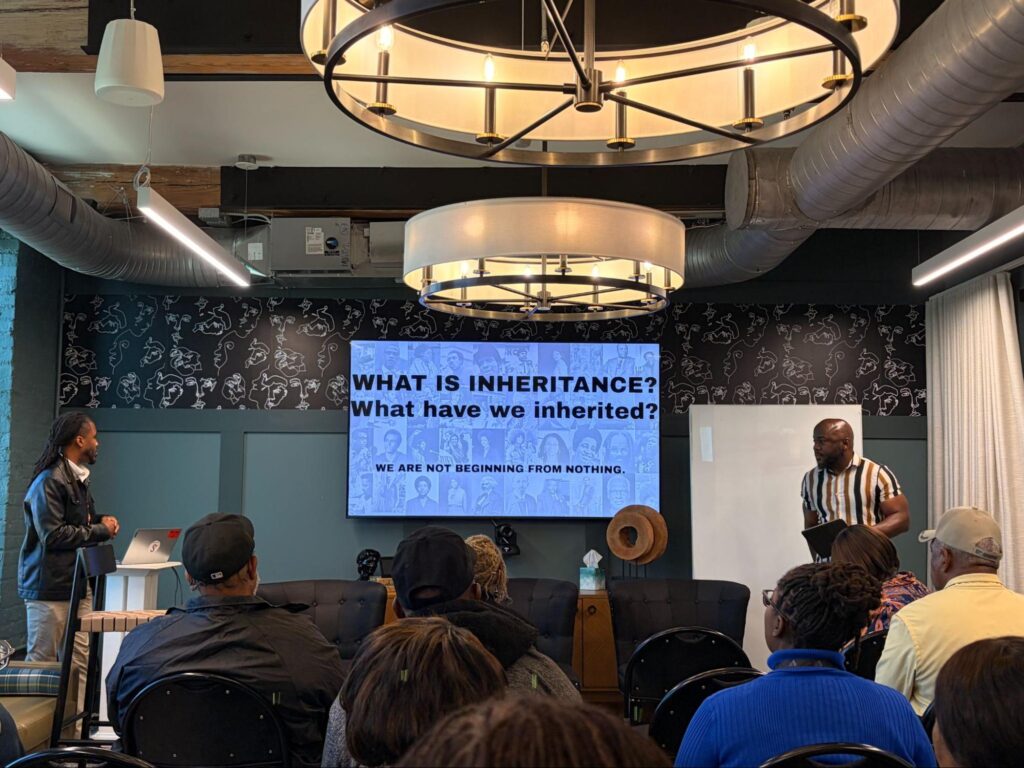
One of the convention's centerpiece panels, titled The Inheritance, challenged members to look past transactional activism and build long-term, independent power. Co-facilitated by Josh Vincent and Mantryll Williams, the session opened with several questions: “What would it take for Black people to have the power to determine what happens next to us?” “What have we inherited? What will we leave?” People mentioned many things, including an understanding of successes and challenges through wisdom. Rebellion, faith, spirituality, and so much more. What they call a ‘formation’ has formed around the idea that we can be more free than this. This powerful sentiment is more of a covenant, the facilitators explained.
Vincent, an alumnus of North Carolina Central University, emphasized that we hold the motion: progressive ideas start with us. He explained the Black Radical Imagination in the face of continued oppression as he led attendees through a comprehensive historical timeline stretching from the Civil War to modern pushbacks. Tracing the trajectory through self-emancipation, Reconstruction, the 1898 Wilmington Coup, the 1930s Southern tenant farmers’ organizing, and the Historic Thousands on Jones Street (HKONJ) 14-Point Agenda, and more. Vincent stressed that every major democratic leap in the United States was fueled by Black struggle. "Every significant political motion or movement that has ever taken place in this country has been inspired and fueled by the fight for Black resistance," Vincent said. "We don’t get written out of progressive ideas. It belongs to us... But with every single one of our political movements has come a significant, radical, oftentimes violent backlash."
Vincent cited Project 2025, noting that its primary architect, Kevin Roberts, built his doctoral research directly upon the study of historic Black resistance to design contemporary countermeasures. Panelists and leaders pushed back against organizational silos, urging the NAACP to operate not as a solitary silo, but as a binding covenant or "formation" that connects independent institutions, land preservation, and economic cooperatives. Brian reinforced that political power and economic power cannot be separated.
Reverend Corine Mack, 1st Vice President of the NC NAACP State Conference, delivered a stirring and candid response: "In the last four years, we have not worked together as we should. One of the reasons white supremacy works is because we are divided. The foundation of every movement was love... Every real movement was led by young people. It's time for us to move out of the way sometimes, let them decide what they want to do and how, and give them the tools to get it done."
Former State Representative and former NC Secretary of Military and Veterans Affairs Larry D. Hall addressed the underutilization of veterans' assets as a critical missing link in closing the racial wealth gap. "One of the areas that we’ve ignored continuously are veterans' benefits, veterans' assets, and how you can both preserve and create wealth that can be transferred to future generations," Hall said. He announced a statewide initiative connecting the NC NAACP Veterans and Military Committee with organizations like the National Association of Black Veterans (NABVETS), establishing direct contact rosters for county veterans services offices, VA hospitals, congressional delegations, and state property tax exemptions for service members.
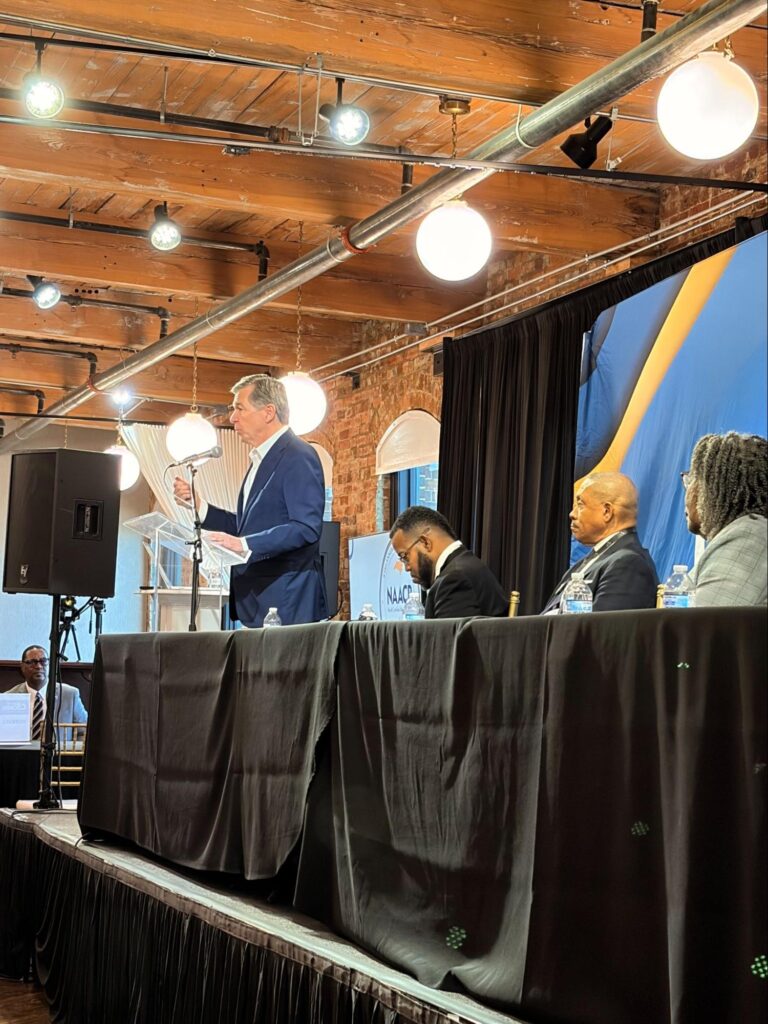
The Saturday Political Action Luncheon brought delegates together with statewide candidates and leaders, highlighted by an address from lifetime NAACP member, former North Carolina Governor, and current U.S. Senate candidate Roy Cooper.
Cooper addressed the political landscape with 38 days remaining until the general election, acknowledging that more than $100 million in attack ads have flooded the airwaves in the contested Senate race. "We don’t have the billionaires they do. We don’t have the dark money groups that they do. We have a people-powered campaign—95% of our contributions are $100 or less, with an average grassroots donation of $36," Cooper said. "We’re gonna make it through, but don't take anything for granted."
Cooper pointed directly to looming federal deadlines, noting that without decisive legislative intervention, Social Security benefits face automatic reductions: "In 2032, Social Security benefits will be cut significantly unless Congress does something. We’ve gotta fix the system. Wealthier people need to pay their fair share. I am a prisoner of hope; I truly believe our best days are ahead of us if we work for it."
Youth inclusion and ground-level voter protection anchored the convention's operational priorities heading into early voting. Nevaeh Hodge, President of the North Carolina NAACP Youth & College Division and National Board Member, challenged everyone to move beyond nominal invitations and share institutional decision-making. "Young people care deeply about what happens in our communities. We care whether we can afford college, whether we can find a place to live, whether we feel safe at school, and whether we have access to healthcare," Hodge declared. "Reach out to your youth council or nearby college chapter before you plan your next civic engagement event. Make the invitation, offer your guidance, listen to their ideas, and give them the space to act."
Addressing the legal front, Nicholas Gothard, Senior National Coordinator of Election Protection at the Lawyers’ Committee for Civil Rights Under Law, called on every branch to recruit at least 10 poll monitors and nonpartisan vote protectors. Gothard directed delegates to inform their communities about the nonpartisan 888-OUR-VOTE (888-687-8683) hotline and the state coalition portal SafeVoterNC.org to intercept improper ballot rejections, voter intimidation, and accessibility violations at precinct sites.
State Conference leadership concluded the session with a unified policy directive, urging all members and community branches to vote "NO" on all three proposed North Carolina constitutional amendments appearing on the upcoming ballot.
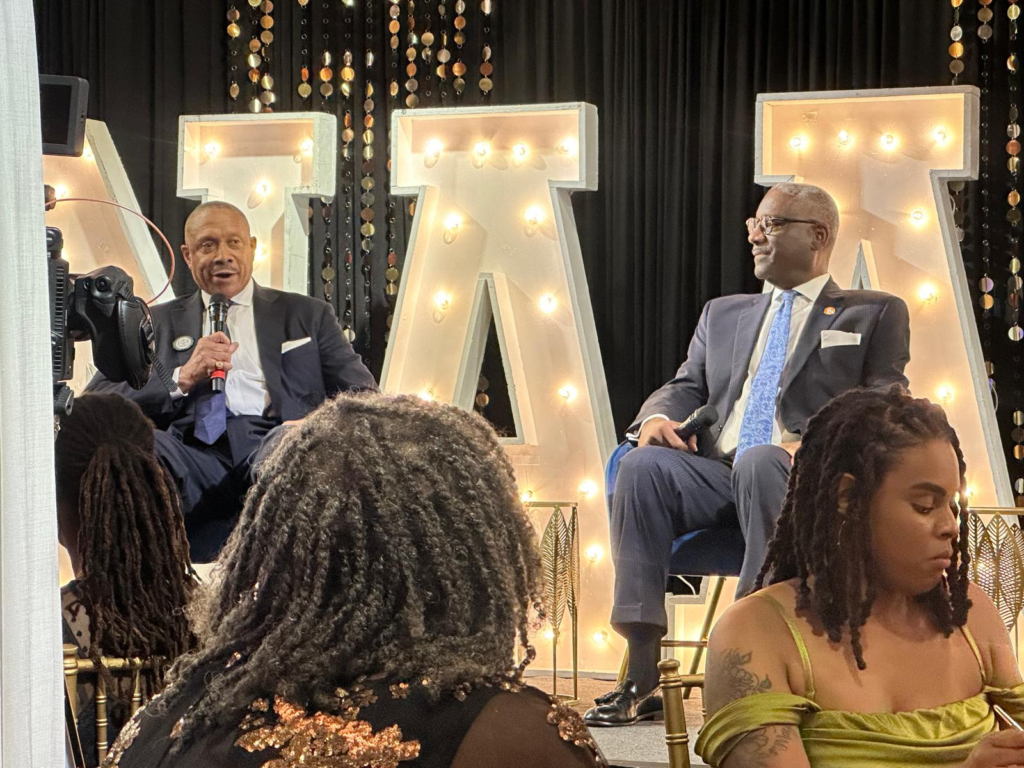
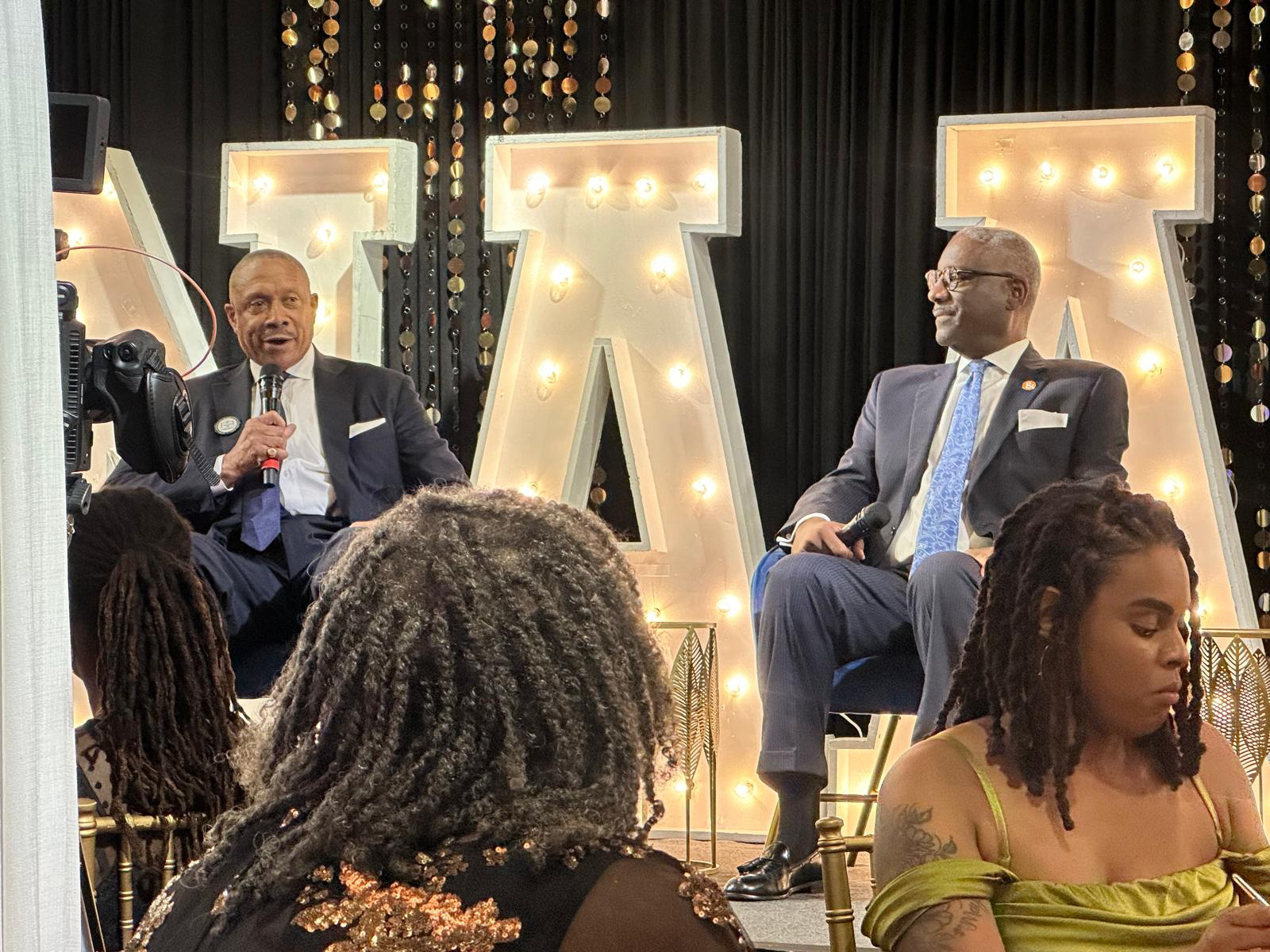
A final nugget from Chair Gerry McCants and his fireside chat with M&F Bank President James Sills regards stocks. Did you know you can invest in the NAACP? Look up ticker NACP. Also, consider investing in North Carolina’s very own M&F Bank at ticker MFBP.
As delegates departed High Point to return to branches across all 100 counties, the convention's closing charge echoed National NAACP Vice President of Field Governance Erica C. Anthony, who used the imagery of The Wizard of Oz to remind delegates that their strength is internal. "You have something called the NAACP on your feet," Anthony reminded the delegates. "All you have to do is click them together. We don't need to ask anybody for anything when we already have the power within ourselves." Join your local NAACP branch today and get involved!