
By Jordan Meadows
Staff Writer
A quarter century in law enforcement led one Fayetteville officer to a conclusion that is now shaping policy across North Carolina: arresting people struggling with addiction was not solving the problem.
For 25 years, Lars Paul worked in narcotics enforcement with the Fayetteville Police Department, making drug arrests, responding to overdoses and leading high-risk operations. Over time, he said, the pattern became clear: many individuals cycled repeatedly through jail without meaningful change in the underlying issues driving their arrests.
“I got to see firsthand over all those years that, ‘Hey, we’re not winning this,’” Paul said. “We’re doing the same thing over and over again, and things aren’t changing.”
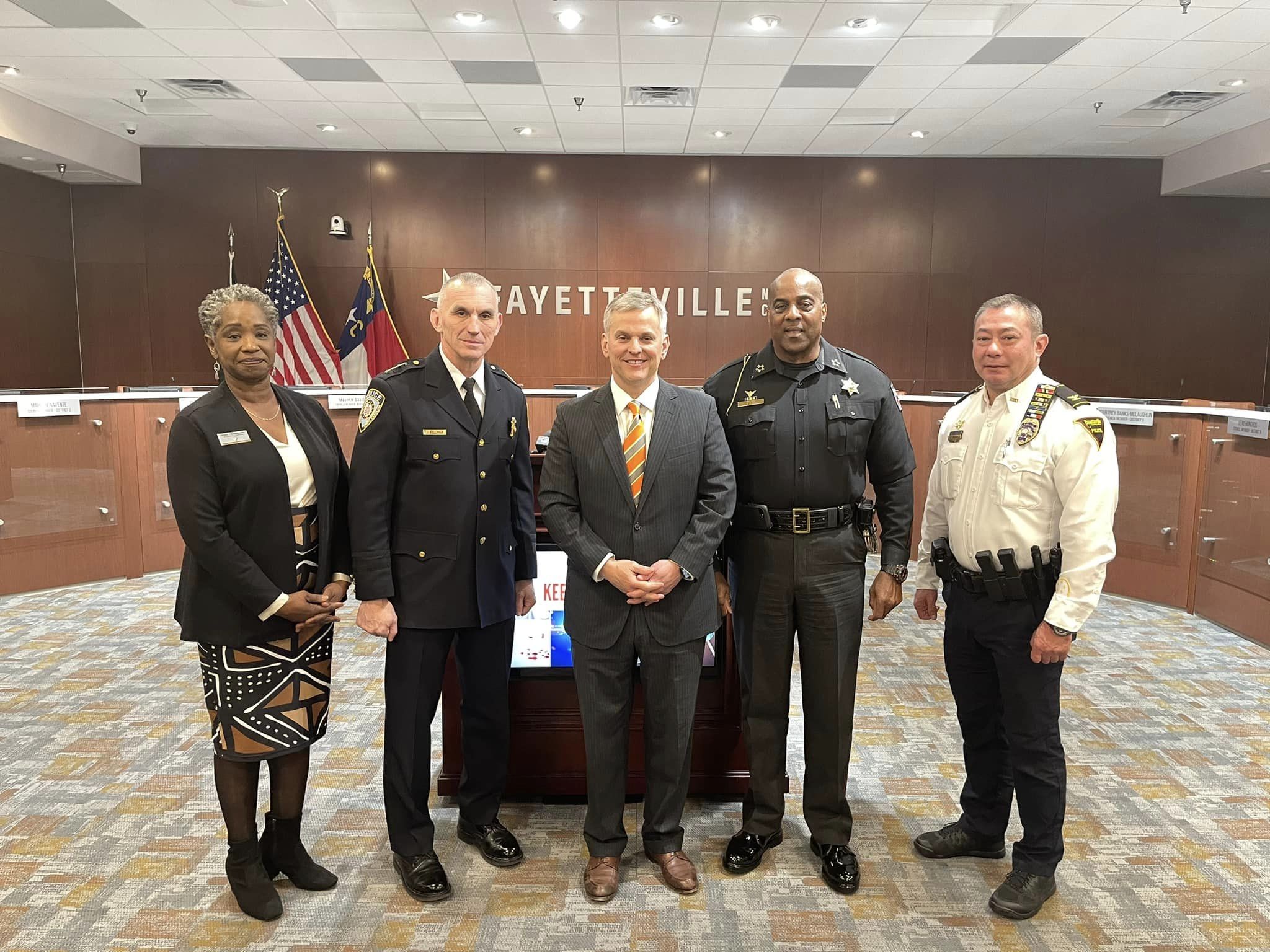
That experience helped drive the creation of a different approach. In 2016, the Fayetteville Police Department launched the state’s first Law Enforcement Assisted Diversion program, commonly known as LEAD. The initiative allows officers to redirect people accused of low-level, nonviolent offenses—often tied to substance use—away from arrest and into treatment and support services.
The model, first developed in Seattle, connects participants with case managers who help them access housing, substance use treatment, transportation and other resources. Instead of focusing on punishment, the program emphasizes stabilization and long-term recovery.
“For many years, the only tool we had was to arrest,” said Fayetteville Police Chief Roberto Bryan Jr. “Today, because of LEAD, our officers have a bridge and a tool that addresses the root causes behind the calls for services that we respond to.”
Over the past decade, the program has expanded beyond Fayetteville and is now being adopted by agencies across the state.
In March, state officials announced a $1.5 million investment to grow LEAD programs into additional communities, including departments in Albemarle, Gaston County, Greensboro, New Hanover County, Robeson County and Harnett County, among others.
Under LEAD, officers can make referrals in two primary ways. In some cases, individuals are diverted at the point of potential arrest for offenses such as drug possession, trespassing or petty theft. In others, officers or outreach workers connect people to the program through “social contact” referrals when they encounter individuals at risk of arrest due to untreated mental health or substance use issues. Participation is voluntary, and the program does not require abstinence. Instead, case managers work with participants to identify goals and connect them to services, checking in regularly to support progress.
“It’s completely participant-centered,” said Greg Berry, a statewide director with the North Carolina Harm Reduction Coalition. “They determine the direction, and the case manager works with them to put a plan together.”
Across the United States, about 60% of people in jails and prisons have a substance use disorder, according to the U.S. Department of Justice. In many communities, law enforcement officers are often the first responders to issues rooted in addiction, homelessness and mental health. Research on LEAD programs in North Carolina suggests the model can reduce that cycle.
A 2022 study by Duke University found that arrests and citations declined by about one-third in the six months after individuals were referred to LEAD, compared with similar individuals who were not referred. The study also found a 50% reduction in the use and cost of crisis services among participants, while costs increased among those who declined to participate.
State health officials say the program is part of a broader effort to address addiction as a public health issue. North Carolina Department of Health and Human Services leaders have pointed to diversion programs, expanded behavioral health services and the use of opioid settlement funds as key strategies.
“LEAD recognizes that substance use challenges are public health issues with public safety consequences,” said Health and Human Services Secretary Dev Sangvai.
From 2022 to 2025, local governments across North Carolina have spent more than $2.1 million in opioid settlement funds on diversion programs, according to state data.
