
By Judaea Ingram
Special To The Carolinian
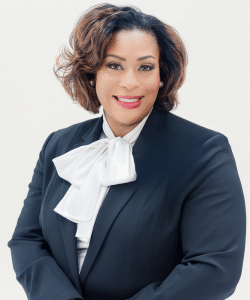 For Lillian M. Davis, mental health advocacy is not just a career, it is a lifelong responsibility shaped by personal experience, family, and a commitment to community care.
Growing up in Johnston County, North Carolina, Davis described her childhood as rooted in a close-knit environment, but not always culturally diverse. That experience, she said, played a role in her decision to attend a historically Black college and university.
She went on to attend North Carolina A&T State University, where she studied psychology and criminal justice. Davis said her time at the institution helped shape her leadership identity and reinforced her sense of belonging.
“I loved it,” she said of her HBCU experience. “It started the type of leader that I would become.”
Her interest in mental health, however, was also deeply personal. At the age of 13, Davis became closely involved in supporting her father, a disabled veteran diagnosed with PTSD. She described becoming an advocate for him at a young age, helping her family navigate his condition and the stigma surrounding it.
“My dad was totally opposite of what people expected,” she said. “People stigmatized PTSD, but he lived with it. I don’t want to define him by it.”
After college, Davis initially entered the public school system as a special education teacher before transitioning into mental health full time. She later worked in inpatient behavioral health settings, eventually rising into leadership roles overseeing multiple hospitals and regions.
Her career now spans nearly three decades, including her work with the National Alliance on Mental Illness (NAMI), where she currently serves in a leadership role at the state level with NAMI North Carolina.
Davis said one of the biggest ongoing challenges in mental health care is access, particularly related to Medicaid coverage and affordability.
“Medicaid is a huge component of a lot of people we serve,” she said. “When those benefits are disrupted, people are forced to choose between their health needs and their basic survival needs.”
Over the past 27 years, Davis has also witnessed a significant shift in how mental health is discussed and understood.
“It’s drastically different now,” she said. “We’re no longer at the end of the conversation—we’re part of the solution.”
She added that stigma around mental health has decreased as more people begin to recognize that conditions such as depression, PTSD, and anxiety are medical issues rather than personal failures.
Davis emphasized that cultural perceptions have also shifted, particularly within Black communities, where churches and community organizations have become more open to mental health discussions and partnerships.
“We learned the church has been the pillar of support,” she said. “Now we’re working together more intentionally.”
One of Davis’s central messages is that mental health and physical health are deeply connected.
“You can’t have one without the other,” she said. “To live a successful life, you have to be mentally and physically well.”
Beyond her professional work, Davis also serves as a leader in civic and community spaces, including Delta Sigma Theta Sorority, Incorporated, where she connects service work with mental health advocacy.
Looking forward, Davis said her goal is to continue reducing stigma and expanding access to care so that mental health support becomes more normalized and accessible.
“I think mental health chooses you,” she said. “Every day I walk into what I live.”
