SUTHERLAND, Va. — Dr. Gladys Mae West, an African American mathematician whose work played a critical role in the development of satellite navigation technology, died on Jan. 17, 2026 at 95.
West spent more than four decades working at the U.S. Navy’s research facility in Dahlgren, Virginia, where her mathematical modeling and data analysis contributed to early systems that allowed satellites to determine precise locations on Earth. That work later became integral to the Global Positioning System, a technology now relied upon worldwide for navigation, transportation, emergency response, and digital mapping.
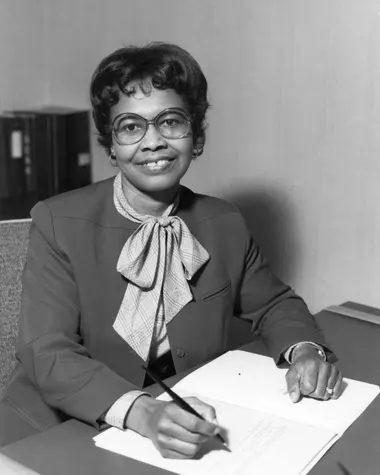 West was born Gladys Mae Brown on Oct. 27, 1930, in Sutherland County, Virginia. Raised in a farming family during segregation, she spent part of her childhood helping harvest crops such as corn, cotton, and tobacco. Teachers recognized her academic ability early, and she graduated as valedictorian of her high school class.
Her academic success earned her a scholarship to Virginia State University, a historically Black institution, where she studied mathematics. She completed her bachelor’s degree in 1952 and earned a master’s degree in mathematics in 1955. Before entering federal service, West taught mathematics in Virginia public schools, a common profession for Black graduates at the time.
In 1956, West joined what was then known as the U.S. Naval Proving Ground in Dahlgren. She became only the second African American woman employed at the facility and was among a small number of Black scientists working there. As computing technology advanced, her work evolved from early computer programming to large-scale analysis of satellite data.
West specialized in geodesy, the study of Earth’s shape and gravitational field. She worked on satellite altimetry projects that helped produce increasingly accurate models of the Earth, known as the geoid. That precision was essential for satellite-based positioning systems, which depend on accurate Earth measurements to function reliably.
For most of her career, West’s work was known primarily within military and scientific communities. She did not work at NASA and was not depicted in the 2016 film Hidden Figures, though her career later drew attention as part of a broader effort to recognize Black women whose scientific contributions had long been overlooked.
West met her husband, Ira V. West, while working at the Dahlgren facility. The two married in 1957 and raised three children — Carolyn, David, and Michael. They were active in their local chapel community on the base, where they attended services regularly. West was also a grandmother to seven grandchildren.
During the Civil Rights era, West supported the movement’s goals but was limited in public participation due to her role as a federal employee. She was part of a group of Black women living in officer housing, known informally as Boomtown, who met to discuss community issues and current events.
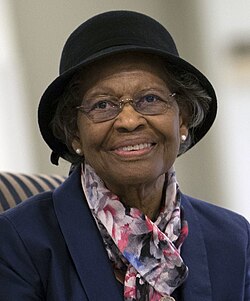 West retired from government service in 1998. She continued her education in retirement, earning a doctorate in public administration and policy affairs from Virginia Polytechnic Institute and State University at the age of 70.
Recognition of her work grew in later years. She was inducted into the U.S. Air Force Space and Missile Pioneers Hall of Fame and received honors from organizations highlighting the contributions of women and African Americans in science, technology, engineering, and mathematics.
West was preceded in death by her husband, who died in October 2024. She is survived by her children and grandchildren.
Her career reflects the long-term impact of scientific work that often operates outside public view. The systems her research helped support continue to shape daily life around the world.
