
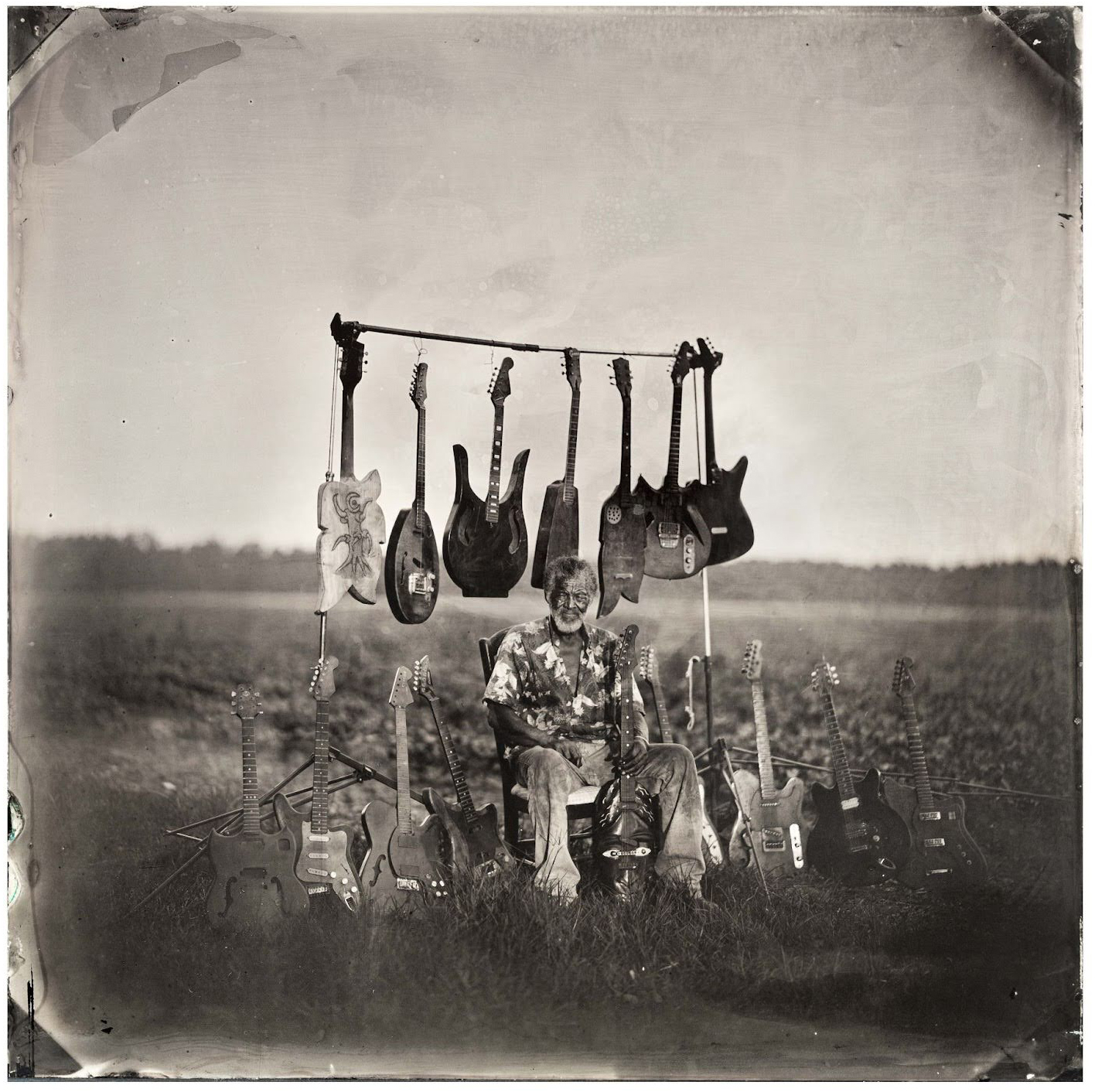
By Dr. Will Boone
North Carolina State University
Freeman Vines is inspired by the raw material of his work. The wood decides what it wants to be. Vines listens to it. “My ears ain’t like other folks’ ears,” he says. “I hear stuff other folks don’t.” The wood has a voice that most people can’t hear. But Vines hears it. And, through his work, we might hear it as well.
Vines frequently turns his unique sense of hearing toward the strange and sinister silences of the past. He surveys the vast acres of farmland that surround him in Eastern North Carolina and asks, “Where in the world did they bury the slaves?” From early colonial days through the Civil War, Vines reflects, thousands of black men and women lived and worked on this land and there “ain’t no cemetery around here where they’re buried.”
When Freeman Vines began working with wood from a tree that had once been used for lynchings, long-silenced voices started to emerge. Vines became particularly enamored with the story of Oliver Moore.
Oliver Moore was lynched on August 19, 1930, not far from where Freeman Vines currently lives. This rural area—where Pitt, Edgecombe, and Wilson counties meet—looks much the same today as it did in 1930.
We know the story of Oliver Moore’s lynching because newspapers all over the U.S. reported it. Some local papers dedicated several articles and editorials to it. These stories are sensationalist and provide plenty of gory details. Reading them, we can hear in our mind’s ear the ominous engine roar of the automobiles approaching the jail; the brief eruption of murderous gunfire; the buzzing of the flies around the blood-drenched corpse as the sun rose.
Looking back on the telling of Oliver Moore’s story, however, it is the silences that are more striking than the sounds. These silences are many. If we trace just a few of them, we can see how they reverberate into the present day.
First, Moore himself was silenced. He was never allowed to tell his side of the story. No one spoke on his behalf. No lawyer volunteered to take his case.
Then there is his wife. Moore was married. Because he was lynched within sight of his own house, it is even feasible that she witnessed the entire barbarous scene. Yet, no stories from the time consider her perspective. No one reaches out to her for comment. There is no recognition of her possible pain and grief.
The voices of African American citizens in general are not represented in reports from the time. For example, white people’s expressed opinions are quoted at length in the detailed account of Moore’s lynching written by sociologist and anti-lynching activist Arthur Raper. But he represents the opinions of the black community in a single summarizing sentence: “The Negroes generally feel that Moore was unjustly accused and that his mob death was inexcusable.”
Perhaps the most resounding silence is that of the community. In this small rural area, there were undoubtedly people who could have identified some of the approximately 80 men in the lynch mob.
But no one ever did. Even the three police officers on duty in the vicinity of the jail the night of the abduction claimed to have heard nothing. There were a number of investigations in the weeks and months following the lynching. But still, no one spoke.
Even today, the fear that produced this silence is almost palpable. The men who perpetrated this crime were terrorists in the truest sense. They traumatized an entire community, substituting the threat of violence for justice.
Although many things changed in Eastern North Carolina between 1930 and the second decade of the 21st century, the silence around dark events like Oliver Moore’s lynching has persisted. With it, a collective trauma has been passed through generations.
When Freeman Vines began working with the hanging tree wood and learning the story of Oliver Moore, he turned his unique sense of hearing toward the silences of the past. Dark skeletal faces and creeping black snakes began to emerge from the wood as he carved. Some of these carvings took the form of guitars, but these were not musical instruments in the traditional sense. These instruments resounded with the tortured spirits of the past; they brought forth voices—like Oliver Moore’s— that had been silenced by the violence and trauma of endemic white supremacy.
One of the last carvings Freeman Vines made from the hanging tree wood was of an old-fashioned shoe. “All I did was cut it out, sand it down to get the edges off, and there set a shoe,” Vines said. What the artist didn’t know at the time, but soon found out, was that Oliver Moore worked as a shoe shiner in the winters when he wasn’t farming. It’s as if a part of Oliver Moore’s personality had been trapped there in the wood just waiting to be revealed.
“It surprised me,” Vines said, “and a little bit scary, too. ‘Cause I ain’t never seen nothing work out like that before. Hard for you to believe if you ain’t experienced it. Every design that came from that wood was already there.”
Freeman Vines’ art is an art of listening to the material, paying attention to what is “already there” and then working to reveal it. His creations invite us to listen more carefully to ourselves and to our past; to try and hear the voices that we have allowed to be silenced.
Oliver Moore was murdered in 1930. Many people would argue that we should resign his story to history and move on. What can we possibly gain by revisiting it almost a century later?
But the truth is that revisiting stories like Moore’s is the only way to move on. The systems of thought and action that hold one race to be inherently inferior have not disappeared. All the acts of violence perpetrated by these systems—from enslavement to Reconstruction, through Jim Crow, to police brutality and mass incarceration—slither their way into our present-day reality like the black snakes in Freeman Vines’ carvings.
We have so much to gain by revisiting Oliver Moore’s story. These gains won’t come from assessing blame, or creating some kind of tally of guilt and innocence, but from reckoning with the forces that allowed such violence to occur.
We can open ourselves up to all the voices silenced by white supremacy. We can try to imagine what Oliver Moore’s wife must have felt, what his family felt, what those in his community felt. We can imagine what it is like to live in a community silenced by terror. And we can stop and search our own hearts for what is hidden—like the shoe in the hanging tree wood—and needs to be revealed.
Freeman Vines’ work invites us to revisit Oliver Moore’s story, and to listen to the past with new ears so that we might carve a different future.
