
By Judaea Ingram
Special To The Carolinian
WAKE FOREST, N.C. — More than a century after Abraham Galloway fought for freedom, citizenship and equality, his story returned to the stage through a powerful one-man performance highlighting the life and legacy of one of North Carolina's most influential figures.
On Friday, June 19, the Alston-Massenburg Center hosted "Fire of Freedom," a theatrical performance that explored the life of Galloway, an enslaved man who escaped to freedom before becoming a Union spy, abolitionist and political leader during the Civil War.
The performance, which took place from 6:30 p.m. to 7:30 p.m., used storytelling and historical interpretation to introduce audiences to Galloway's journey and the risks he took while fighting for freedom and equal rights.
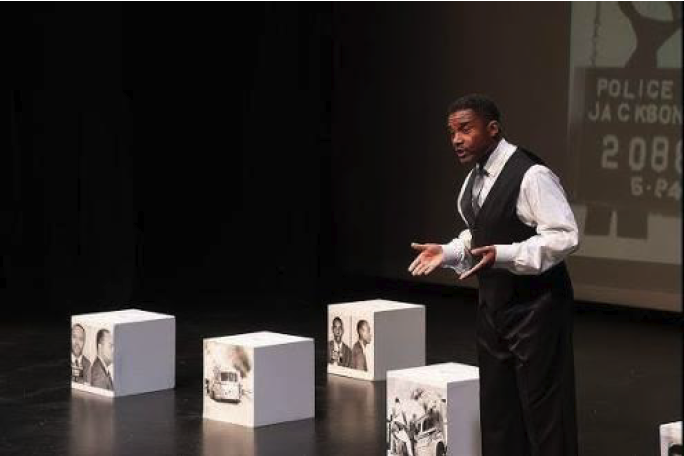
Actor Mike Wiley brought multiple voices to life during the production, portraying different perspectives connected to Galloway's story. With minimal set design and a focus on performance, Wiley guided audiences through the challenges Galloway faced as he worked to challenge slavery and advocate for the rights of formerly enslaved people.
Galloway's story began during a time when enslaved African Americans were denied basic freedoms and opportunities. After escaping slavery, he became involved in efforts to support the Union during the Civil War, using his intelligence and courage as a spy.
His work extended beyond the battlefield. Following the Civil War, Galloway became involved in politics and pushed for citizenship, voting rights and equal treatment for Black Americans during Reconstruction.
"Fire of Freedom" highlighted those different chapters of his life, showing audiences that Galloway's fight did not end once he reached freedom. Instead, his mission expanded into a lifelong commitment to creating a more equal society.
The production used theater as a way to preserve history and make the past feel immediate. Rather than presenting Galloway only as a historical figure, Wiley's performance showed him as a person who faced difficult choices, uncertainty and danger while fighting for a future he believed in.
The timing of the performance also added significance, taking place on Juneteenth, a holiday that commemorates the end of slavery in the United States and celebrates freedom, resilience and Black history.
For many communities, Juneteenth has become an opportunity not only to celebrate but also to reflect on the stories of those who fought for freedom before them. Galloway's life represents that struggle, showing how formerly enslaved people became leaders in the fight for justice after emancipation.
Through "Fire of Freedom," audiences were given a chance to learn about a North Carolina figure whose contributions have often received less attention than other Civil War-era leaders.
The performance demonstrated how historical storytelling can connect generations, using art as a tool to educate, preserve memory and encourage conversations about freedom and equality.
Abraham Galloway's legacy continues to serve as a reminder that freedom was not simply granted, but fought for by individuals willing to risk everything. His story reflects the courage, leadership and determination that shaped the history of Black Americans in North Carolina and across the nation.
By bringing Galloway's journey to the stage, "Fire of Freedom"
