
By Jheri Hardaway
Staff Writer
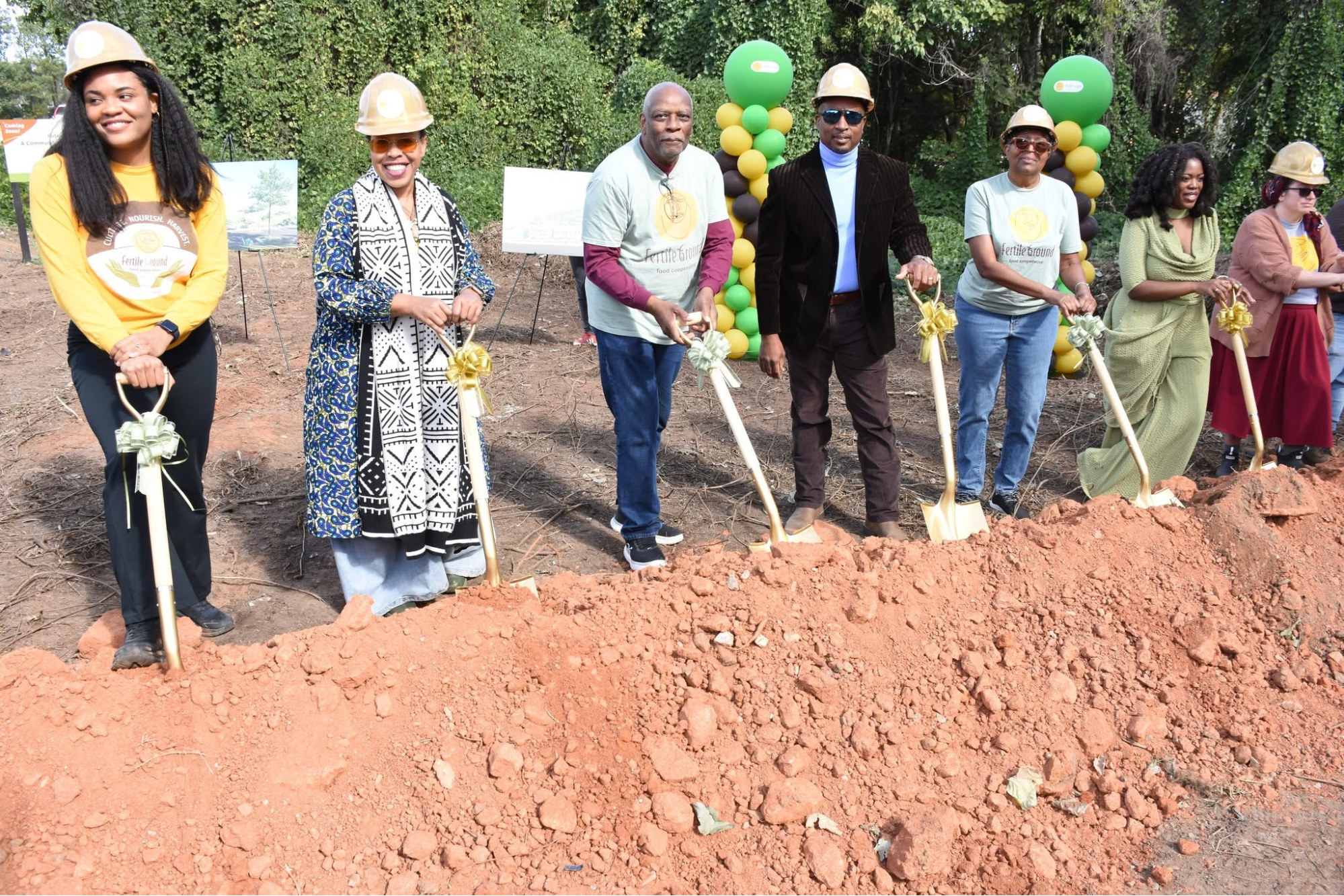
Raleigh, NC - In an era where systemic food apartheid and commercial disinvestment have left too many urban areas underserved, Southeast Raleigh is writing its own blueprint for self-reliance. Following years of grassroots organizing, policy navigation, and community mobilization, the Fertile Ground Food Cooperative marked a historic turning point on Saturday, October 24, 2026, officially breaking ground on a Black-led, community-owned grocery store.
The groundbreaking serves as the launchpad for the cooperative’s final capital campaign to complete construction on the full-service market. Aiming to welcome shoppers by late 2027 or early 2028, the enterprise represents far more than brick-and-mortar retail; it is an act of economic self-determination designed to dismantle food insecurity while anchoring community wealth in the neighborhood.
For decades, the standard corporate grocery model has repeatedly failed legacy neighborhoods, with national chains either departing or refusing to establish roots in urban centers. Fertile Ground’s model turns that dynamic on its head by prioritizing people over shareholders. The future cooperative market will feature fresh produce and daily pantry staples sourced directly from Black agriculturalists and regional growers across the state. This network deliberately deepens relationships with established local pillars, including the Black Farmers’ Market of Raleigh, ensuring that the food dollar cycles directly between regional producers and neighborhood dinner tables.
Operating under a democratic co-op framework, local residents and supporters who buy equity shares become legal member-owners. This structure grants them voting rights in major institutional decisions and allows them to partake directly in surplus profits. “We, the community residents, own our grocery store,” emphasized former board member and co-op leader Janet Howard. “With an emphasis on carrying local and regional products; giving consumers, producers, and workers leadership opportunities; and providing indoor and outdoor gathering spaces, our grocery store provides community decision-making and financial empowerment.”
The ceremonial soil-turning was preceded by an evening of fellowship and fundraising at the co-op’s inaugural Harvest Gala on Saturday, October 17, hosted at Dix Park’s historic All Faiths Chapel. The gathering served as a strategic rallying cry for financial contributions while honoring national movements of food sovereignty. Attendees heard keynote remarks from Malik Yakini, co-founder and former Executive Director of the Detroit Black Community Food Security Network and current board member of the Detroit People’s Food Co-op. Yakini, an architect of modern Black agrarian and cooperative thought, provided a masterclass on how collective land and food control serve as cornerstones of true racial equity.
Rooted in the philosophy that community infrastructure must be shaped by those who will inherit it, Fertile Ground collaborated with the project’s lead design firm, Andre Johnson Architects, to host a youth design challenge. Students from kindergarten through eighth grade across Wake County submitted their visions of what a neighborhood gathering space and grocery store should embody. Third-grader Kate and seventh-graders Gigi and Shyla took top honors. The three young designers were celebrated during the Harvest Gala, receiving pairs of tickets to the event and widespread recognition for their contributions.
As construction begins, organizers remain clear about the measurable benefits the finished cooperative will deliver to Southeast Raleigh:
Equitable Food Access: Eradicating localized food deserts with nutrient-dense, culturally relevant food choices.
Farmer & Vendor Pipeline: Offering dedicated shelf space and wholesale contracts to Black and regional agricultural purveyors.
Neighborhood Job Creation: Generating quality, living-wage employment and operational training within the community.
Civic Gathering Hub: Dedicated indoor and outdoor public spaces designed for community meetings, wellness workshops, and youth education.
Intergenerational Wealth Retention: Keeping local revenue circulating inside the district through shared patronage dividends.
“Our ultimate goal is to build community and belonging inside the grocery store,” said Board President Erin Dale McClellan. “We want everyone who joins our effort to know they are special, they are worthy, and we are in it together.
