
By Jordan Meadows
Staff Writer
Fresh signs of strain in the U.S. labor market are fueling concerns, as new data shows the economy shed 92,000 jobs in February and unemployment reached its highest level in years.
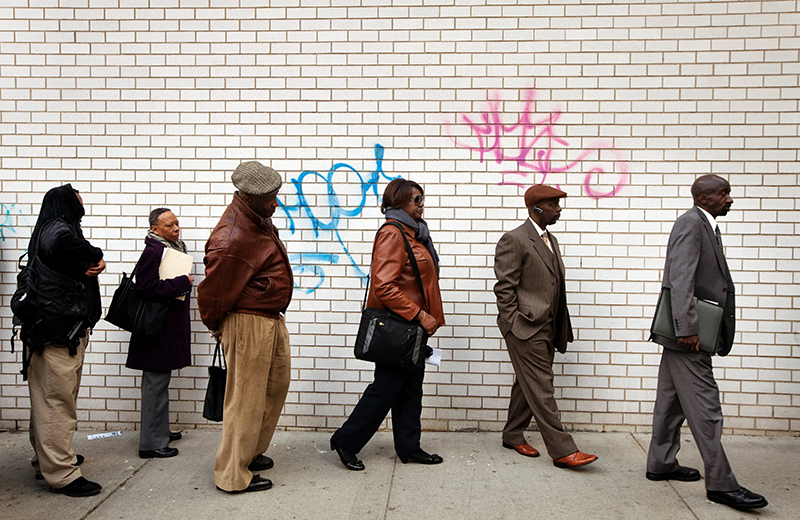
Economists say the warning signs are especially pronounced for Black workers, who continue to face significantly higher unemployment rates than other groups. According to the U.S. Bureau of Labor Statistics, Black unemployment measured 7.3% in January, climbed to 7.7% in February, and edged down slightly to 7.1% in March. That remains nearly double the 3.6% rate for white workers and well above the national average of 4.3%.
The March report showed modest improvement for Black workers, with employment rising by 42,000 and the unemployment rate declining from the previous month. But analysts warn that month-to-month changes do little to alter the broader trajectory.
“The decline in the Black unemployed from 7.7% to 7.1% is significant and encouraging. But don’t be surprised if it rises again as month-to-month changes obscure the overall trajectory,” said Andre Perry, senior director at the Brookings Institution.
Critics argue that sweeping cuts to federal agencies and workforce programs have disproportionately affected Black workers, particularly in the civil service, which has historically provided stable employment opportunities. More than 327,000 federal jobs have been eliminated over the past year, alongside efforts to scale back programs aimed at supporting minority-owned businesses, including the Community Development Financial Institutions Fund and the Minority Business Development Agency.
The administration’s proposed 2027 budget includes a 10% reduction in discretionary spending and targets a range of diversity, equity, and inclusion programs for cuts.
Supporters say such moves are aimed at reducing government spending, while critics warn they could deepen economic disparities.
Researchers at the Joint Center for Political and Economic Studies described current conditions as a “regression and recession” for Black Americans. Black unemployment reached 8.3% in November 2025, its highest level since the pandemic, while Black homeownership fell to 43.9% in early 2025—reversing years of gains.
Economists often describe Black workers as the “canary in the coal mine” during economic downturns, meaning their experiences can foreshadow wider labor market trouble. With job losses mounting, hiring stagnant, and disparities widening, analysts say the latest data presents a clear warning.
