
By Jheri Hardaway
Staff Writer
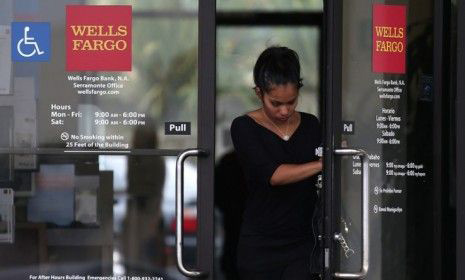
Charlotte, NC – Wells Fargo’s mortgage lending patterns demonstrate significant racial disparities in Charlotte and across North Carolina, according to a new report released by Americans for Financial Reform Education Fund, North Carolina United Power for Action/NC Industrial Areas Foundation, Organized Power in Numbers, and UNITE HERE North Carolina. The study analyzed nearly 25,000 North Carolina mortgage applications and over 16,000 mortgage loans at Wells Fargo between 2020 and 2024 and found racial disparities across several key metrics.
This is not Wells Fargo’s first time being in hot water for questionable banking practices. Wells Fargo denied Black, Latino, and Asian mortgage applicants about twice as frequently as white applicants. Wells Fargo rejected 22.5% of Black applicants, 25.6% of Latino applicants, and 20.3% of Asian applicants, compared with 10.3% of white applicants between 2020 and 2024. These racial disparities persisted even when controlling for income. People of color comprise the majority of the population in 27.3% of North Carolina census tracts, but Wells Fargo took only 15.4% of its mortgage applications and made only 14.3% of its loans in these areas. On a personal note, I was denied a mortgage loan from Wells Fargo in 2021, despite having excellent credit. As I moved forward in the lending process, I was later approved for $100,000 over what I was seeking from Wells Fargo with a different financial institution.
“The report underscores just how far away Wells Fargo is from cleaning up its long history of customer abuses. Regulators must immediately investigate this disturbing new evidence of racial disparities in Wells Fargo’s mortgage lending,” said Senator Elizabeth Warren
North Carolina is facing a significant housing affordability crisis. Roughly two-thirds of residents can’t afford to buy a home, and home prices have risen steeply across the state. Wells Fargo is the largest bank mortgage lender in the state, but its mortgage applications and loans have fallen by over 70% between 2020 and 2024. Some of the decline is undoubtedly tied to the rising interest rate environment.
“As a Latina woman who works at Wells Fargo, this report is personal. These are my people being denied the opportunity to own a home, to build generational wealth, to leave a legacy to their families— and at two to three times the rate of their white counterparts with the same income, that doesn’t feel like an accident. That feels like redlining,” said Danielle Olivas, a Wells Fargo teller from a unionized branch in Artesia, New Mexico, that is currently in bargaining for their first union contract. “Workers see what is going on. We sit with these families, we know their stories because we live it. We know what this bank is capable of, and we know when something isn’t right. But without a union, we have no protected way to speak up about it. That is why workers across the country are fighting to unionize, not just for ourselves, but for our communities. My people deserve better, and so do we.”
