
By Jheri Hardaway
Staff Writer
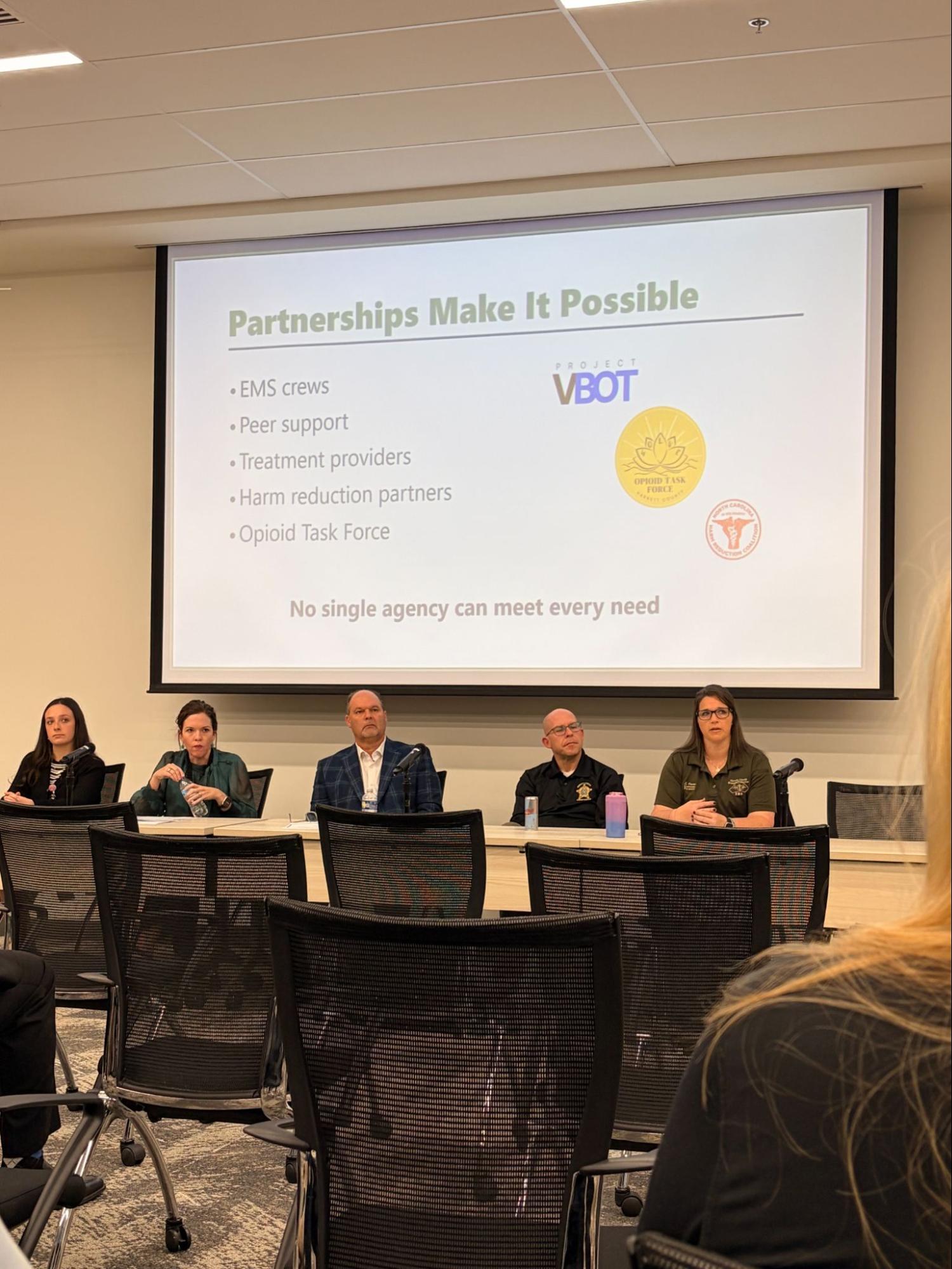
Lillington, NC - Confronted with a public health crisis that has touched every corner of North Carolina, Harnett County is demonstrating what happens when law enforcement, emergency responders, health officials, and community advocates abandon separate approaches for coordinated, compassionate intervention. During a recent community update hosted by the Harnett County Opioid Task Force, leaders shared encouraging local data alongside major upcoming funding opportunities and frontline recovery initiatives. Guided by its mission to bring together diverse specialties to address the epidemic with a holistic view, the task force detailed how settlement funds and grassroots partnerships are actively saving lives across the county.
The most striking update of the evening came directly from North Carolina Department of Health and Human Services (NCDHHS) Injury and Violence Prevention Branch data. According to the latest figures shared by the task force, Harnett County recorded three fentanyl-positive deaths year-to-date in 2026, marking a dramatic drop compared to 14 deaths during the same period the previous year. While task force leaders welcomed the steep decline as proof that harm-reduction and outreach efforts are gaining traction, they emphasized that even three lives lost is three too many. The task force continues to analyze geographic and demographic trends to ensure outreach gets to the neighborhoods and populations most at risk, and residents can view the updated data dashboard, strategic plan, and downloadable county-specific resource brochures online at solveharnett.org.
Financially, Harnett County is slated to receive approximately $12.3 million in national opioid settlement funds over an 18-year period, with roughly $5.5 million already received to date. To deploy those dollars strategically into local communities, the task force is transitioning into a formal Request for Proposals (RFP) reimbursement model featuring two funding cycles each year in the spring and fall, with the initial application window targeted for April 2027 and a subsequent cycle in October 2027. Approved organizations can receive multi-year support extending up to three years, contingent on annual reapplications and updated budgets. Eligible proposals must serve Harnett County residents, systems, or community partners across prevention, education, harm reduction, treatment, long-term recovery support, crisis response, and system improvement. Applicants will be required to submit clear implementation budgets, identify clinical healthcare partners for treatment-related proposals, and demonstrate how their work adds value alongside existing local services, with subcommittees currently finalizing an eight-criteria scoring rubric for the website.
Beyond long-term grants, county agencies highlighted immediate, barrier-free resources already operating on the ground, starting with the Harnett County Health Department. Serving as the county's primary Naloxone distribution hub, the department supplies free overdose-reversal kits and nurse-led training to walk-in residents, churches, schools, nonprofits, and businesses. The department also deploys a mobile medical unit, tracks distribution via zip-code heat maps, leads library outreach, and promotes the 988 Suicide and Crisis Lifeline through the Healthy Harnett coalition.
Working alongside public health educators, the Post-Overdose Response Team (PORT) brings direct follow-up care to overdose survivors. Operated by specially trained community paramedics, PORT contacts individuals within 24 to 72 hours after an overdose by phone or home visit to build trust without judgment. Working in partnership with organizations like Project VBOT and the North Carolina Harm Reduction Coalition, paramedics provide hygiene kits, leave-behind Narcan, telehealth connections, and Medications for Opioid Use Disorder (MOUD) such as buprenorphine and Suboxone, helping dismantle barriers related to transportation, housing instability, and cost.
The Harnett County Sheriff’s Office also detailed how it has shifted away from an "arrest our way out" mindset to break cycles of addiction and recidivism. Speaking on behalf of the agency, Jeff Armstrong highlighted the Sheriff’s STAR (Substance Treatment and Recovery) reentry program, which utilizes a full-time detention social worker inside the jail. Currently supporting 18 enrolled individuals, the program maintains existing MOUD prescriptions upon booking, inducts eligible inmates experiencing withdrawal onto safe medication protocols, and provides harm-reduction kits containing Narcan, test strips, and educational guides upon release when an individual's lowered tolerance puts them at heightened risk of fatal overdose.
In addition to in-custody support, the Sheriff’s Office recently partnered with the North Carolina Harm Reduction Coalition to launch LEAD (Law Enforcement Assisted Diversion), a pre-arrest diversion initiative. LEAD empowers deputies to connect individuals facing low-level offenses—such as simple possession, drug paraphernalia, or minor trespassing—directly with community-based care and support services rather than taking them to jail. For residents looking to prevent misuse at home, the Sheriff’s Office also serves as a permanent drop-off location for Operation Medicine Drop, offering a secure lockbox in its front lobby where anyone can safely dispose of unused prescription or over-the-counter medications.
From mobile medical outreach and post-overdose paramedic visits to pre-arrest diversion and transparent grant funding, Harnett County’s multi-agency strategy reflects a clear commitment to meeting residents where they are. As the task force prepares to open its upcoming funding cycles, local nonprofits, faith leaders, and healthcare providers are encouraged to stay connected through the task force’s online portal and monthly Healthy Harnett coalition meetings to help sustain the county’s downward trend in overdose fatalities.
