
By Jordan Meadows
Staff Writer
The Wake County Board of Commissioners has formally endorsed Solly’s Law, a proposed North Carolina law that would raise the minimum legal age to purchase tobacco and nicotine products from 18 to 21 and establish a statewide tobacco retailer permitting system.
The resolution was approved unanimously during the board’s Monday meeting, drawing support from local public health officials, community organizations and Wake County high school students who urged lawmakers to strengthen protections against youth vaping and nicotine addiction.
The resolution, introduced by commissioner Cheryl Stallings during the meeting, calls on North Carolina to align its tobacco sales laws with federal requirements and implement additional measures to hold tobacco retailers accountable. The endorsement makes Wake County the 177th government organization to support Solly’s Law.
A large group of supporters attended the meeting, including members of the Tobacco 21 Coalition, youth representatives, health center staff, and Wake County public health employees.
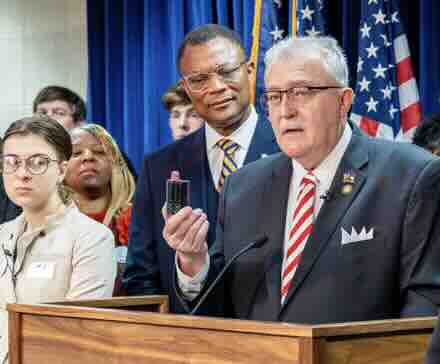
The resolution cited research indicating that 95% of tobacco users begin using tobacco before the age of 21. It also noted that most North Carolina youth obtain tobacco products, including electronic cigarettes, from retailers, while young people who obtain e-cigarettes from friends primarily get them from friends who are also under 21.
Congress raised the federal minimum legal sales age for all tobacco products, including e-cigarettes, from 18 to 21 in 2019. However, North Carolina's minimum legal sales age remains 18, leaving the state out of alignment with federal law.
According to the resolution presented to commissioners, 44 states had raised their minimum tobacco sales age to 21 as of March 2026, leaving North Carolina among only eight states that had not made the change.
Another major component of Solly’s Law would establish a statewide tobacco retailer permitting system. North Carolina is currently one of only eight states that do not require tobacco retailers to obtain a license or permit to sell tobacco products.
During the presentation, Gabriel Anderson, an advocate and Senior at Cardinal Gibbons High School, explained how raising the purchasing age could make it more difficult for younger teenagers to obtain nicotine products through their older peers.
“A 14-year-old rarely has 21-year-old friends, but they do go to school with 18-year-olds,” said Anderson. He added that raising the sales age would help reduce access during a critical period of brain development, when young people are particularly vulnerable to nicotine addiction.
The resolution also highlighted potential financial consequences for North Carolina if the state fails to adequately enforce federal tobacco sales requirements. Under the federal Synar Amendment, states are expected to reduce illegal tobacco sales to individuals under the age of 21.
If underage sales remain too high during required annual inspections, North Carolina could face penalties resulting in the loss of more than $5.2 million in annual funding through the federal Substance Abuse Prevention and Treatment Block Grant. The state uses this funding to support drug treatment services.
Following the resolution's presentation, the board approved the measure without opposition. The motion was seconded by Commissioner Tara Waters, and the chair announced that the motion carried after hearing no votes against it.
Elizabeth Lern, an advocate and student at Cardinal Gibbons High School, also praised Wake County's endorsement, describing it as an important step toward expanding protections for young people across the state.
“North Carolina is one of the few remaining states without these comprehensive protections, and we believe our young people deserve the same safeguards as youth across the country,” Lern said.
Mansu Shocho, a senior at Green Hope High School representing the Poe Youth Empowerment Team, said young people should not be expected to make healthy decisions in environments where tobacco and vaping have become normalized.
“One thing I've learned is that we cannot expect our young people to make healthier choices while surrounding them with environments that normalize tobacco and vaping,” Shocho said. “We should not have to wait until another generation becomes dependent on nicotine before deciding to act.”
The board's endorsement also received support from local public health advocates. During the meeting's public comment period, Wake County resident and medical doctor Saran Sundaram thanked commissioners for their continued investment in public health and human services, specifically recognizing their support for tobacco prevention and control efforts.
The county has supported the Region 7 Tobacco Prevention and Control Program and enacted an opioid settlement funding plan for fiscal years 2026 and 2027, which directs resources toward evidence-based addiction treatment, recovery support, early intervention, and recovery housing.
