
By Jheri Hardaway
Staff Writer
Veterans deserve more. United States servicemen and women earn their benefits and support through their service, yet far too many face ongoing challenges with healthcare access, mental health resources, disability claims backlogs, and housing support. Veterans treatment courts (VTC) aim to promote recovery and reduce recidivism in high-risk, high-need military veterans with repeat infractions related to substance use, mental health, and co-occurring disorders. Honorable Robert Russell founded the first VTC in Buffalo, New York, in January 2008. The structure of VTCs are similar to that of adult drug treatment courts in that they involve cooperation and collaboration with court officials, community partners, and law enforcement. The goal is to connect eligible veterans with benefits and treatment earned through military service. The program was initially funded initially by a grant from the Governor's Crime Commission from then-Governor Pat McCrory.
The VTC is an 18-24 month treatment and rehabilitation diversion program made specifically for veterans facing trouble with the law, while also facing mental health and substance abuse disorders. VTCs follow the adult treatment court best-practice standards and the VTC ten key components. At the heart of the model lies the seamless integration of addiction recovery, substance abuse treatment, and mental health clinical services directly alongside legal processing. This holistic approach relies on a multidisciplinary team that unites traditional judicial officers, Department of Veterans Affairs representatives, supportive family networks, and volunteer veteran mentors. Rather than pursuing traditional adversarial conflict, prosecutors and defense counsel work side by side to prioritize long-term rehabilitation and personal stability over conventional prosecution. By emphasizing early intervention and rapid placement, the program uses the immediate crisis of arrest to help veterans confront denial and accept assistance. Recognizing that healing requires addressing the whole person, courts provide a robust continuum of care tackling co-occurring struggles like chronic medical conditions, housing instability, joblessness, and combat trauma, all with the empathetic guidance of fellow veterans.
To maintain structure and accountability, participants undergo frequent testing for drug and alcohol abstinence, coupled with a coordinated strategy of graduated incentives and sanctions that reward progress while constructively addressing infractions. The presiding judge serves as an engaged team leader, engaging in direct judicial interaction to offer steady supervision, firm authority, and authentic encouragement. Program effectiveness is safeguarded through continuous monitoring and evaluation, ensuring operations adapt to meet outcome goals. Furthermore, ongoing interdisciplinary training keeps court personnel, VA partners, and community mentors aligned in purpose and practice. Ultimately, these specialized courts flourish by cultivating strong community partnerships with public institutions, local organizations, and veteran agencies, creating an expansive support network to help former service members rebuild their lives.
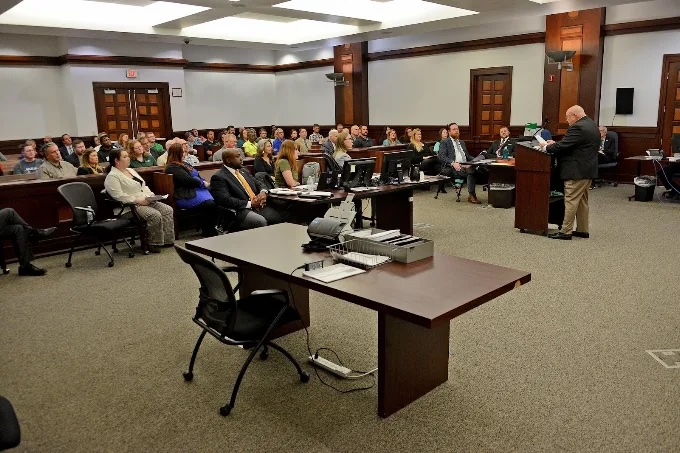
Harnett County Veterans Treatment Court District 12 is noted as North Carolina's inaugural VTC program, officially launched on November 6, 2013. The Harnett County Veterans Treatment Court is dedicated to serving those who served. Veterans treatment courts are operational in the following counties: Buncombe (District 40), Catawba (District 36), Cumberland (District 14), Forsyth (District 31), Gaston (District 38), Iredell (District 32), Moore (District 29), New Hanover (District 6), Onslow (District 5), Pitt (District 3), Randolph (District 37), Rockingham (District 22), Rowan (District 27), Union County (District 30).
The goal of the VTC is to help justice-involved veterans gain the tools and support they need to successfully reintegrate into society, as well as resources to take with them after graduating to continue to lead productive, stable, healthy lives. The help goes beyond treatment, and thanks to the wonderful, committed people of the community, the organization also connects veterans with resources needed for employment, housing, schooling, job training, and more. The Harentt County VTC Facebook page states, ”We believe no veteran should be left behind.”
