
By Jordan Meadows
Staff Writer
Raleigh Water officials told the City Council on Tuesday morning that the region's water demand is projected to double by 2065, laying out a set of costly long-term supply options as the Triangle emerges from its worst drought since 2007.
Whit Wheeler of Raleigh Water delivered the work-session presentation, covering current drought status, potential changes to the city's Water Shortage Response Plan, future demand scenarios, new water resource projects and regional planning efforts through Wake One Water and the Triangle Water Supply Partnership.
Wheeler said that while demand is growing roughly 3% a year, per-capita water use has dropped every year since about 2007, a trend he credited with dramatically extending the region's existing supply. Raleigh currently uses about 50 gallons per person per day, with single-family homes using roughly 100 gallons daily.
Falls Lake and Jordan Lake serve as the two main water sources in Wake County, with the Triangle Water Supply Partnership distributing Jordan Lake water across seven counties including Lee, Orange, Durham, Wake, Johnston and Harnett.
Wake County's water demand is being driven by a population expected to exceed 2 million residents. About 85% of county residents currently rely on municipal water systems, while the remaining 15% depend on private groundwater wells.
Raleigh Water, which serves Raleigh, Wake Forest, Zebulon, Knightdale and Fuquay-Varina, is expanding its primary treatment facility to handle up to 120 million gallons a day by 2031. The system currently draws roughly 60 million gallons a day, with demand projected to reach 98 million gallons a day by 2047.
Officials say current water resources are adequate through at least 2045, but the options under investigation for beyond that horizon carry significant price tags.
Mayor Janet Cowell and other regional leaders are weighing a new reservoir on the Little River that would net an additional 14 million gallons a day, though inflation has pushed its estimated cost above $380 million, and environmental researchers at NC State have argued new reservoirs can be counterproductive because large open water surfaces lose enormous volume to heat evaporation. Another option under discussion would pull water from Kerr Lake, north of Henderson, which could supply roughly 40 million gallons a day but would require moving water across multiple counties; the Little River or Neuse River could serve as alternatives, though both would be needed together to match Kerr Lake's output.
Depending on how much water the city ultimately pursues, those projects could cost anywhere from $540 million to $1.8 billion.
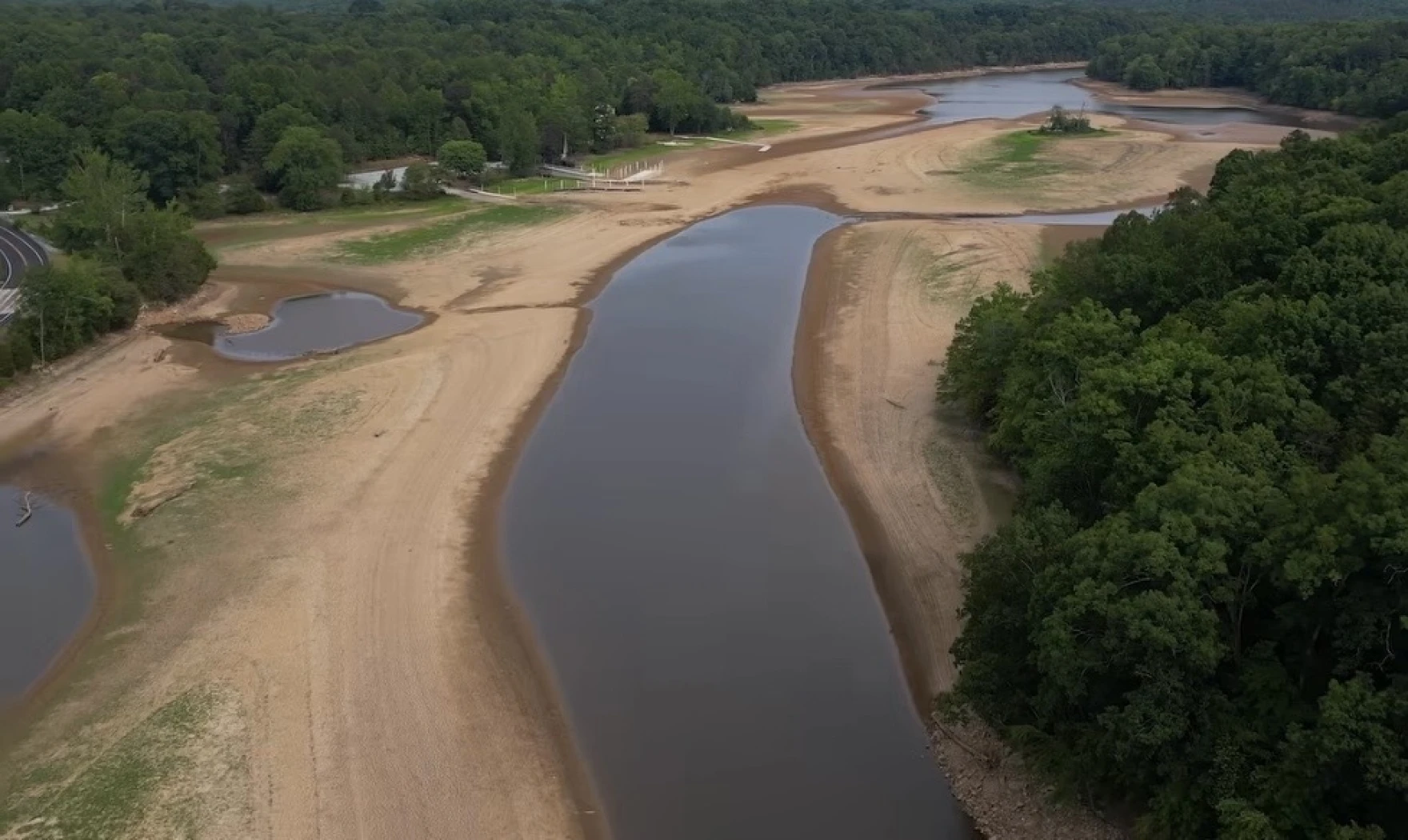
The presentation came on the heels of a severe, yearlong drought that stretched from late 2025 into mid-2026, escalating by summer into the region's worst dry spell since 2007, with parts of the Triangle reaching "exceptional drought," the highest federal classification. Raleigh Water triggered mandatory Stage 1 Water Shortage Restrictions in April 2026, heavily limiting yard irrigation for more than 650,000 customers across Raleigh, Wake Forest, Garner, Knightdale, Rolesville, Wendell and Zebulon.
Despite the rules, customer water consumption actually rose early in the summer compared with the previous year, and the city logged more than 1,100 violations, issuing hundreds of warnings and multiple fines. Heavy late-summer rainfall finally replenished Falls Lake from a low of 62% back to 84% capacity, allowing officials to formally lift restrictions on Aug. 3.
Council members raised questions about both environmental strategy and enforcement data.
The mayor pro tem Jane Harrison noted that while the water supply pool looks healthy, an Army Corps report rated water quality at only 40%.
"That's not Raleigh's water, but we're all part of the system," she said, adding that "the more we can be a leader, hopefully that can have some positive effects; we're all playing in the same pools."
She asked whether the city could divert resources toward environmental measures to preserve the Falls Lake supply, and warned that shifting to smaller rivers would carry far greater land-use consequences for surrounding communities. She described North Carolina as a water-rich state but pressed staff on what policy options might save residents money while drawing on more sources.
Council member Christina Jones asked how the department distinguishes between noncompliance and simple growth when measuring increases in water usage, demand and irrigation.
"As we look forward, on the growth and future measurements on growth increases vs. non-compliance increases," Jones said.
Staff noted that treating water drawn from more stressed sources requires more chemicals and affects downstream users more heavily, and pointed to Cary as an example of a system that runs conservation campaigns even when its supply is adequate.
While newer developments trend less water-intensive—multifamily complexes and smaller lawns mean less seasonal irrigation, historically the driver of peak summer demand — data centers have emerged as a new kind of industrial demand. Unlike typical commercial users, which return most of their water to the municipal sewer system for treatment and reuse, data centers rely on evaporative cooling, permanently removing millions of gallons from the local ecosystem.
Raleigh Water received one proposal on June 30 for radio telemetry services covering preventative maintenance and emergency response for its Supervisory Control and Data Acquisition network, which remotely operates and collects data from water storage tanks, sewer pump stations and flood warning sites across the utility system. The system's vulnerabilities were underscored recently when a 30-inch water main break on N.C. 55 triggered system pressure advisories and boil water notices for tens of thousands of residents across Cary and Morrisville.
