
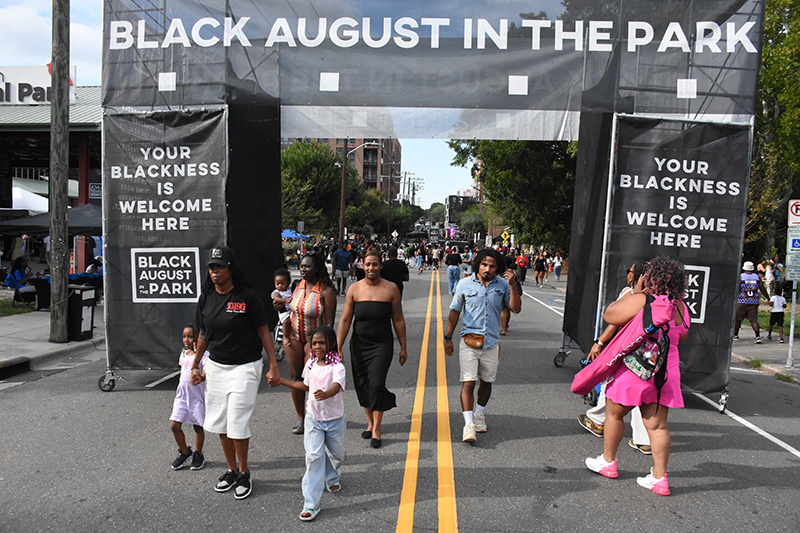
DURHAM, N.C. — For a decade, Black August in the Park has brought Black residents and visitors together in Durham to celebrate culture, remember histories of resistance and build community through music, food, art and fellowship.
The annual gathering returned to Durham Central Park on Aug. 30 as the centerpiece of a three-day celebration marking its 10th year. Organizers expanded this year's event into a weekend of programming, with activities beginning Aug. 28 and continuing through Aug. 30.
The main festival featured music, food, community organizations and opportunities for residents to connect. Organizers describe the gathering as both a celebration and an extension of the Black August tradition of remembrance, resistance and collective liberation.
Black August originated in California prisons in 1979, when incarcerated Black organizers began commemorating people who had died in struggles for Black liberation. The observance later spread beyond prisons, becoming a broader period of reflection on Black political history, resistance and freedom.
In Durham, organizers have reimagined that history through a public celebration centered on Black joy and community.
Black August in the Park began in 2015, when a group of friends sought to create a space where Black people could gather, celebrate their identity and respond to changes affecting Durham's Black communities. Over the years, the event has developed into an annual tradition that organizers say has drawn thousands of people.
The gathering's connection to Durham is significant. The city was once home to a nationally recognized Black business district along Parrish Street, commonly known as Black Wall Street. During the late 19th and early 20th centuries, Black-owned businesses, professionals and institutions helped make the area an economic center for the city's Black community.
That history remains part of the conversation surrounding Black August in the Park as Durham continues to experience rapid growth and redevelopment.
For organizers, preserving space for Black culture is not separate from celebrating it.
“Culture is memory. Culture is identity. Culture is infrastructure,” the festival says in its description of the event.
This year's festival was organized by the Black Farmers Market, which received $16,817 from the city of Durham through its fiscal year 2026 Festival and Special Events funding program.
The 2026 weekend also represented a change for an event that had traditionally been free. Organizers introduced paid weekend passes to help support artists, production, local businesses and the infrastructure needed to sustain the festival. A free-ticket program was also offered for people who could not afford admission.
The organizers said the change was intended to help Black August in the Park continue into the future without abandoning its emphasis on accessibility.
The weekend began Aug. 28 with a film screening at the Hayti Heritage Center. Saturday programming included a wellness experience and a live podcast event before Sunday's main celebration at Durham Central Park.
The festival's organizers say the event remains rooted in the idea that joy itself can be a form of resistance.
That approach has helped Black August in the Park develop an atmosphere that longtime attendees and organizers have compared to a family reunion or homecoming. Music and dancing share space with community organizations, food vendors and opportunities for political and social engagement.
More than a festival, organizers envision the gathering as a place where people can connect with Durham's Black history while imagining its future.
After 10 years, that combination of remembrance and celebration remains at the center of Black August in the Park — a Durham tradition that uses a public park to create space for Black culture, community and collective possibility.
