
By Jordan Meadows
Staff Writer
Rev. Dr. Pauli Murray, born in Baltimore in 1910 and orphaned and raised in Durham, became one of the 20th century's most consequential yet least recognized civil rights figures.
Murray was raised in Durham by an aunt, Pauline Fitzgerald Dame, in a house at 906 Carroll Street built by Murray's maternal grandfather, a Union Civil War veteran born into slavery. Murray graduated at the head of the class in Durham before moving to New York to attend Hunter College, graduating in 1933 with a degree in English. Murray later wrote of that maternal Fitzgerald lineage in the 1956 memoir "Proud Shoes."
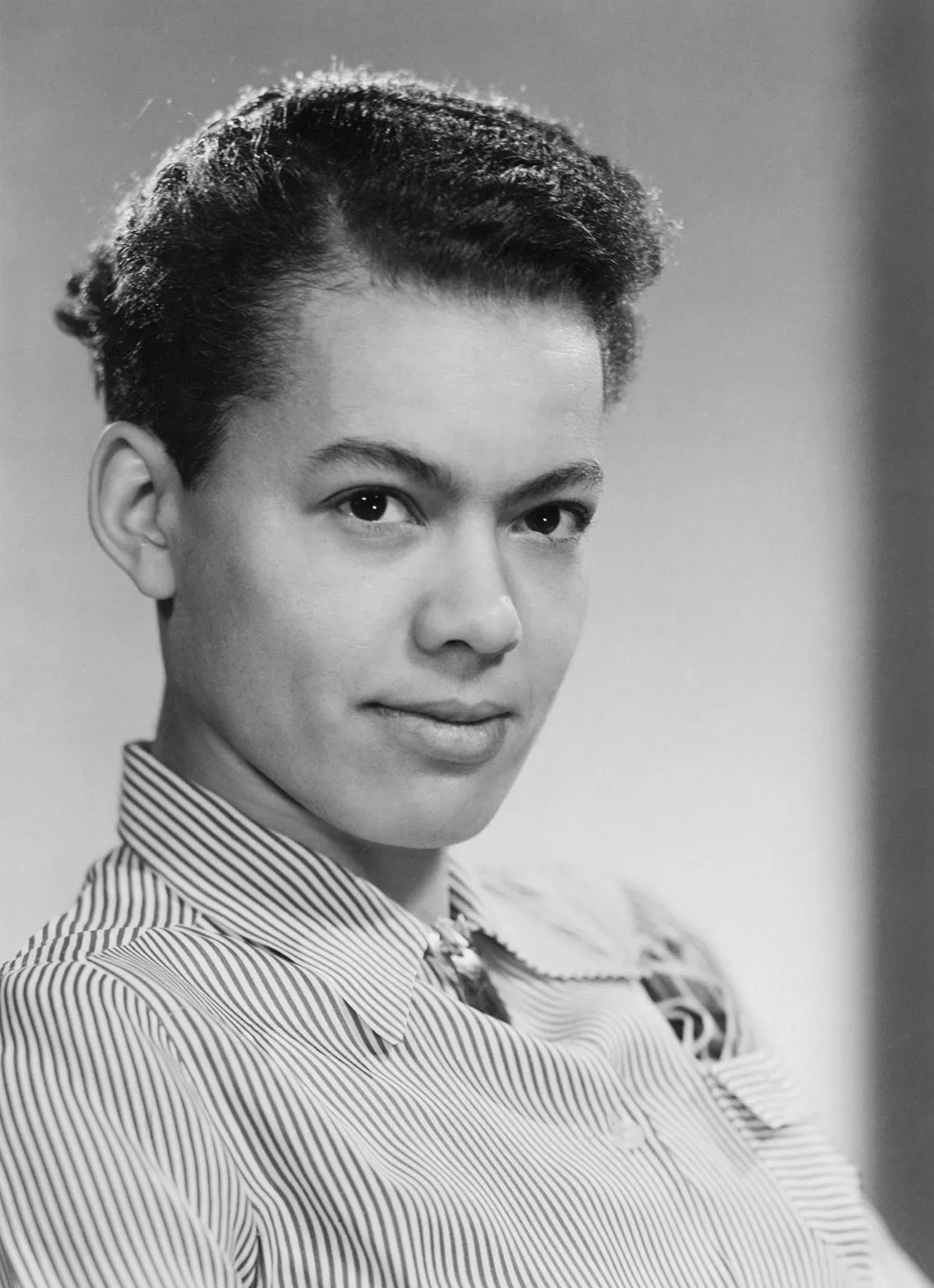 In 1938, Murray applied to graduate school at the University of North Carolina at Chapel Hill and was refused admission because of race, at a time when every school and public facility in the state was segregated; the NAACP considered a lawsuit but ultimately declined, citing questions over Murray's state residency.
Two years later, Murray was arrested for sitting in the whites-only section of a Virginia bus, 15 years before Rosa Parks' more famous refusal in Montgomery, and went on to organize restaurant sit-ins in Washington, D.C., two decades before the Greensboro sit-ins.
Murray enrolled instead at Howard University's law school, the only woman in the class, graduated first academically in 1944 as class valedictorian and Chief Justice of the Howard Court of Peers, and was then denied the chance to pursue postgraduate study at Harvard because of gender, despite a letter of recommendation from President Franklin D. Roosevelt that left the law faculty's vote deadlocked 7-7. Murray later described that rejection, coining a term that entered the civil rights lexicon, as earning a "Bachelor of Feminism" degree and coined the broader phrase "Jane Crow" to describe sex discrimination's parallels to Jim Crow.
A Rosenwald Fellowship took Murray to Berkeley for a master's degree instead, and after passing the California bar, Murray became the state's first Black deputy attorney general in 1946.
Murray's 1950 book, "States' Laws on Race and Color," a comprehensive catalog of discriminatory laws nationwide, was called the "bible" of the civil rights movement by NAACP Chief Counsel Thurgood Marshall and proved instrumental to the legal argument in Brown v. Board of Education. In 1965, Murray became the first Black person to earn a doctorate in law from Yale.
A year later, working with the ACLU alongside lawyer Dorothy Kenyon, Murray co-wrote the brief in White v. Crook, which struck down an all-white, all-male jury system in Alabama and is regarded as a turning point establishing legal protections against sex discrimination; that scholarship later shaped Ruth Bader Ginsburg's argument in the 1971 case Reed v. Reed, the first time the Equal Protection Clause was applied to sex discrimination, and Ginsburg listed Murray as a coauthor on her brief in recognition of the debt.
Murray's earlier writing pressing the analogy between race and sex discrimination, particularly as it doubled the burden on Black women, has since been described by scholars as a direct precursor to Kimberlé Crenshaw's theory of intersectionality. In 1966, Murray became a founding member of the National Organization for Women, present at the informal gathering where the organization's purpose was first sketched out on a napkin by Betty Friedan; Murray later wrote that the small group who set up NOW's permanent structure never imagined it would grow into a 200,000-member political force within two decades.
President John F. Kennedy appointed Murray to the 1961-63 Presidential Commission on the Status of Women, and Murray had already served as a correspondent and informal adviser to First Lady Eleanor Roosevelt for years, a friendship documented in hundreds of letters between the two. Murray also held faculty or administrative posts at the Ghana School of Law, Benedict College, and Brandeis University.
Murray was also, throughout her life, open in her own era's limited terms about relationships with women and about not fitting conventional gender presentation. That part of Murray's biography, combined with a brief association with the Communist Party that drew McCarthy-era scrutiny, contributed to Murray being written out of the movement's mainstream narrative during the respectability politics of the mid-20th century, according to historians.
Late in life, Murray returned to the Episcopal Church, in which she'd been raised, and in 1977 became the first Black woman ordained as an Episcopal priest, delivering her first Holy Eucharist at the Chapel of the Cross in Chapel Hill—the same chapel where her enslaved grandmother had been baptized generations earlier. The Episcopal Church later named Murray among its Holy Women, Holy Men in 2012, effectively canonizing her as a saint.
Murray also published two autobiographies, including "Song in a Weary Throat," and a poetry collection, "Dark Testament".
Murray's Durham childhood home has since been designated a National Historic Landmark and now serves as the Pauli Murray Center for History and Social Justice, and Yale named a residential college in Murray's honor.
