
By Dominique Heath
Columnist
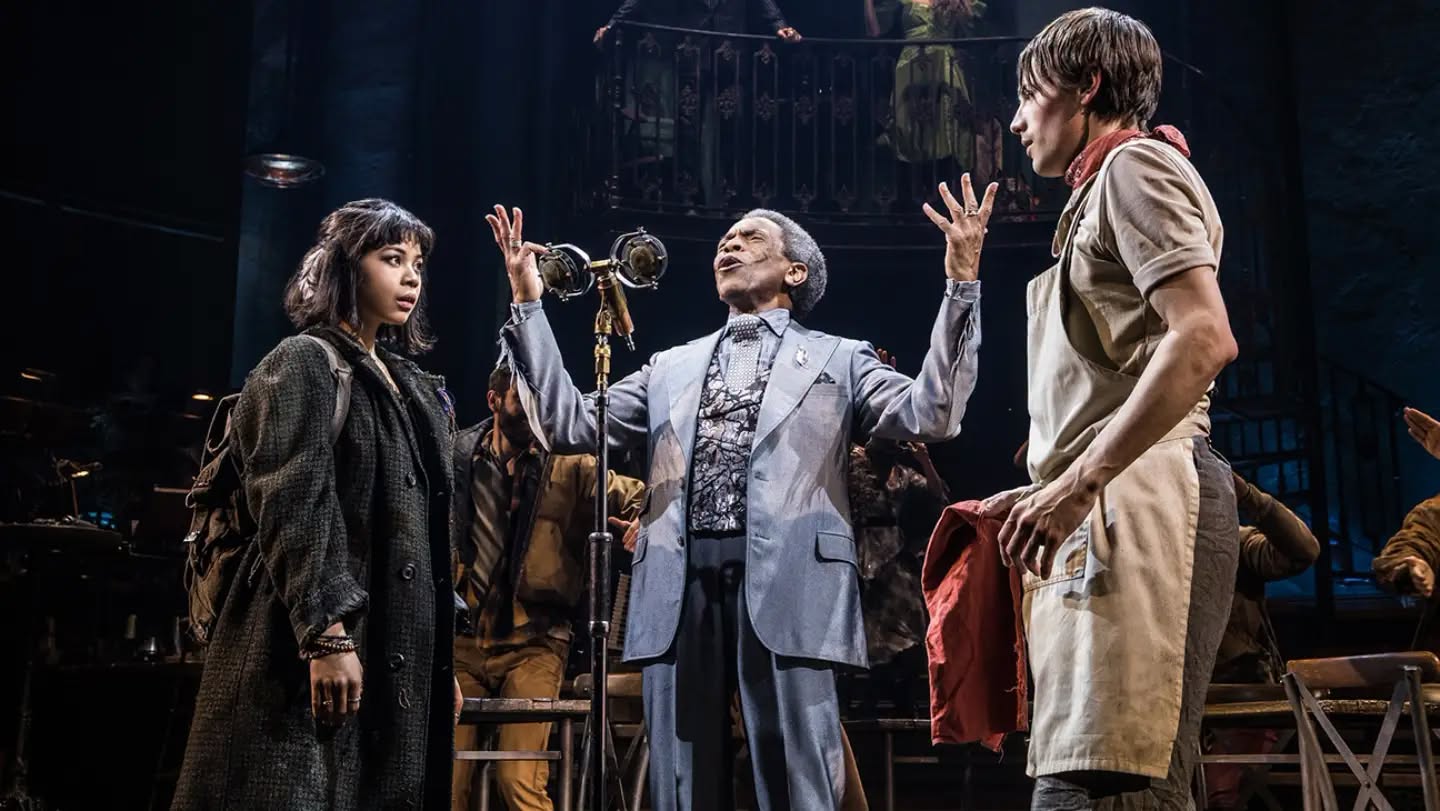
For five days, Hadestown stepped off the Broadway stage and onto the big screen, giving moviegoers a rare opportunity to experience the Tony Award-winning musical on the big screen. More than a filmed stage production, Hadestown is a bold reinterpretation of Greek mythology that blends ancient storytelling with the musical traditions of New Orleans, creating a production that feels both timeless and strikingly modern.
The musical intertwines two Greek myths: the love story of Orpheus and Eurydice and the complicated relationship between Hades, ruler of the Underworld, and his wife, Persephone. While the original myths are centuries old, Hadestown places them in a world shaped by jazz, blues, folk, and gospel, proving that great stories can transcend both time and culture.
The New Orleans influence is impossible to ignore. Rather than treating jazz as background music, the production allows it to shape the pace, emotion, and personality of the story. Hermes takes on the role of storyteller, guiding the audience through each chapter with ease, emotion, and flare, while the live band becomes as much a part of the narrative as the actors themselves. The result is a musical that uplifts Black American music.
The choice to tell a Greek myth through the sounds of New Orleans is one of the production's most compelling creative decisions. It demonstrates how stories evolve as they pass through different cultures. The themes of love, loss, hope, and perseverance remain unchanged, but the music gives them a new voice rooted in a city whose artistic legacy has influenced generations of musicians and storytellers.
Beyond its music, Hadestown offers pointed social commentary.
In this retelling, Hades is less of a mythical god and more of an industrial magnate. He builds an empire on labor, convincing workers that the walls surrounding Hadestown exist for their protection. They are promised security, stability, and purpose, but in exchange they surrender their freedom, spending their days working endlessly while slowly forgetting who they are and why they came.
The wall becomes one of the production's strongest symbols. Built under the promise of safety, it ultimately serves to isolate and control the very people it claims to protect. It becomes easy for audiences to interpret and draw parallels to the wall as a commentary on labor, class, politics, and wealth.
At its center, however, Hadestown remains a love story.
Orpheus and Eurydice are not portrayed as flawless heroes. They are two young people trying to build a life together while navigating poverty, uncertainty, and impossible choices. Their relationship feels contemporary because its struggles are familiar. Love alone cannot erase hardship, yet hope continues to drive both characters forward, even when the outcome seems inevitable.
The cast brings that emotional weight to every performance. Each actor fully embraces the production's unique style, balancing humor, heartbreak, and powerful vocals without overshadowing one another. The chemistry among the ensemble and the actors reinforces one of the musical's central messages: no story belongs to a single generation. Each retelling allows new audiences to discover something different.
That may be Hadestown's greatest achievement. Rather than simply adapting Greek mythology for modern audiences, it reimagines it through an American cultural lens while preserving the emotional core that has allowed these stories to endure for thousands of years.
For audiences fortunate enough to catch its limited theatrical release, Hadestown offered more than an evening of entertainment. It demonstrated how music, mythology, and social commentary can come together to create a production that feels just as relevant today as the stories did when they were first told.
