
By Jordan Meadows
Staff Writer
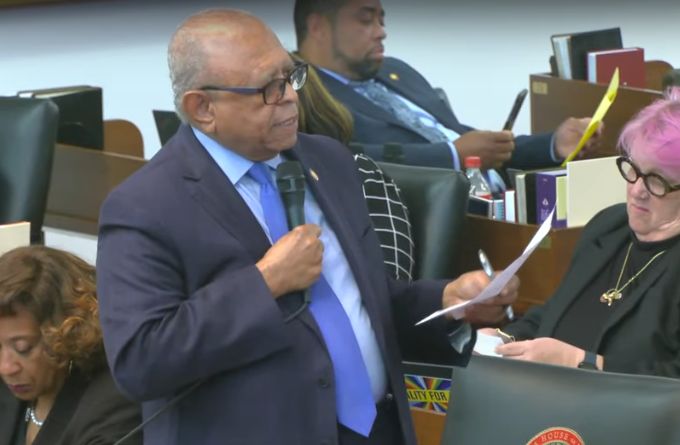
Two outgoing state lawmakers out of Mecklenburg County have changed their political affiliation to unaffiliated after losing their Democratic primaries by wide margins.
State Reps. Carla Cunningham and Nasif Majeed announced their departures from the Democratic Party days apart, with Cunningham changing her registration on Friday and Majeed following on Monday. Both are nearing the end of their current terms after being defeated in March primaries by primary challengers.
In statements, both lawmakers cited concerns about political conduct and a growing disconnect with their party.
Cunningham said she had experienced “a troubling wave of hostility” and described what she viewed as inconsistencies within the political landscape over the past four years.
Majeed echoed similar concerns, saying he could not remain aligned with a party where issues of fairness were not adequately addressed.
Their decisions follow decisive primary losses in their respective districts. Cunningham, who has served seven terms representing House District 106, was unseated by Rev. Rodney Sadler, who received more than 70% of the vote. Majeed, a four-term representative from District 99, lost to Valeria Levy, who secured roughly two-thirds of the vote. Both challengers were backed by progressive organizations and, in Cunningham’s case, by Gov. Josh Stein.
The outcomes reflect a broader trend seen in several Democratic primaries across the state, where incumbents who had crossed party lines on key votes were defeated. In addition to Cunningham and Majeed, other lawmakers who supported Republican-backed legislation or veto overrides—including Rep. Shelly Willingham—also lost their seats.
Much of the voter backlash centered on high-profile votes during the 2025–2026 legislative session.
Both Cunningham and Majeed supported the “Power Bill Reduction Act,” which eliminated an interim carbon reduction target for Duke Energy. Majeed also voted with Republicans to override a veto on legislation defining sex and gender in state law, while Cunningham cast a deciding vote to override a veto on House Bill 318, which requires local sheriffs to cooperate with federal immigration authorities. Cunningham’s remarks during debate on that bill, including comments about cultural assimilation, drew criticism from some constituents and advocacy groups.
Challengers in both races pointed to those votes as key issues in the campaigns: Levy said constituents were frustrated by decisions that added costs or diverged from party priorities, while Sadler framed his campaign as a shift away from what he described as divisive policies.
The primary results were shaped in part by coordinated organizing efforts. Advocacy groups including labor unions and environmental organizations invested significant resources in voter outreach, including hundreds of thousands of door knocks and direct mail campaigns highlighting incumbents’ voting records.
Political analysts and organizers say the results signal growing expectations among Democratic primary voters for party alignment. Despite breaking a Republican supermajority in the state House, some Democrats’ votes with Republicans effectively allowed veto overrides to continue, prompting frustration among segments of the party’s base.
Cunningham’s party switch does not immediately change the balance of power in the state House, where Republicans hold 71 of 120 seats—just one short of a veto-proof supermajority. However, her future caucus alignment remains unclear and could influence legislative dynamics if she chooses to work more closely with Republicans.
Republican leaders welcomed the party changes. House Speaker Destin Hall praised both lawmakers for what he described as independent decision-making.
“Today’s Democratic Party has no room for those who don’t toe the line of the far left’s agenda,” Hall said. “I applaud my colleagues, Rep. Cunningham and Rep. Majeed, for putting their constituents first."
Cunningham, a registered nurse who has been active on health policy, said her decision was rooted in a desire to serve constituents rather than a political party. Majeed similarly emphasized ethical concerns in his statement. Neither lawmaker has announced plans beyond the end of their current terms, though both said they intend to continue serving their districts until then.
