
WUNC - Five years ago, 42-year-old Andrew Brown, Jr. died in his car a few yards away from his home in Elizabeth City, with a deputy sheriff's bullet in the back of his head.
Brown Jr.'s death in 2021 made international headlines as a national reckoning of racism and police brutality arrived at a small town along the northeastern edge of the state.
On the fifth anniversary of his death with the attention of the national press long gone, several people interviewed by WUNC News say that the persistent hope for healing and accountability still remains.
"He was executed," said D.J. Bryant, manager of local barbershop Legends Barber Lounge. “It could happen to any one of us at any given time, especially of our persuasion.”
Legends Barber Lounge is known and frequented by many in this majority-Black city of nearly 20,000 people, including members of law enforcement and those who knew Brown.
The city hasn't been the same since Pasquotank County Sheriff’s deputies wielding AR-15 rifles arrived at Brown’s home on April 21, 2021 to serve drug-related search and arrest warrants.
Brown was unarmed. He shot five times in his car as he attempted to flee.
A year after the shooting, the involved deputies – two white officers and one Black officer – were not fired by Sheriff Tommy Wooten. Their actions were ruled lawful by then District Attorney Andrew Womble, who said there would be no charges against them.
Only partial and redacted body camera footage of Brown’s shooting was authorized for release to the media or public by a judge.
In 2022, the Brown family settled a civil lawsuit with the county for $3 million.
The city hasn't been the same since Pasquotank County Sheriff’s deputies wielding AR-15 rifles arrived at Brown’s home on April 21, 2021 to serve drug-related search and arrest warrants.
Brown was unarmed. He shot five times in his car as he attempted to flee.
A year after the shooting, the involved deputies – two white officers and one Black officer – were not fired by Sheriff Tommy Wooten. Their actions were ruled lawful by then District Attorney Andrew Womble, who said there would be no charges against them.
Only partial and redacted body camera footage of Brown’s shooting was authorized for release to the media or public by a judge.
In 2022, the Brown family settled a civil lawsuit with the county for $3 million.
“It is definitely still an open wound,” said Michael Harrell, vice president of the Pasquotank County NAACP. “ You hear people still talking about it. It's open wounds, lot of unanswered questions, and a lot of feelings involved.”
Sheriff Tommy Wooten did not respond to requests for an interview with WUNC News for this story.
What changed — and didn't — in Elizabeth City
Since 2021, some of the notable changes in Elizabeth City have happened in local government: the election of new city council candidates representing Black districts, including the election of community advocate Kirk Rivers in 2022, and his subsequent re-election in 2025.
Rivers is the first Black mayor to serve a second mayoral term, according to state election records.
The Citizens’ Advisory Council for Pasquotank County was also created in 2022. It's a 13-member law enforcement oversight council to field complaints regarding the Sheriff’s Office.
"Maybe (the city) changed, and also not changed," said Markie Riddick, 46, who said he was a childhood friend of Brown's. "It changed because the trust in the (criminal justice) system ... showed more of how the system's a failure."
Riddick argues the criminal justice system was designed to favor law enforcement officers at fault if they killed someone like Brown, since they could lean on his criminal past to defend themselves.
Brown, who had been in and out of jail and prison for most of his adult life, wasn't being sought for violent crimes.
"The system's just so messed up," Riddick said. "I have had my ups and downs in the system. I have my failures in the system. I've been in the system. So, me speaking is not coming from an outside person looking in."
In the aftermath of the shooting, former District Attorney Womble referred to Brown as a "violent felon", accusing him of using his car as a "deadly weapon" against officers, justifying the shooting under the law.
“I think we all kind of grew up poor, especially in the neighborhood we lived in,” said Riddick. “Trauma itself is the whole branch of Elizabeth City, because there's no safety net for nobody here as of right now.”
A call for accountability
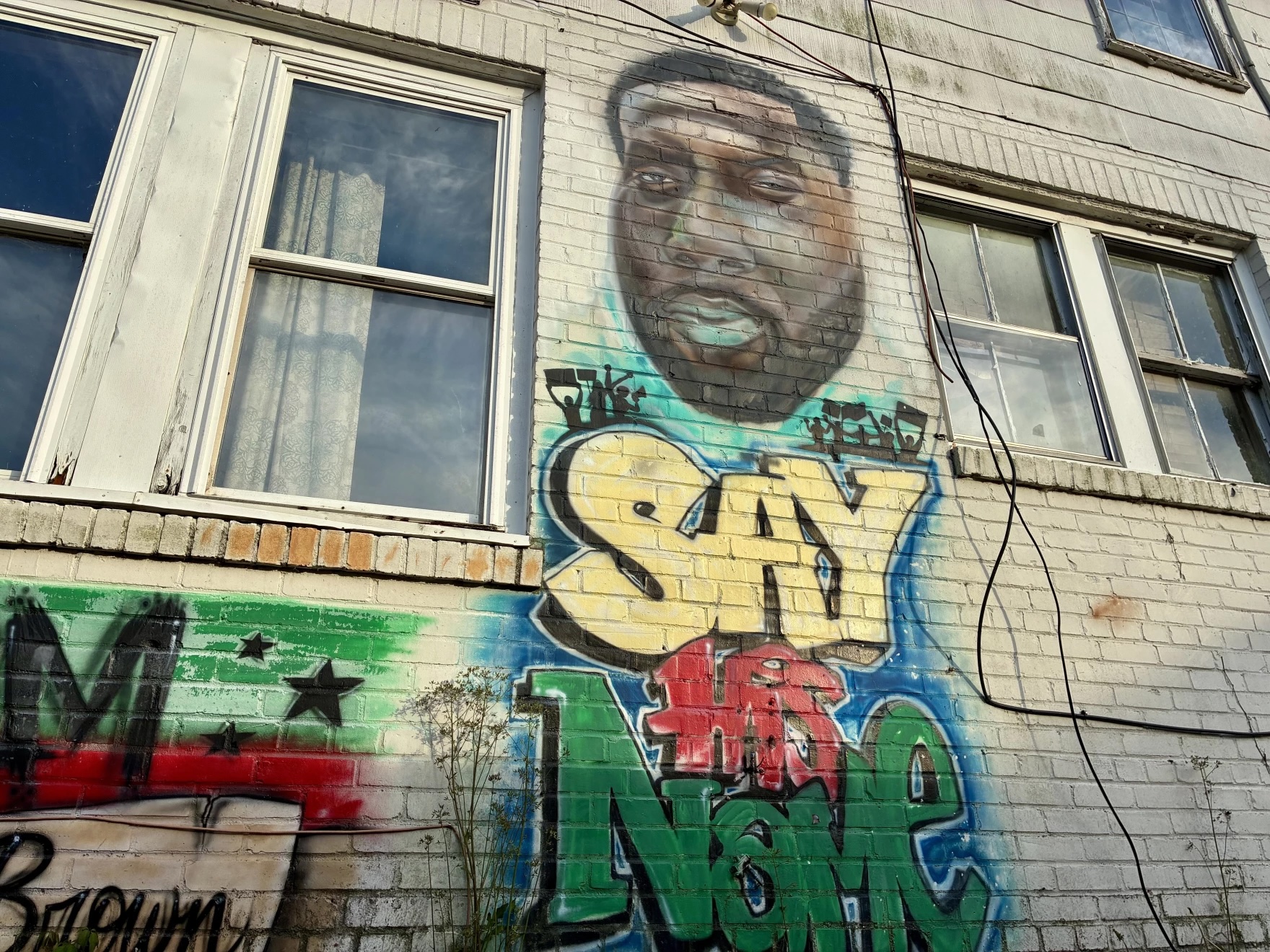
Elizabeth City tattoo artist Jimmy Bones, who painted a mural of Brown on the side of his former home, says mistrust in law enforcement has persisted.
“It's not sitting well with people in those demographics, because we're not seeing a change and how those areas are policed, and how those people that live there are handled,” Bones told WUNC News. “I haven't seen much of a dialogue open between the two.”
Bones points out the similarities in the January shooting death of Renee Good, who was shot and killed in her car by Border Patrol officers in Minneapolis during federal immigration operations.
“You have somebody in the car and they're scared,” he said. “They have a way to get away, so naturally, they're gonna drive away. And then you have this officer that's really not in danger of being run over.”
Pasquotank NAACP president Keith Rivers, brother of Mayor Kirk Rivers, says the open wound in the city never really closed. “Things seem not to go away,” Rivers said. “That creates apathy.”
The NAACP previously called for the resignation of Pasquotank's sheriff.
Womble, the former district attorney of Pasquotank's prosecutorial district, was elected Superior Court Judge for District 1 a year after Brown was killed.
Sheriff Wooten was re-elected after winning the Republican primary race for sheriff this year.
The day after his win, Wooten fired four of his employees, including an officer who ran against him, and Maj. Aaron Wallio, who was the sheriff’s liaison to the Citizens’ Advisory Council, according to reporting by local newspaper The Daily Advance.
“When the community looks back and it's still the same people in the same places, that's what takes away hope,” Rivers said.
The work ahead
Pasquotank native Ashley Mitchell, attorney for social justice think tank Forward Justice and chair of the Citizens’ Advisory Council, says the council’s work is an effective bridge between the Sheriff’s Office and the people of the county.
But, she says, their work is still cut out for them, and they need more from the Sheriff's Office.
“There have been efforts, don't get me wrong,” said Mitchell in an interview. “The forming of the CAC is definitely an effort. The sheriff creating some community programs and trying to be more visible. But unless you're really touching the people, the ones who are truly impacted, and listening to them, you're not really fixing that issue of harm in the community.”
Increasing public awareness and visibility for the council is still an ongoing challenge, due to Elizabeth City’s unique culture and demographics as a rural city, Mitchell said.
In the wake of Brown’s death, Pasquotank County Commissioners contracted with Police2Peace, a nonprofit that studies how to improve law enforcement community relations.
Following months of meetings and community listening sessions, Police2Peace released the “Pasquotank Peace Initiative" report in 2022.
The plan recommends enhanced de-escalation training for officers and much more engagement with residents.
In a regular meeting this week, Pasquotank County commissioners agreed to a request by the NAACP to revisit the plan and assess the county’s progress on those goals.
