By Jordan Meadows
Staff Writer
Nearly 30 years after residents of the predominantly Black Kingsboro community–sitting in between Rocky Mount and Tarboro–stopped a massive hog slaughterhouse from being built in their neighborhood, the fight is being recognized as a defining environmental justice victory in Edgecombe County.
In the mid-1990s, Iowa Beef Processors (IBP) proposed constructing a 300-acre hog slaughterhouse between Rocky Mount and Tarboro that would have operated 24 hours a day and killed an estimated 20,000 to 30,000 hogs daily. The facility was expected to employ about 2,000 workers and bring constant tractor-trailer traffic through the rural community.
In 1995, the white-majority Edgecombe County Board of Commissioners began efforts to rezone land in Kingsboro from residential to heavy industrial use to accommodate the IBP facility.
The proposal drew little public attention until Tarboro attorney Marvin V. Horton Jr. noticed a legal notice in The Daily Southerner announcing the rezoning request. After pressing county officials for details, Horton learned that IBP was behind the plan.
“They were excited about it,” Horton later recalled in a documentary called We Can Do Better. “I told them I thought I was going to be sick.”
Horton alerted Kingsboro residents, warning that the slaughterhouse posed serious risks to the community’s health, property, and environment. The proposed facility raised immediate concerns about water use and pollution. The slaughterhouse would have required up to six million gallons of water per day from the city of Rocky Mount, a demand that opponents argued threatened the Tar River as a clean water source.
Environmental advocates warned that waste discharge and runoff from the plant could contaminate waterways and harm aquatic life. Slaughterhouses are widely recognized as significant contributors to water pollution, with weak regulatory oversight often leaving neighboring communities exposed to environmental and health risks. Residents also objected to the project’s economic structure, noting that many of the higher-paying management jobs would be based in neighboring Nash County, while Edgecombe County would bear the environmental burden and receive mostly low-wage positions.
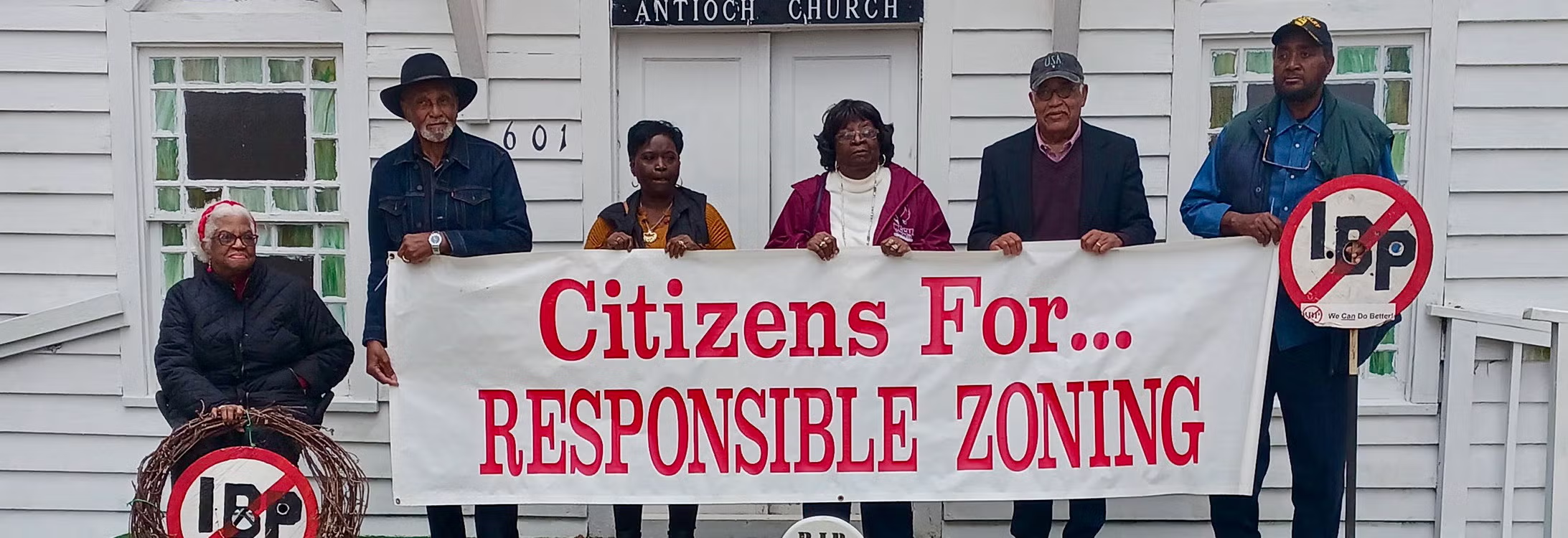
In response, residents formed the Citizens for Responsible Zoning (CRZ), chaired by Kingsboro resident Gleno Horne. Under the slogan “We Can Do Better,” the group organized public opposition to the IBP proposal.
CRZ members packed planning board meetings and public hearings, where crowds frequently overflowed and chanted “No IBP!” The group brought in a health expert from Iowa to brief the public and elected officials on the impacts of hog slaughterhouses, and held organizing meetings at Antioch Church, where residents established the Kingsboro Property Owners Association.
In March 1996, the Kingsboro Property Owners Association filed a lawsuit against Edgecombe County, alleging contract zoning, abuse of public duty, and the creation of a public nuisance. One issue proved especially influential: water consumption. Horton and other opponents argued that slaughtering tens of thousands of hogs per day would require two to three times the daily flow of the Tar River, making the project environmentally untenable.
On April 9, 1996, after months of protests, public hearings, and legal action, the Edgecombe County Board of Commissioners voted to deny IBP’s rezoning request. The decision marked a major victory for Kingsboro residents, who viewed the outcome as protection against environmental racism — the disproportionate siting of polluting industries in communities of color.
Instead of a hog slaughterhouse, the land once targeted by IBP was later developed into an eco-friendly QVC distribution center, powered in part by a solar farm and employing up to 2,000 people.
The Kingsboro fight has since been documented in We Can Do Better, a 30-minute documentary produced by Charlotte-based filmmaker Frederick Murphy in collaboration with East Carolina University Special Collections and the Phoenix Historical Society. The film was supported by a 2022–23 Institute of Museum and Library Services Library Services and Technology Act grant.
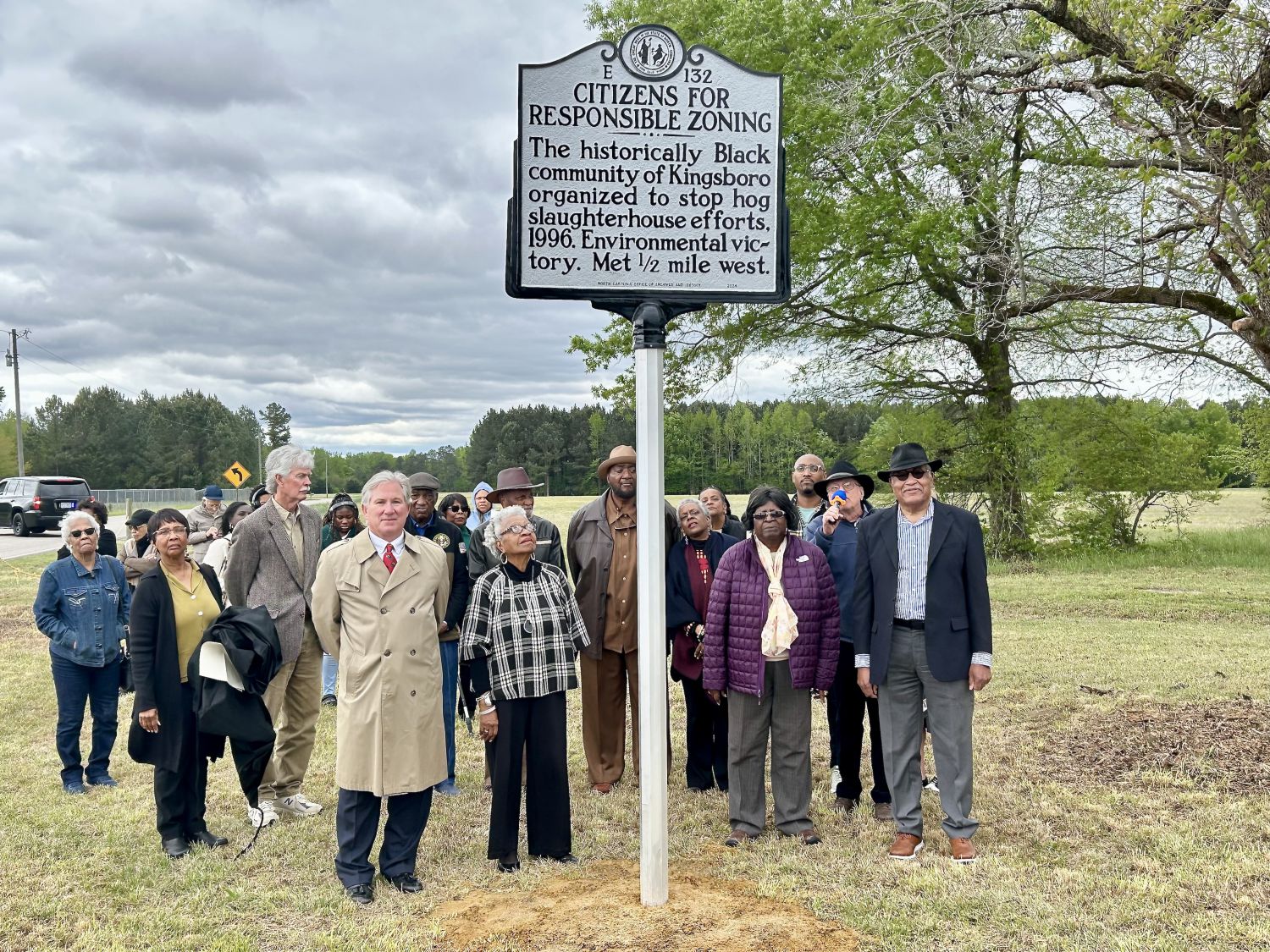
In April 2025, the Citizens for Responsible Zoning were honored with a North Carolina Highway Historical Marker, dedicated at the intersection of Kingsboro Road and Antioch Road. More than 125 people attended the unveiling ceremony, which recognized the contributions of 18 CRZ participants who have since died.
Community members and advocates continue to cite the Kingsboro campaign as a model for grassroots organizing and environmental justice, particularly in rural Black communities facing industrial development pressures.
As resident Melvin Ray Hart said during the commemoration, “If those people hadn’t stood together and spoken so forcefully, anything could have happened.”
