By Guns & Ammo Staff
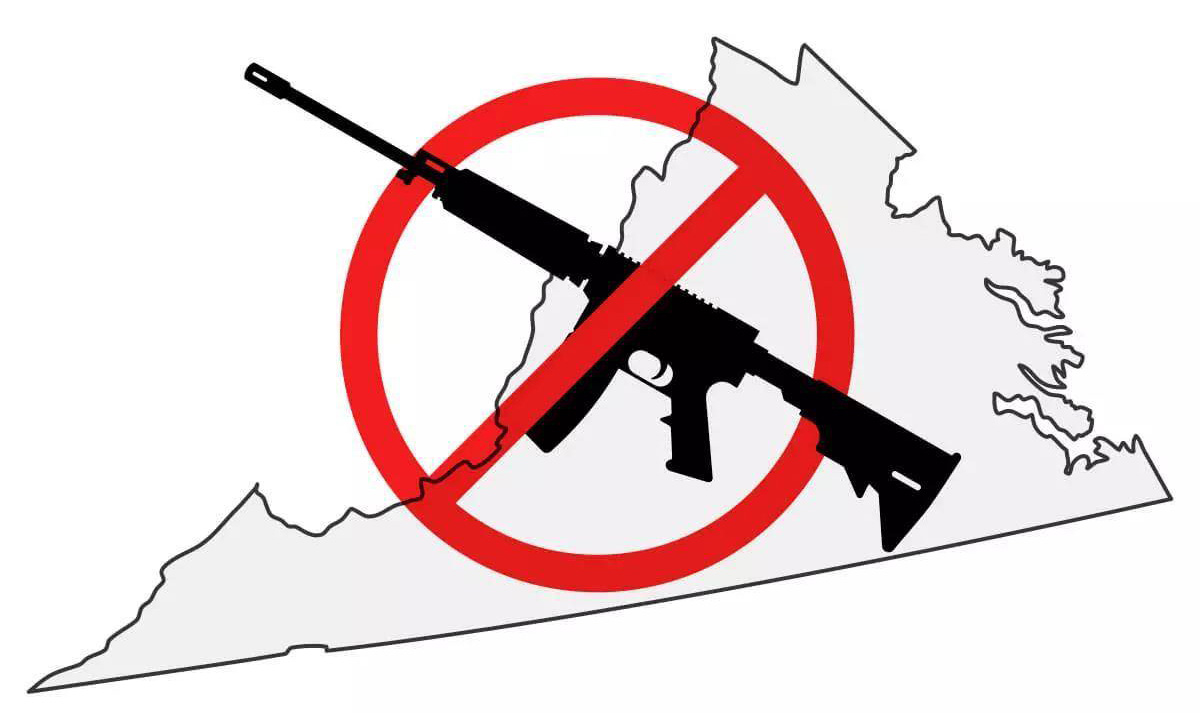
Virginia is poised to become the 12th state in the nation to ban so-called "assault weapons". Senate Bill 749, which passed along party lines by the Democrat-controlled General Assembly and now sitting on Gov. Abigail Spanberger's desk, will prohibit the sale, purchase, importation, manufacture, and transfer of a broad category of semi-automatic firearms beginning July 1, 2026. Spanberger, who has publicly supported such legislation, is expected to sign it.
Law-abiding Gun owners across the Commonwealth are scrambling to understand what it means for them. Violent criminals, such as the known terrorist and convicted felon who murdered an Army ROTC instructor at Virginia’s Old Dominion University, will be unaffected by the legislation.
If there was any doubt that gun control has become a completely partisan issue in the Commonwealth, the passage of this bill should put that to rest. As soon as Virginia Democrats achieved the “trifecta” of the Governor’s office and majorities in both legislative chambers, this ban marched forward. Not a single Democrat voted against it.
Republicans in the General Assembly pushed back hard, pointing out the hypocrisy of the soft-on-crime members pushing for the ban. “Democrats in Virginia refuse to take criminals who repeatedly terrorize our communities off our streets,” Senate Minority Leader Ryan McDougle (R- Mechanicsville) told Guns & Ammo. “But they want to punish law-abiding gun owners who follow the rules.”
Critics also note the arbitrary nature of the ban. The features targeted by SB 749 are largely cosmetic, a point opponents made with little effect on the bill's supporters.
The Scope
The bill defines "assault firearms" using a feature-based test that will be immediately familiar to anyone who lived through the 1994-2004 federal ban — because it's essentially modeled on it. Lead sponsor Sen. Saddam Salim (D–Fairfax) has said as much.
Under SB 749, a semi-automatic, centerfire rifle that accepts a detachable magazine becomes prohibited if it has any one of the following features:
● A folding, telescoping, or collapsible stock
● A thumbhole stock or pistol grip that protrudes beneath the action
● A second handgrip or protruding grip for the non-trigger hand
● A grenade launcher
A threaded barrel capable of accepting a muzzle brake, compensator, suppressor, or flash hider In practice, this sweeps up the AR-15 and millions of other legally owned rifles. Semi-automatic pistols face a two-feature test. The bill also bans magazines that hold more than 15 rounds.
The Grandfather Clause
As we’ve seen in other jurisdictions, the law includes a grandfather clause. Firearms and magazines lawfully owned before July 1, 2026, may be kept but not sold or otherwise transferred to a follow Virginian. The plan is clear: eliminate ownership within a generation.
Law enforcement agencies are exempt from the sales ban, and federally licensed dealers may continue to acquire and transfer the affected firearms but only to eligible buyers outside Virginia or to other FFLs, not to individual Virginia residents.
Violations are classified as a Class 1 misdemeanor. Convictions carry a three-year prohibition on purchasing, possessing, or transporting any firearm: a consequence that should not be taken lightly.
The Legal Fight
Second Amendment advocates are not waiting to see how this plays out in the legislature. The constitutional argument centers on District of Columbia v. Heller (2008), which held that firearms "in common use" for lawful purposes cannot be banned. By any measure, the AR-15 and similar semi-automatic rifles qualify since they are among the most popular firearms in the country.
The legal landscape is genuinely mixed. Several federal district courts have struck down similar laws under the Bruen (2022) standard, which requires the government to show that a restriction is consistent with America's historical tradition of firearm regulation. But the 4th Circuit, the federal appellate court with jurisdiction over Virginia, upheld Maryland’s "assault weapon" ban in 2017 and 2024. That tension may ultimately have to be resolved by the Supreme Court, which declined to take up the Maryland ruling in 2025.
Virginia gun owners who have not yet contacted their governor or gotten involved with pro-Second Amendment organizations in the state should do so now. The legal challenges ahead will take time, money, and organized pressure to succeed. The clock is already running.
