By Jordan Meadows
Staff Writer
Lawmakers on the North Carolina Joint Legislative Education Oversight Committee spent Tuesday morning grappling with how best to measure student success, modernize curriculum, and address challenges in the state’s teacher pipeline, with members raising pointed questions about both instructional methods and long-term outcomes.
A recurring theme throughout the meeting was how students are being taught, particularly in early grades.
Rep. David Mills of Union County suggested the state may need to revisit more traditional approaches to instruction.
“We should take a look at going back to textbooks in k-5. I think we have too much choice and flexibility in content…what the concrete vetting of what thinking behind these things are,” Mills said.
But others pushed back on the idea that traditional tools alone reflect how students learn today.
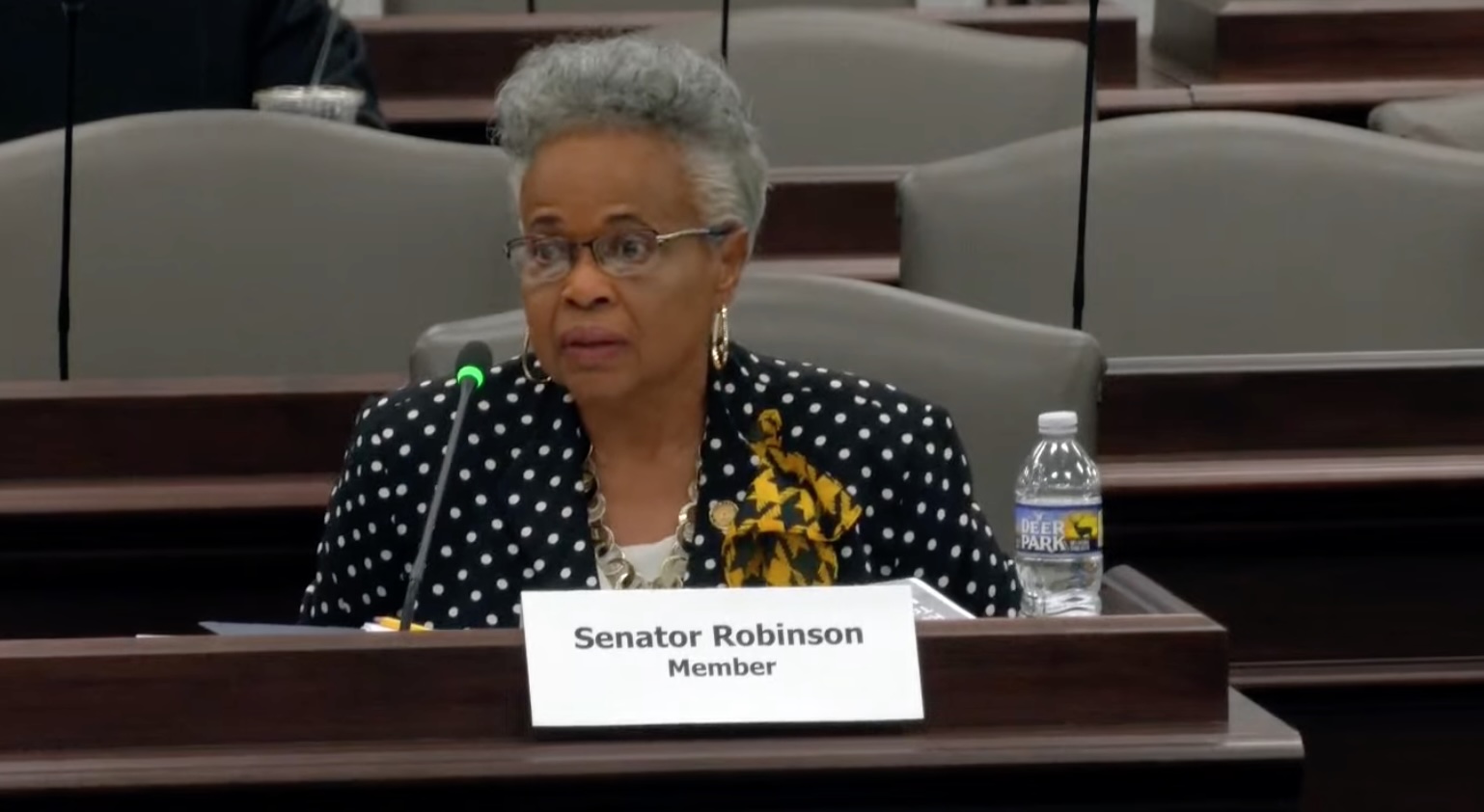
Sen. Gladys A. Robinson of Guilford County questioned whether current reforms align with modern learning styles and national trends.
“Kids aren’t using textbooks. They’re using models and machines, that’s how they learn. I know my grandchildren use all the technology, and that’s how they’re learning. What is the national trend… you’re comparing the recent math proficiency scores with—relative to what?” Robinson said.
Sen. Robinson also raised concerns about implementation, asking, “Where will teachers get the preparation necessary to learn the new curriculum and skills being implemented in the math courses?”
State education officials said districts will have time to adjust, pointing to face-to-face and hybrid options over two full years to allow school systems to develop plans and train teachers on what they described as a “crosswalk,” a tool designed to help educators understand where and how standards are changing across grade levels.
Officials from the North Carolina Department of Public Instruction acknowledged that while test scores show some improvement, there is still significant room for growth.
“In mathematics, NC is essentially within the pack of the states—slightly above in 8th grade math. In all aspects, we have potential to grow,” said State Superintendent Mo Green.
Still, lawmakers questioned how those gains are being measured.
Rep. Hugh Blackwell of Burke County raised concerns about relying on year-to-year comparisons of different student groups, noting that broader trends may tell a different story about readiness over time. He pointed to the need to examine outcomes across entire cohorts of students, suggesting that current data reveals declining college readiness the longer students “remain in the system”.
Blackwell also pressed officials on expectations for student achievement in reading.
“Should we expect two thirds of students to be proficient in reading?” he asked. Education officials acknowledged that scores could be improved but did not offer definitive answers during the meeting.
In addition to curriculum and performance, lawmakers also heard a proposal aimed at addressing the state’s ongoing teacher shortage. The organization BEST NC presented its TeachReadyNC plan, which would create up to 3,000 teacher apprenticeships across the state. The initiative is designed to provide structured, paid, on-the-job training for college graduates entering the profession, rather than placing them directly into classrooms under emergency or alternative licenses.
“This could be up to 3,000 teacher apprenticeships for the state of North Carolina, converting people who normally would come in under emergency license without any teacher preparation, instead entering through an apprenticeship of at least one year where they’re learning how to become a teacher for a year before jumping into that deep end of the pool,” said Brenda Berg of BEST NC.
The proposal comes as North Carolina continues to rely heavily on alternatively licensed teachers.
The meeting highlighted a central tension facing state education leaders: how to balance evolving classroom practices with measurable outcomes, while ensuring teachers are adequately prepared to meet changing demands.
