By: Jordan Meadows
Staff Writer
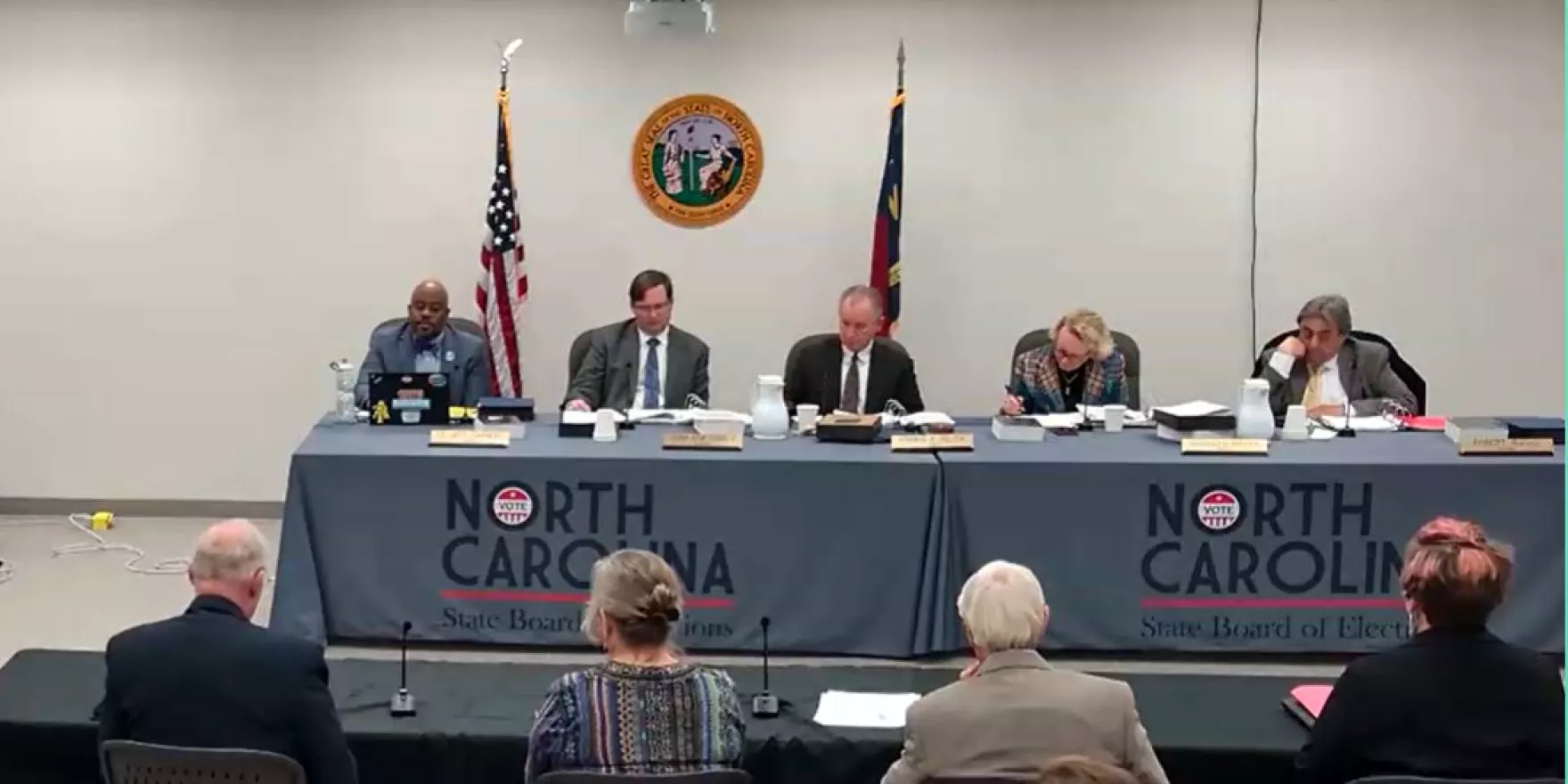
A series of recent decisions by the North Carolina State Board of Elections is reshaping how and where voters across the state will cast their ballots in the upcoming primary.
Since December 2025, the state board has begun approving early voting plans from county boards after Republican lawmakers in the General Assembly shifted oversight of the elections board from the Democratic governor to the GOP-led State Auditor’s Office. The change has coincided with a broader ideological shift: all 100 local election boards in North Carolina moved from Democratic majorities to Republican control.
As part of that process, nearly three dozen counties have moved to reduce early voting access by cutting polling sites, limiting hours, or eliminating Sunday voting altogether. Of those counties, at least 10 are located in newly redrawn congressional districts or have large Black populations. Advocacy groups argue the reductions threaten long-standing voting traditions such as “Souls to the Polls,” a civil-rights-era initiative led by Black churches that mobilizes congregations to vote together on Sundays.
Marcus Bass, executive director of the North Carolina Black Alliance, said Sunday voting has provided both access and protection for decades.
“The opportunity to go with your faith center, to go vote en masse, helps fight back against racist voter intimidation,” Bass said. “It helps fight back against misinformation at the polls.”
State Auditor Dave Boliek defended the changes, saying local boards considered multiple factors when drafting their plans, including projected turnout and cost. He said early voting is expensive and counties must balance access with financial realities.
“We’re dealing with a primary, and elections are not cheap,” Boliek said. “There are financial considerations on how many early voting sites you would need, depending on what you expect turnout to be.”
Boliek said he remains confident the revised schedules will result in a successful election cycle, describing the goal as expanding access while maintaining election security.
The issue has been especially visible on college campuses. In January, the state board voted 3–2 to exclude early voting sites at four universities: North Carolina A&T State University, UNC Greensboro, Western Carolina University, and Elon University. At NC A&T, the largest historically Black college and university in the nation, students reacted to the decision, arguing that the loss of on-campus early voting places an unfair burden on students without cars or flexible schedules.
An NC A&T student approached Guilford County elections board Democrat Carolyn Bunker in tears after the board’s vote, explaining she felt responsible for driving classmates to off-campus polling locations while juggling school and work. Bunker said election boards should not place that kind of burden on voters. Student leaders at NC A&T have since launched “Protect Ours,” an effort to organize transportation to the polls during early voting.
“This was no goof of the system or administrative error,” Rouse said. “This is a modern-day poll tax on a student.”
Similar debates unfolded in Western North Carolina, where the state board upheld Republican-backed plans in Jackson County to reduce early voting sites from six to four and eliminate a long-standing early voting location at Western Carolina University. State board chair Bill Thompson rejected claims that the change amounted to voter suppression, saying students could travel the short distance to off-campus sites.
Republican members have repeatedly cited historical turnout data to justify the decisions, arguing that campus sites were not used during midterm or municipal elections and that mail-in absentee voting and Election Day voting remain available options.
The changes come alongside heightened scrutiny of mail-in voting, with new rules tightening deadlines and administrative requirements. Voting advocates say the combined effect of fewer polling locations, reduced early voting days, and stricter absentee ballot procedures will fall hardest on older voters, students, rural residents, and communities of color.
Despite the setbacks, students and advocacy groups say they are preparing to adapt. At NC A&T, organizers are raising money for shuttle services and planning a march from campus to the Old County Courthouse during early voting. They also hope to coordinate with student leaders at other universities that have lost early voting sites.
Early voting starts February 12th in the North Carolina elections.
