By Jordan Meadows
Staff Writer
Southeast Raleigh residents are calling out city officials over a series of long-planned parks bond projects that community members say are drifting away from their original vision.
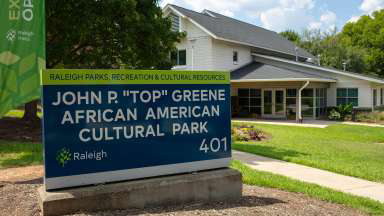
At the center of the dispute are several initiatives tied to the South Park neighborhood, including the John P. “Top” Greene African American Cultural Center, the South Park Heritage Trail, Heritage Plaza, and Phase II of the John Chavis Memorial Park master plan. Residents who have worked on these projects for decades say a lack of transparency and limited public input now threaten both the projects’ integrity and their cultural significance.
“This was supposed to be the heart of the project,” one resident of Southeast
Raleigh said of Heritage Plaza. “It was meant to represent the endurance of those who’ve historically lived there, to remind people and give them an experience of what life was like earlier in this community.”
The conflict traces back to a 2007 neighborhood-led planning effort known as the South Park Heritage Walk Revitalization Strategy. Developed through the South Park-East Raleigh Neighborhood Association (SPERNA) and the Central Citizens Advisory Council, the plan aimed to preserve and highlight the history of the East Raleigh-South Park National Historic District—an area anchored by Shaw University and St. Augustine’s University.
By that time, the district had already been recognized as one of the most prominent historically Black residential areas in Raleigh, listed on the National Register of Historic Places.
Residents say the revitalization strategy was comprehensive, involving local artists, architects, engineers, and institutions such as North Carolina State University College of Design. The goal was cultural preservation—telling the stories of people and places that shaped the community.
“We were focusing on the stories of Southeast Raleigh,” one resident said. “It’s too big to be general—there needs to be a focus on this area.”
The South Park Archives initiative, first proposed in the late 1990s, was built and maintained by volunteers for years inside the cultural center. Programming and staffing were minimal, according to residents.
Despite those challenges, residents eventually helped secure millions in parks bond funding approved in 2022. Approximately $9 million was allocated for renovations and expansion of the Top Greene Cultural Center, with an additional $3 million designated for the South Park Heritage Trail.
Now, residents argue that the implementation phase has sidelined their input.
“The staff decided how the money would be spent to implement these projects without any community input,” one resident said. “We did all the work—designing the programs, building support, getting public buy-in—yet we’ve never had an opportunity to talk directly with city staff about how the money would actually be used.”
A key frustration is the structure of communication. Concerns must be routed through city staff before reaching administrators or elected officials, creating what some describe as a disconnect between the community and decision-makers.
According to residents, plans now include converting the Top Greene Cultural Center building’s primary meeting space into a recording studio—something they say was never requested or discussed publicly. They argue this would significantly reduce the room’s capacity and eliminate its use for exhibitions and community gatherings.
Other concerns include the removal of a kitchen stove, changes to exhibition space plans, and the elimination of a proposed memorial garden designed to educate visitors about the neighborhood’s history. Residents also worry these changes could undermine the facility’s financial sustainability by reducing its ability to host events and generate rental income.
Beyond any single project, residents say the issue reflects a broader pattern of stalled or incomplete initiatives. Some projects tied to the revitalization strategy have yet to begin, while others remain unfinished.
They also note that turnover on the City Council has created an additional challenge.
“Most of the current council members weren’t here when this started,” one resident said. “They’re not even aware that we’ve already done most of the planning work. We began this with NC State back in 2007 and completed the initial documentation by 2010.”
Some residents have begun reaching out directly to elected officials, including Jonathan Lambert-Melton, in an effort to pause current plans and reopen the process for public input.
“I actually facilitated a meeting with the City Manager, our staff working on the project, and [residents] for next week.” Council Member Melton said via email on Tuesday morning.
As the city moves forward with implementing its parks bond projects, the dispute highlights an ongoing tension between long-term community planning efforts and the realities of municipal decision-making.
