By Jordan Meadows
Staff Writer
Owen Lun West Smith was born into slavery on May 18, 1851, in Giddensville, Sampson County, North Carolina. At the age of at most 14 he initially followed the Confederate Army as a personal servant. As the war drew to a close, Smith’s path changed dramatically when he left his mother and joined General William T. Sherman’s Union forces on their return north.
He was present at the Battle of Bentonville in North Carolina, the last major engagement of Sherman’s campaign against Confederate General Joseph E. Johnston, and later marched in the Grand Review in Washington, D.C., marking the end of the war. After his military service, Smith returned to North Carolina, where his mother ensured he received schooling, first in New Bern under the instruction of an African Methodist Episcopal Zion minister and later in Pitt County, where he worked part-time on a farm while continuing his education at a school established for workers’ children.
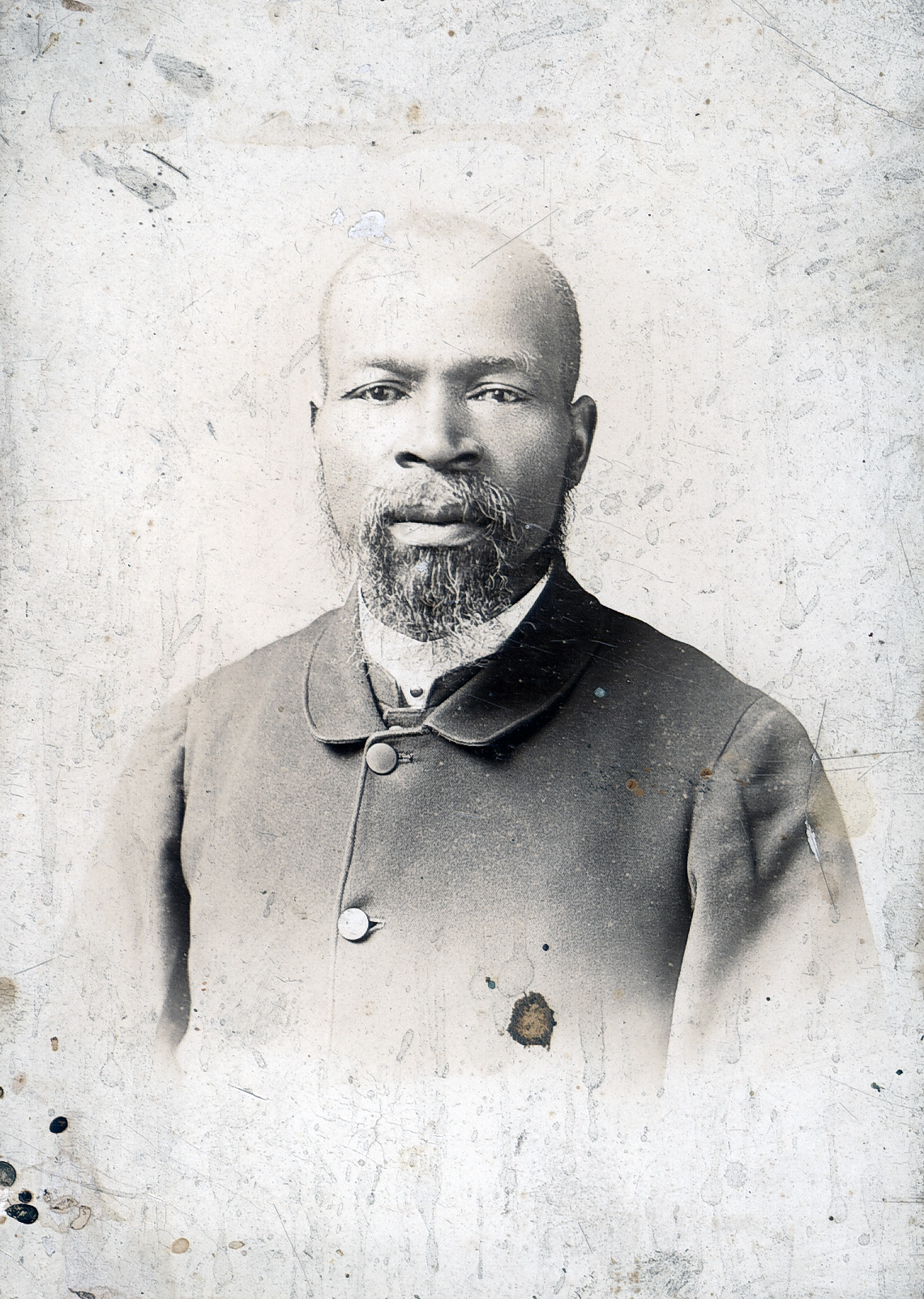 In 1873, he was appointed a Justice of the Peace in South Carolina, and in 1874, he received a state scholarship to attend the University of South Carolina, where he studied law until 1876. Although African Americans were barred from the university in 1877, Smith had obtained his license and practiced law briefly.
He later returned to North Carolina until a turning point in October 1880, when he experienced a religious conversion at a camp meeting in Whiteville, North Carolina. That conversion led him to join the African Methodist Episcopal Zion Church, where he quickly advanced, receiving a local preacher’s license in February 1881, ordination as a deacon in April 1881, and elder’s orders in December 1883 at Raleigh.
Smith pastored numerous circuits and stations, including Stantonburg, Magnolia, Elizabethtown, Ingold, Kinston, Tarboro, and Wilson, earning widespread praise for his leadership and organizational skill. Under his direction, numerous churches were built, including multiple congregations on the Magnolia, Ingold, and Speight’s Bridge Circuits, as well as Trinity Church in Wilson. He served as residing elder, secretary of the Sunday School Convention, private secretary to Bishop John Small, conference delegate, and corresponding editor of the Star of Zion.
In 1885, he became pastor of St. John’s in Wilson, North Carolina, a community where he would live for the remainder of his life and from which he would rise to national and international prominence. In recognition of his religious leadership, Livingstone College in Salisbury, North Carolina, awarded him an honorary Doctor of Divinity degree in 1883, with another conferred in 1898.
In 1897, he sought an appointment to a foreign post and received strong endorsements from the governor, the attorney general, and members of Congress. From a field of forty-three applicants, President William McKinley selected him as United States Minister Resident and Consul General to Liberia, a position he assumed in 1898 and held until 1902. Smith was the last in a line of four North Carolinians to serve in the top diplomatic post in Monrovia, and his appointment reflected the State Department’s comparatively early willingness to entrust African Americans with high-level diplomatic responsibility. While serving in Liberia, Smith also acted as presiding elder for A.M.E. Zion mission work in Africa and traveled through England, including time in London and Oxford, further broadening his international experience.
Alongside his public service, Smith maintained a full personal life rooted largely in North Carolina. He was married three times, first to Lucy Ann Jackson in 1878, with whom he had a son, Jesse Alexander Smith, born in Salisbury, North Carolina, in 1881. While in Liberia, Smith and Adora adopted a girl, Carrie Emma Smith, who later returned with them to North Carolina and died in Wilson in 1917 while preparing to become a missionary. Smith’s final marriage was to Cynthia Ann King Isler in 1908.
Owen Lun West Smith died in 1926 and was buried in the private cemetery of Mount Hebron Masonic Lodge in Wilson.
