By Jheri Hardaway
Staff Writer
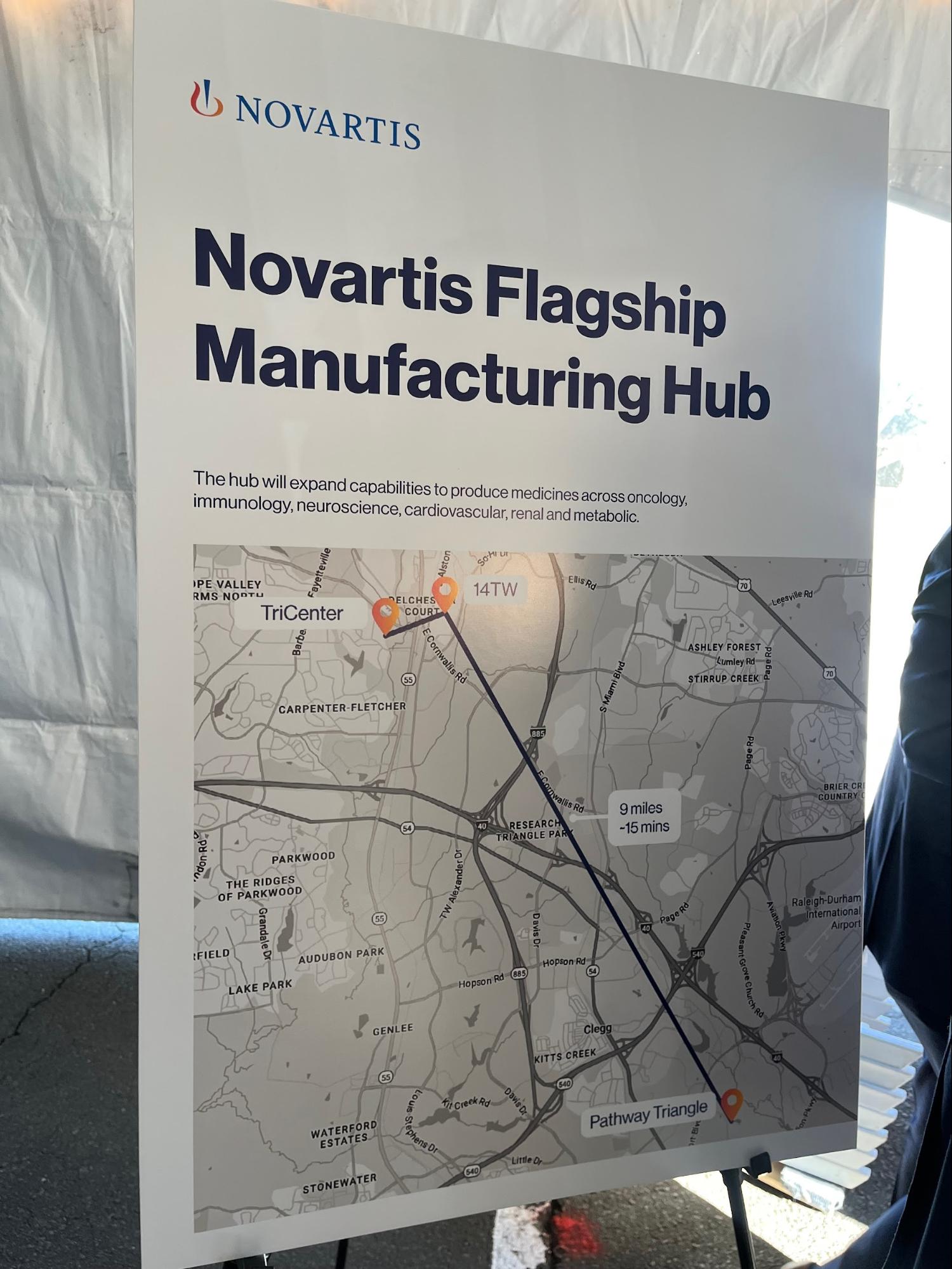
Durham, N.C. — In a major victory for North Carolina’s biotechnology sector, global pharmaceutical giant Novartis and DPR Construction broke ground this week on a massive expansion of its manufacturing capabilities in Durham and Morrisville. The event, attended by Governor Josh Stein, FDA Commissioner Dr. Marty Makary, and Novartis CEO Vas Narasimhan, marked the beginning of a $771 million investment projected to bring 700 new, high-paying jobs to the region by 2030. The ceremony underscored North Carolina’s status as a global leader in life sciences, with state and federal officials praising the initiative as a critical step toward bringing essential drug manufacturing back to American soil.
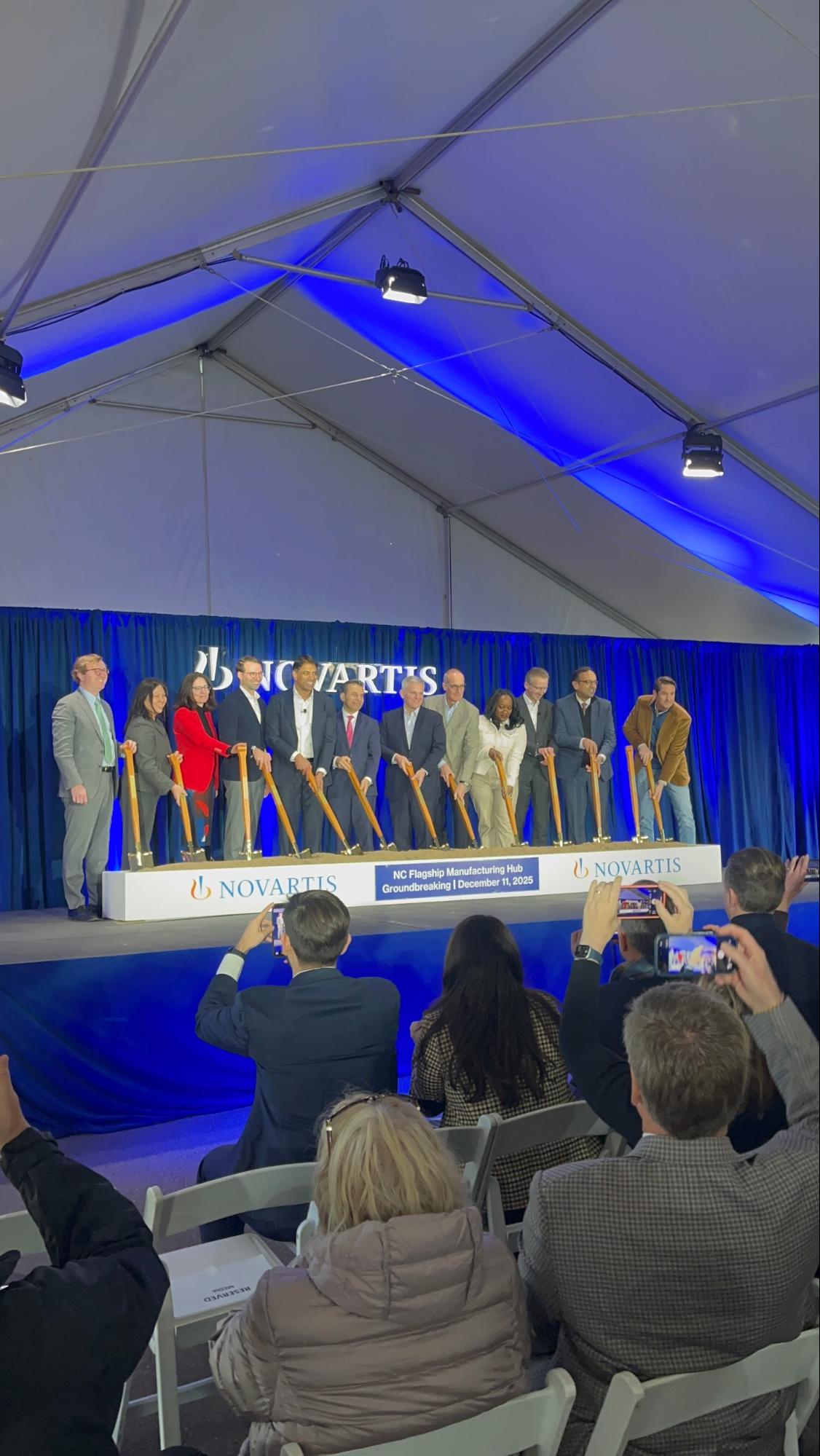 Victor Bulto, President of Novartis U.S., kicked off the event by highlighting the company’s return to the region. He noted that while Novartis had previously built a facility in Holly Springs in 2006, this new expansion in Durham represents the largest expansion of U.S. manufacturing for the company in 20 years. “We learned about what an incredible ecosystem exists in this state, with a combination of world-class talent, world-class universities, and [organizations] that really want to get talent that enables you to fill these manufacturing facilities with the best people,” Bulto said.
The new hub will focus on the latest technologies, ranging from small molecules to biologics and gene therapies, ensuring that breakthrough treatments are not only discovered but also manufactured within the United States.
Governor Josh Stein took the stage to champion the economic benefits of the project, labeling economic development as "the ultimate team sport." “Novartis is going to invest $771 million in the City of Durham and the town of Morrisville,” Governor Stein announced. “We are talking about big and meaningful numbers.” The Governor noted that the 700 direct jobs created by this expansion will carry an average wage of approximately $110,000—salaries capable of supporting families and strengthening the local economy. Additionally, the project is expected to generate 3,000 indirect jobs within the supply chain and contribute an estimated $3 billion to the state’s economy. “North Carolina is ripe to be the place,” Stein said, referencing the state’s recent accolades as a top state for business.
A significant portion of the event focused on national security and supply chain resilience. FDA Commissioner Dr. Marty Makary delivered a passionate address about the "American First" agenda in healthcare manufacturing. “For decades, manufacturing jobs went overseas, and people said it was impossible to bring it back. And here we are,” Makary said. He emphasized that domestic manufacturing is a national security issue, citing the shortages of PPE and medications experienced during the COVID-19 pandemic as a scenario that must never be repeated. Makary promised that the FDA would be a partner rather than an obstacle, citing new initiatives to cut red tape, utilize AI in reviews, and streamline inspections for domestic plants to encourage companies to build in the U.S.
 While the numbers were impressive, the event was grounded by the personal story of Craig Spinale, a Novartis employee and patient who battles Chronic Myeloid Leukemia (CML). Craig shared his journey of treatment using three generations of Novartis drugs—Gleevec, Tasigna, and Scemblix—which have allowed him to live a full life, including running the New York City Marathon and climbing Mount Kilimanjaro. “For me, it isn’t just about surviving. It’s about thriving,” Craig told the audience. “Being on the right medicine has allowed me to do that.”
The event also highlighted the strong diplomatic ties between the U.S. and Switzerland. Swiss Ambassador to the U.S., Ralf Heckner, noted that Switzerland is the largest foreign direct investor in American research and development. “This Novartis production investment speaks to a shared commitment between our two countries,” Heckner stated, emphasizing that innovation does not pause during policy transitions. When complete, the integrated hub will handle everything from specialized science to sterile filling and packaging, speeding up the delivery of medicines to patients. As shovels hit the dirt, the message was clear: The Research Triangle Park remains a premier destination for global innovation, and the pipeline from laboratory to patient is becoming shorter, stronger, and more local.
