By Jordan Meadows
Staff Writer
Data centers have become the backbone of modern life. In North Carolina, that backbone is expanding at a historic pace by bringing billions in investment, thousands of construction jobs and a growing debate over energy, water and who pays the bill.
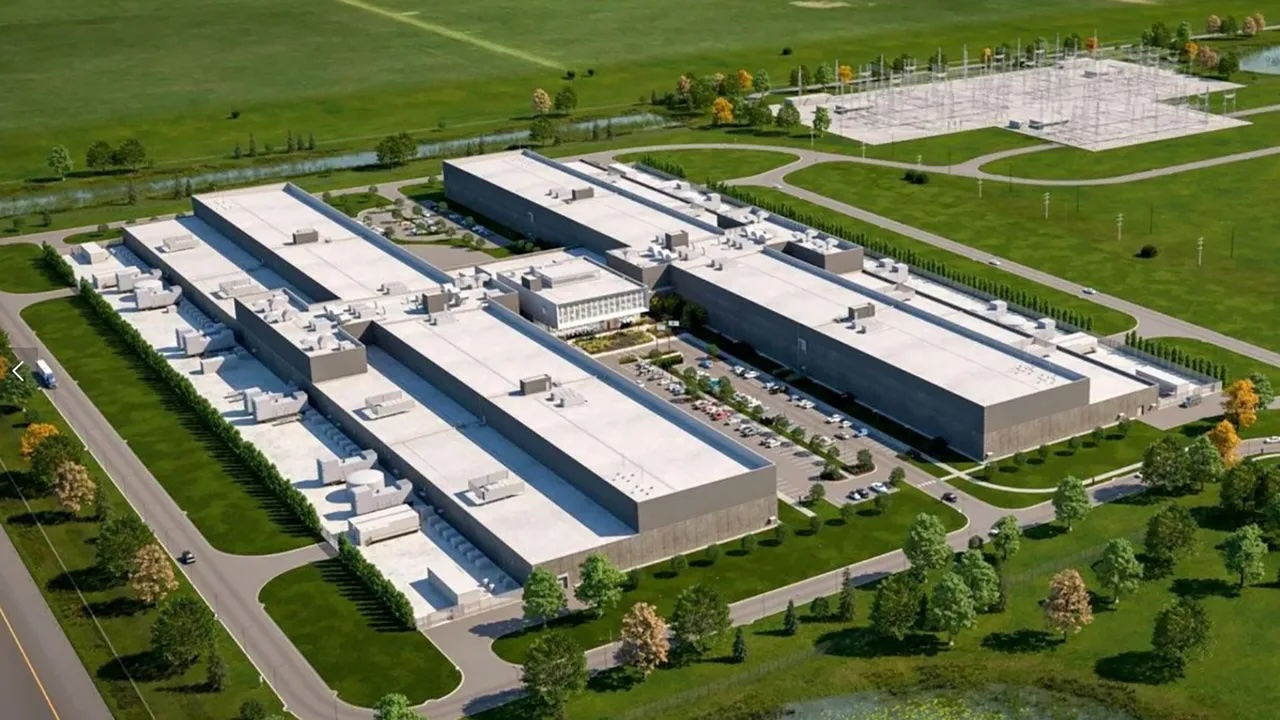
The warehouse-sized facilities that power cloud computing, artificial intelligence, streaming services and nearly every corner of the modern digital economy are expanding rapidly across North Carolina. Yet it remains surprisingly difficult to pin down exactly how many data centers there really are in the state. Depending on the source and how facilities are categorized, estimates range from roughly 40 major operating centers to 140 total facilities statewide.
North Carolina’s data center footprint began in earnest in 2009 when Apple announced its campus in Catawba County. The company now operates eight hyperscale facilities there, spanning more than 500,000 square feet, including a recent $175 million, 237,600-square-foot expansion. Meta established a multi-building campus in Rutherford County, while Google has invested more than $1.2 billion in Caldwell County.
Amazon Web Services has announced projects across multiple counties too, including a $10 billion investment in Richmond County. The largest operational data center currently in the state is the T-5 Data Center in Cleveland County, a facility that consumes roughly as much electricity as nearly every home in Durham County combined. Microsoft purchased a 1,385-acre megasite in Person County for $26.85 million in 2024. In Edgecombe County, Energy Storage Solutions plans to break ground in 2026 on a $19.2 billion, 900-megawatt data center and energy storage campus in Tarboro’s Kingsboro development, with a similarly scaled project planned in Fayetteville.
Several factors have made North Carolina particularly attractive to data center developers: strong grid coverage from Duke Energy, significant solar generation capacity, abundant large parcels of land at competitive prices, business-friendly tax incentives, and proximity to major East Coast routes. Nationally, Virginia remains the dominant data center market with more than 600 facilities concentrated in Northern Virginia’s “Data Center Alley,” the largest cluster in the world, while Texas and California follow behind.
The growth comes with significant energy implications. According to Duke Energy’s 2025 load forecast, total demand across its two Carolina systems is projected to increase between 16% and nearly 60% through 2040. Future growth is expected to accelerate sharply, with data centers accounting for about 80% of Duke Energy’s projected demand growth, according to Gov. Josh Stein’s North Carolina Energy Policy Task Force.
Between 2017 and 2024, the average residential electricity bill in North Carolina rose nearly 30%, with almost two-thirds of that increase driven by rising fuel costs tied largely to volatile natural gas prices. Utilities are projecting further increases by 2040, including proposed residential rate hikes of 16–18% over just the next two years.
In response to those concerns, Gov. Stein created the bipartisan Energy Policy Task Force in August 2025 through Executive Order 23. The 30-member panel, co-chaired by Department of Environmental Quality Secretary Reid Wilson and Rep. Kyle Hall, released an interim report recommending the development of large-load tariffs to ensure that major customers like data centers pay the majority of costs tied to their infrastructure needs. The task force also proposed “bring your own capacity” options that would allow large-load customers to procure or build their own energy resources, encouraged load flexibility programs that would require data centers to reduce consumption during peak demand periods, and called for an assessment of the dollar value of existing tax exemptions for data centers.
The task force will refine its recommendations over the next year before issuing a final report in February 2027.
Environmental advocates point to a Duke University study suggesting that the true cost impact may depend less on total electricity consumption and more on when that electricity is used. The study found that adopting “load flexibility”--shifting computing tasks to off-peak hours when unused grid capacity exists—could help the United States avoid up to $150 billion in new power plant, fuel and transmission costs over the next decade.
Local governments are grappling with how to manage the boom. Chatham County leaders recently approved a one-year moratorium on new data center construction to reassess zoning and infrastructure impacts. In Apex, residents in the New Hill and Jordan Pointe communities have voiced opposition to a proposed 190-acre data center near old U.S. Highway 1.
At the same time, the construction surge is straining labor markets. Data center projects require mission-critical standards for redundancy, cooling, power and security, creating high demand for journeyman and master electricians, low-voltage and fiber technicians, HVAC and refrigeration specialists, pipefitters, ironworkers, concrete crews and experienced project managers. Contractors say finding qualified workers is becoming as challenging as securing materials, particularly in counties where hyperscale campuses overlap with advanced manufacturing projects.
