By: Jordan Meadows
Staff Writer
The fatal stabbing of a Ukrainian refugee on Charlotte’s light-rail system last summer continues to reverberate through North Carolina politics. The killing of 23-year-old Iryna Zarutska in August, followed by a non-fatal stabbing on the same transit line in December, has become a focal point for Republican criticism of Democratic leadership in Charlotte and statewide, particularly around criminal justice and mental health policy.
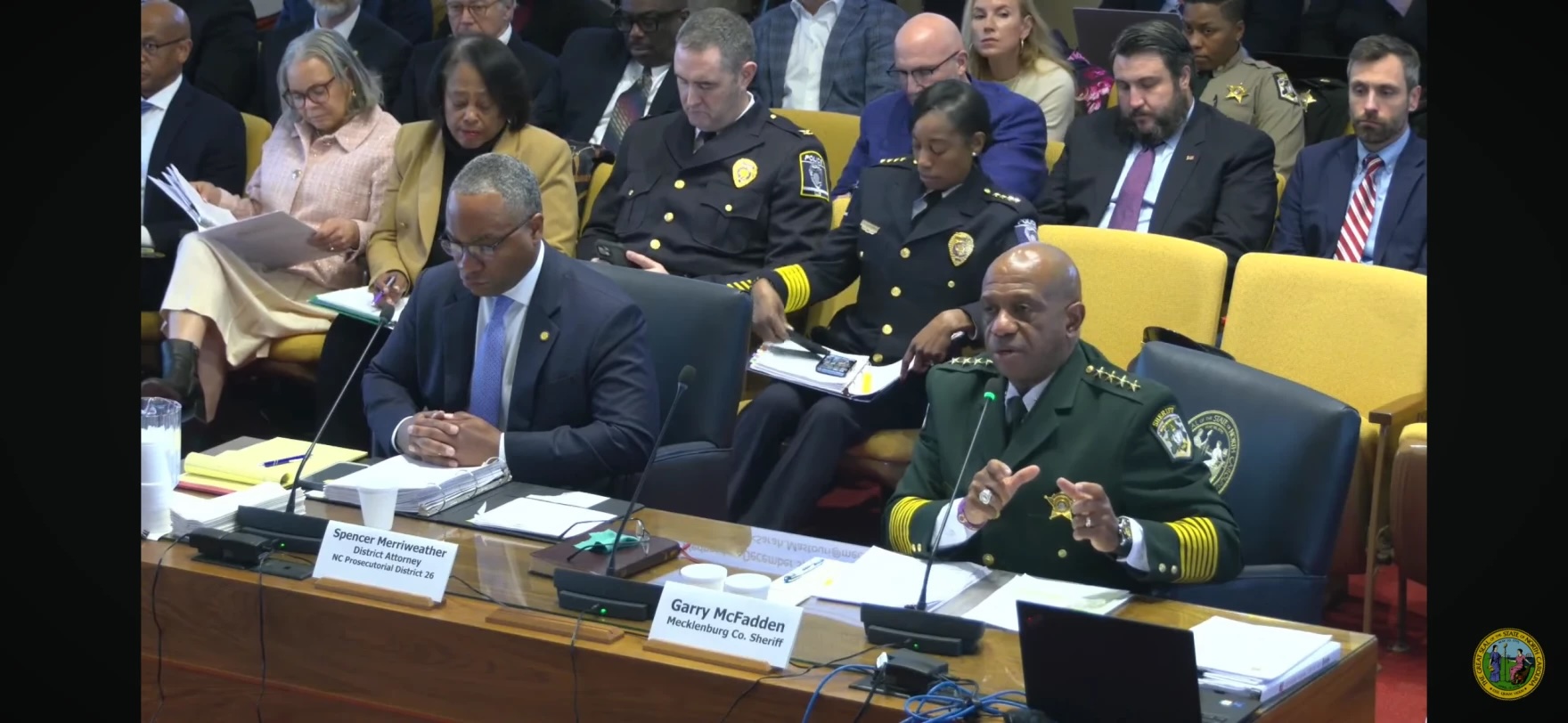
On Monday, North Carolina Republican lawmakers pressed Charlotte-area officials during a House oversight hearing, questioning whether failures within the criminal justice system allowed DeCarlos Brown Jr., the man accused of killing Zarutska, to remain free despite a lengthy criminal history and reported mental health concerns. GOP Rep. Brenden Jones, co-chairman of the House oversight committee, opened the hearing by describing Zarutska’s death as the result of systemic “incompetence”. Democrats on the committee pushed back, arguing that the testimony showed no such incompetence and accusing Republicans of politicizing a tragedy.
Charlotte Mayor Vi Lyles, Charlotte-Mecklenburg Police Chief Estella Patterson, Mecklenburg County Sheriff Garry McFadden, and District Attorney Spencer Merriweather all testified, emphasizing existing crime-reduction strategies, declining crime rates, and new safety measures implemented on the light-rail system since the attacks. Merriweather called for additional assistant prosecutors, earlier mental-health interventions, and stronger responses to serious juvenile crime.
Much of the lawmakers’ scrutiny focused on the role of mental health evaluations and pretrial decision-making. Brown faces both state and federal murder charges, and courts in each system have ordered psychiatric evaluations to determine whether he is competent to stand trial. His case has renewed attention on how North Carolina law handles defendants found incapable of proceeding due to mental illness.
Under state law, the question of a defendant’s capacity to proceed can be raised at any time by prosecutors, defense attorneys, defendants, or the court itself. If raised, the court must hold a hearing to determine capacity, but a forensic mental-health evaluation is not required, allowing judges to make determinations without professional input.
These issues were specifically examined Tuesday during a meeting of the House Select Committee on Involuntary Commitment and Public Safety, chaired by House Deputy Majority Whip Rep. Timothy Reeder, a Republican from Pitt County.
Lawmakers discussed statutory standards governing when defendants are deemed incapable of understanding court proceedings, comprehending their legal situation, or assisting in their own defense. The committee also reviewed criteria for assisted outpatient treatment, which applies to individuals experiencing serious mental illness who are unlikely to survive safely in the community without supervision, have a history of treatment noncompliance, or have engaged in recent violent behavior.
As part of the discussion, lawmakers heard about jail-based and community programs designed to address the intersection of mental health and public safety. One Wake County judge told legislators that courts are coordinating with District Attorney Lorrin Freeman and behavioral-health agencies through programs such as NC RISE, a jail-based initiative at the Wake County Detention Center that provides mental-health treatment to restore the legal capacity of inmates found unfit to stand trial. The program, operated in partnership with the North Carolina Department of Health and Human Services, offers daily group and individual sessions and is intended to reduce wait times for state psychiatric hospital beds by providing local, voluntary treatment.
State lawmakers passed a new law barring cashless bail for certain violent crimes and repeat offenders, while also seeking to ensure that more defendants receive mental-health evaluations. Democratic Gov. Josh Stein recently issued an executive order aimed in part at improving mental-health treatment for people encountered by law enforcement and those who are incarcerated.
The case has also become a flashpoint in the 2026 race for North Carolina’s open U.S. Senate seat, where former Democratic Gov. Roy Cooper is expected to face Republican nominee Michael Whatley, the former Republican National Committee chairman. Republicans have repeatedly claimed that Brown was released early from prison as part of a 2021 COVID-era settlement between Cooper’s administration and civil rights groups. PolitiFact North Carolina has rated those claims false, noting that Brown was released from prison in September 2020, five months before the settlement was reached, and that he served 100 percent of his minimum sentence.
State records show that Brown pleaded guilty to armed robbery in 2014 and was incarcerated from February 2015 until September 2020. While on post-release supervision in early 2021, Brown was arrested on misdemeanor charges that were later dropped. A parole hearing officer decided to allow him to remain free, and he completed his sentence later that year. Although Brown was counted among prisoners released under the 2021 settlement for administrative purposes, state officials say the agreement had no bearing on his custody status.
Despite those findings, national and state Republicans have continued to link the case to Cooper, with party committees and prominent GOP figures accusing him of prioritizing criminals over public safety. Whatley has echoed those claims on social media. With the Senate race intensifying, lawmakers from both parties acknowledge that the Charlotte stabbing has moved beyond a criminal case, becoming a central narrative in debates over public safety in North Carolina.
