By Jordan Meadows
Staff Writer
In the years following the Civil War, when the promise of freedom demanded real institutions to sustain it, the Thompson Institute emerged in Lumberton, North Carolina, as one of the most important educational lights for African Americans in the state.
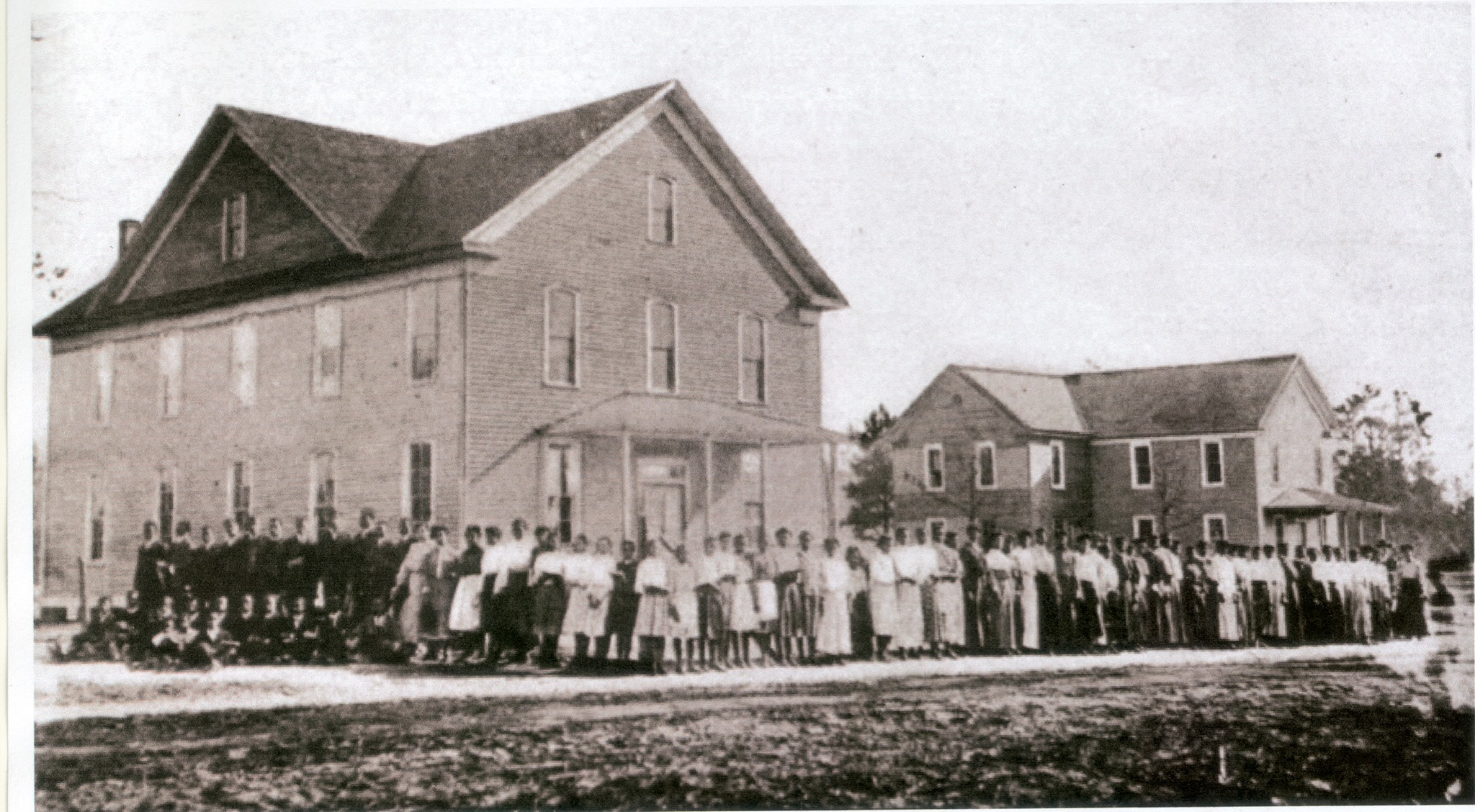
Born from former slaves, the origins of the Thompson Institute trace back to the founding of the Lumber River Missionary Baptist Association in 1877 in Fair Bluff. From its inception, the Association recognized education as essential to the freedom and advancement of Black families newly navigating life after emancipation. Four years later, in 1881, the Association established a school in Lumberton dedicated to teaching reading, writing, and the arts—disciplines denied to African Americans under slavery and still inaccessible due to the absence of public Black schools in Robeson County.
This school would soon bear the name Thompson Institute, honoring the leadership and vision of the Rev. Alexander H. Thompson, a man born enslaved in 1828 who would one day be recognized as one of the region’s great spiritual and educational pioneers.
 Alexander Thompson’s life embodied the transformation of the Reconstruction era. Forbidden under threat of family separation to learn to read or write, he continued throughout his life to sign his name with an “X” in memory of that rule. Yet freed after the Civil War, Thompson helped establish five churches, became a leading figure in the Lumber River Baptist Association, and inspired the founding of the Institute that would carry his name. Thompson died in 1911.
The early years of the Thompson Institute were humble. Funding came largely from local Black churches, supplemented by small aid from the Home Mission Society of New York. Yet the school quickly developed into a boarding institution that attracted students from far beyond Robeson County—some traveling from New England.
Under the leadership of A.H. Thompson, followed by the Rev. J. Avery, and—most notably—the Rev. William Henry Knuckles, a Shaw University graduate who served as principal for 30 years, the Institute grew into the first Black high school in Robeson County to be accredited by the Southern Association of Schools and Colleges.
By 1914, the curriculum reflected rigorous academic expectations: Latin, geometry, psychology, and the arts. Its graduates left to teach in communities across North Carolina and beyond, establishing schools and churches. Many alumni later recalled the Institute as “more like a college” because eighth-grade graduates were equipped to enter the teaching profession directly.
Like many private Black preparatory schools across the South, the Thompson Institute found its identity transformed as public education expanded for African Americans. In 1942, local Baptists concluded their operation of the school. The next year, the buildings were leased and then sold to the Robeson County school board.
The Institute was renamed South Lumberton Elementary School in 1950 and, following integration in 1969 and a period of reorganization, became W. H. Knuckles Elementary School in 1994, honoring the principal whose long service had shaped the institution’s golden era. Today, Knuckles Elementary stands on the historic site where thousands once pursued their education under the Thompson Institute banner.
The Thompson/Ashley Reunion, one of the oldest and most cherished gatherings of descendants, honors the “family sages”—the oldest living members whose wisdom and memories preserve the lineage.
In 2023, the honored family sage was Georgeva Gerald Wright, a lifelong educator who reflected the school’s ethos of scholarship, service, and community leadership. A descendant of the Thompson line through Maggie Thompson Gerald, Georgeva exemplifies the lifelong commitment to learning that the Institute nurtured. For 35 years she taught in North Carolina schools, mentored countless students, and championed community institutions including the Lumber River Baptist Association and Hilly Branch Baptist Church, founded by her ancestors.
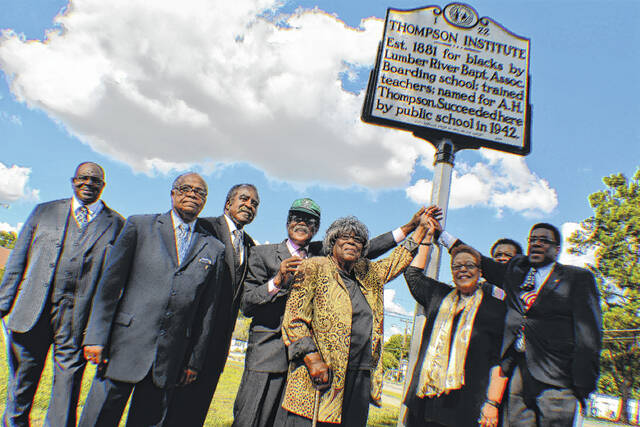
The effort to secure statewide recognition for the Thompson Institute was itself led by descendants Carletta Thompson and Demetria Taylor, along with Rep. Garland Pierce, the campaign required decades of research and multiple applications. After initially being rejected for “lack of statewide significance,” the family compiled documentation demonstrating the Institute’s impact—teachers who spread across North Carolina, photos and diplomas dating back to the early 1900s, and testimonies about its role in advancing Black literacy after emancipation.
Their persistence paid off: A North Carolina Highway Historical Marker was installed at 1520 Martin Luther King Jr. Drive in Lumberton—Robeson County’s 15th such marker, and only the seventh honoring a Black preparatory school in the state. The cast-aluminum sign stands as a “roadside history lesson,” preserving the memory of a school that shaped the educational landscape of a county and a state.
More than 140 years after its founding, the Thompson Institute remains a symbol of Black achievement born in the hardest of times.
As Rep. Charles Graham noted, it “laid the framework for the Black community to encourage and promote education and promote literacy”—not only in Robeson County, but across North Carolina and the United States.
